
Title
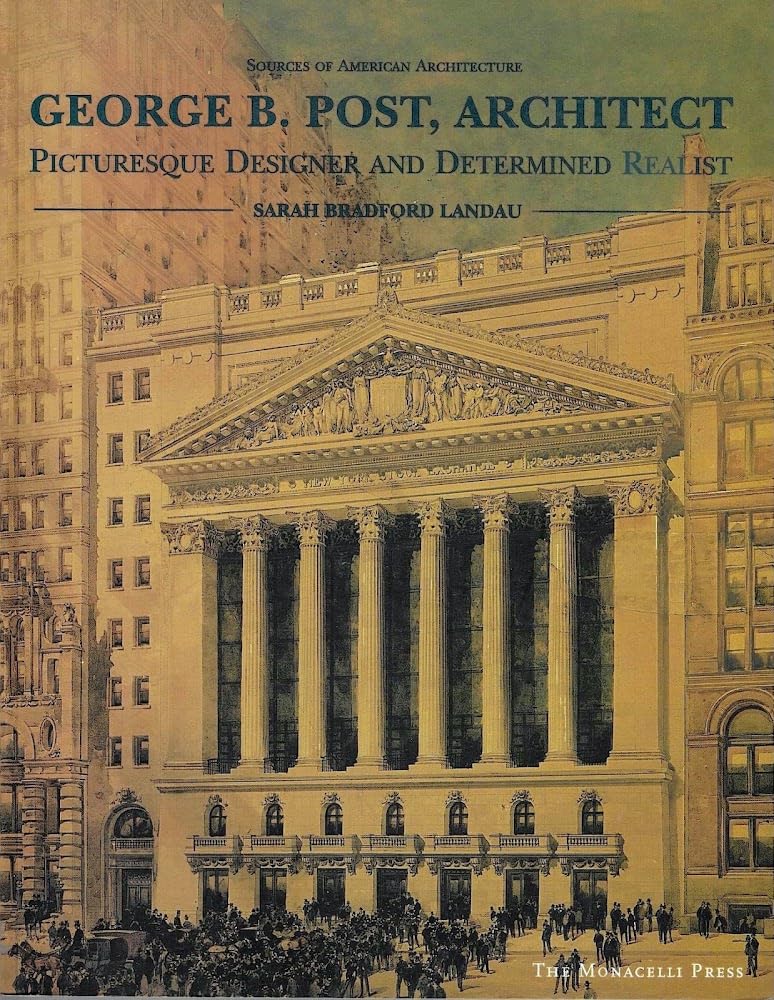
George B. Post, Architect: Picturesque Designer and Determined Realist,Used
Sold by Ergodebooks, an authorized reseller.
Returns accepted within 30 days | support@ergodebooks.com
Shipping Information
- Free Standard Shipping — United States only
- Processing Time: 3–5 business days
- Estimated Delivery: 6–10 business days after dispatch
- Double-boxed, fully insured & discreetly packaged
- Tracking number sent via email once dispatched
Returns & Refund
Returns accepted within 30 days of delivery.
Damaged or Defective Item
Free return shipping + replacement or full refund
Wrong Item Received
Free return shipping + replacement or full refund
Change of Mind
Return shipping at customer's expense · 25% restocking fee applies
Payment Option

Architect George B. Post, one of the preeminent American architects of his time, is known not only for the exceptional quality of his many buildings but also for his contributions to both the technology and the practice of architecture. Acknowledged in his lifetime as the 'father of the tall building in New York,' Post designed a great number of buildings in a variety of types (hospitals, banks, city and country houses, in addition to commercial skyscrapers); his command of the latest developments in technology, planning, and style was evident throughout his long career; and his multifaceted practice continues to serve as a model for the profession. This volume, the first monograph published on Post (18371913), offers a chronological presentation of his career, starting with his studies at the Ecole des BeauxArts in Paris and in the atelier of Richard Morris Hunt. Once in practice for himself, he received commissions for commercial and institution projects, including the Equitable Building in New York, the first office building to use elevators. At the same time he designed tall, Post also developed the engineering expertise to 'design wide': structures with large open interiors, such as the Troy Savings BankMusic Hall in Troy, New York. Two of his early skyscrapers, the twentystory World (Pulitzer) Building and the twentysix story St. Paul Building, were the tallest buildings in New York when they were built. His large open spaces culminated in the thirtyacre Manufactures and Liberal Arts Building at the World's Columbian Exposition in Chicago in 1893, called 'the largest structure on earth.' Other major projects included the New York Stock Exchange and the Produce Exchange in New York, a new campus plan and five building for the City College of New York in upper Manhattan, and the majestic Wisconsin State Capitol.
⚠️ WARNING (California Proposition 65):
This product may contain chemicals known to the State of California to cause cancer, birth defects, or other reproductive harm.
For more information, please visit www.P65Warnings.ca.gov.