
Title
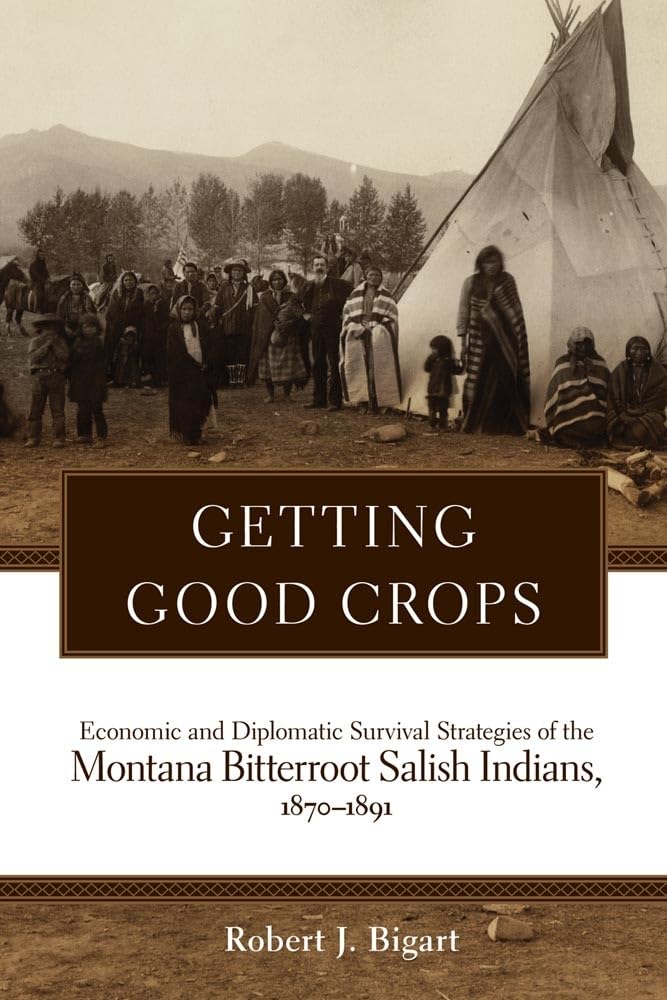
Getting Good Crops: Economic And Diplomatic Survival Strategies Of The Montana Bitterroot Salish Indians, 18701891 (Civilizatio,Used
Sold by Ergodebooks, an authorized reseller.
Returns accepted within 30 days | support@ergodebooks.com
Shipping Information
- Free Standard Shipping — United States only
- Processing Time: 3–5 business days
- Estimated Delivery: 6–10 business days after dispatch
- Double-boxed, fully insured & discreetly packaged
- Tracking number sent via email once dispatched
Returns & Refund
Returns accepted within 30 days of delivery.
Damaged or Defective Item
Free return shipping + replacement or full refund
Wrong Item Received
Free return shipping + replacement or full refund
Change of Mind
Return shipping at customer's expense · 25% restocking fee applies
Payment Option

Tells how one American Indian tribe survived despite overwhelming challengesIn 1870, the Bitterroot Salish Indianscalled Flatheads by the first white explorers to encounter themwere a small tribe living on the western slope of the Northern Rocky Mountains in Montana Territory. Pressures on the Salish were intensifying during this time, from droughts and dwindling resources to aggressive neighboring tribes and AngloAmerican expansion. In 1891, the economically impoverished Salish accepted government promises of assistance and retreated to the Flathead Reservation, more than sixty miles from their homeland.In Getting Good Crops, Robert J. Bigart examines the full range of available sources to explain how the Salish survived into the twentieth century, despite their small numbers, their military disadvantages, and the aggressive invasion of white settlers who greedily devoured their land and its natural resources.Bigart argues that a key to the survival of the Salish, from the early nineteenth century onward, was their diplomatic agility and willingness to form strategic alliances and friendships with nonSalish peoples. In doing so, the Salish navigated their way through multiple crises, relying more on their wits than on force. The Salish also took steps to sustain themselves economically. Although hunting and gathering had been their mainstay for centuries, the Salish began farming getting good crops to feed themselves because buffalo were becoming increasingly scarce.Raised on the Flathead Reservation himself, the author is seeking to convey the Salish story from their perspective, despite the paucity of written Salish testimony. What emerges is a picture both inspiring and heartbreaking of a people maintaining autonomy against all odds.
⚠️ WARNING (California Proposition 65):
This product may contain chemicals known to the State of California to cause cancer, birth defects, or other reproductive harm.
For more information, please visit www.P65Warnings.ca.gov.