If you have any questions, you are always welcome to contact us. We'll get back to you as soon as possible, withing 24 hours on weekdays.
Customer service
All questions about your order, return and delivery must be sent to our customer service team by e-mail at yourstore@yourdomain.com
Sale & Press
If you are interested in selling our products, need more information about our brand or wish to make a collaboration, please contact us at press@yourdomain.com
Help
If you have any questions, you are always welcome to contact us. We'll get back to you as soon as possible, withing 24 hours on weekdays.
Customer service
All questions about your order, return and delivery must be sent to our customer service team by e-mail at yourstore@yourdomain.com
Sale & Press
If you are interested in selling our products, need more information about our brand or wish to make a collaboration, please contact us at press@yourdomain.com
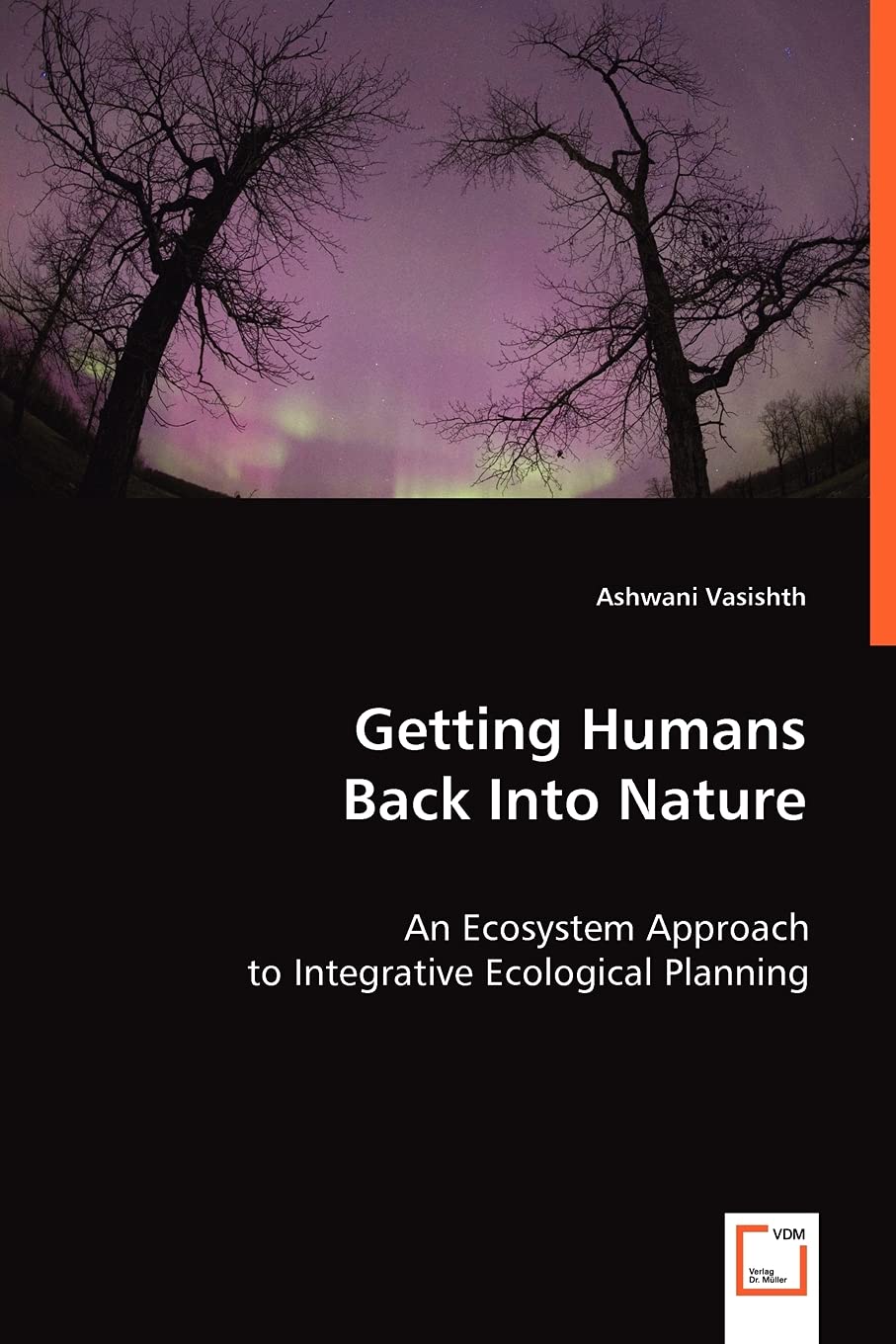
To think ecologically is to recognize that reality is rarely singular, and that there is usually more than just the one thing going on at the same time. Additionally, some few aspects of a phenomenon usually matter much more than others, and the physically tangible world we care most about is usually shaped by intangible sets of processes and functions. What we see is rarely all that we get. Under these conditions, an ecological planning becomes the richly informative telling of context, and the cognitively savvy tracing of consequence. Some key insights from such a view are that complex systems: are best organized into nested levels; that their descriptions are inherently purposive and perspectival; and that they can only be meaningful if they are seen to have multiple boundaries, and depicted using multiple spatial and temporal scales. I use cases from the history of ecology and social theory, habitat conservation planning, urban ecology, regional planning, and disaster planning, to synthesize a description of what it means, pragmatically, to think and plan in an integrative and ecological way, using an ecosystem approach from scalehierarchic ecology.
⚠️ WARNING (California Proposition 65):
This product may contain chemicals known to the State of California to cause cancer,
birth defects, or other reproductive harm.
For MAP (Minimum Advertised Price) violations and Intellectual Property (IP) or Trademark concerns, please contact:
support@ergodebooks.com
⚠️ California Proposition 65 Warning: Some products sold on this website may expose you to chemicals known to the State of California to cause cancer, birth defects, or other reproductive harm. For more information, visit www.P65Warnings.ca.gov.