
Title
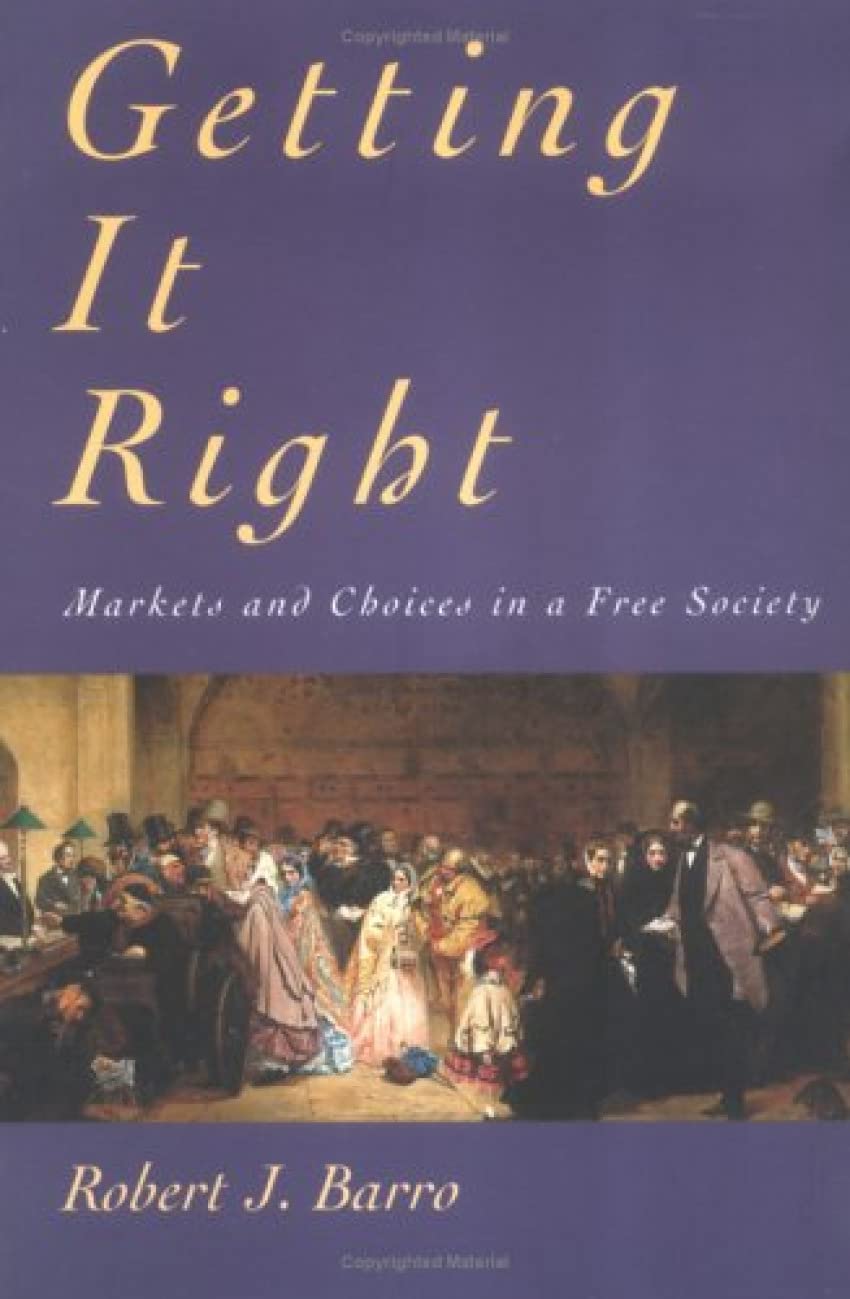
Getting It Right: Markets And Choices In A Free Society
Sold by Ergodebooks, an authorized reseller.
Returns accepted within 30 days | support@ergodebooks.com
Shipping Information
- Free Standard Shipping — United States only
- Processing Time: 3–5 business days
- Estimated Delivery: 6–10 business days after dispatch
- Double-boxed, fully insured & discreetly packaged
- Tracking number sent via email once dispatched
Returns & Refund
Returns accepted within 30 days of delivery.
Damaged or Defective Item
Free return shipping + replacement or full refund
Wrong Item Received
Free return shipping + replacement or full refund
Change of Mind
Return shipping at customer's expense · 25% restocking fee applies
Payment Option

Since 1991, Robert Barro has been a lively contributor to the Wall Street Journal and other popular financial media. Getting It Right brings together, updates, and expands upon these writings that showcase Barro's agility in applying economic understanding to a wide array of social issues. Barro, a conservative who takes no prisoners, and a selfdescribed libertarian, believes that most governments have gone much too far in their spending, taxation, and regulation. The dominant theme in these wideranging essays is the importance of institutions that ensure property rights and free markets. The discussion deals especially with the appropriate range of government: which areas represent useful public policy and which are unnecessary interference. The first section of the book considers these questions in the context of the determinants of longrun economic growth. In addition to basic economics, Barro assesses related political topics, such as the role of public institutions, the optimal size of countries, and the consequences of default on foreign debt. The second section deals with the proper role and form of monetary policy. Barro argues that government should provide markets with a stable nominal framework and then stay out of the way to best allow for price stability. Writings in the third section cover fiscal and other macroeconomic policies. Topics include the distorting influences of taxation, especially taxes on capital income; infrastructure investment and other government spending; and the consequences of public debt and budget deficits. In a final section, Barro looks at more micro issues such as cartels, tax amnesties, school choice, privatization, cigarettesmoking regulation, endangered species regulation, the market for baseball players, and term limits for politicians.
⚠️ WARNING (California Proposition 65):
This product may contain chemicals known to the State of California to cause cancer, birth defects, or other reproductive harm.
For more information, please visit www.P65Warnings.ca.gov.