
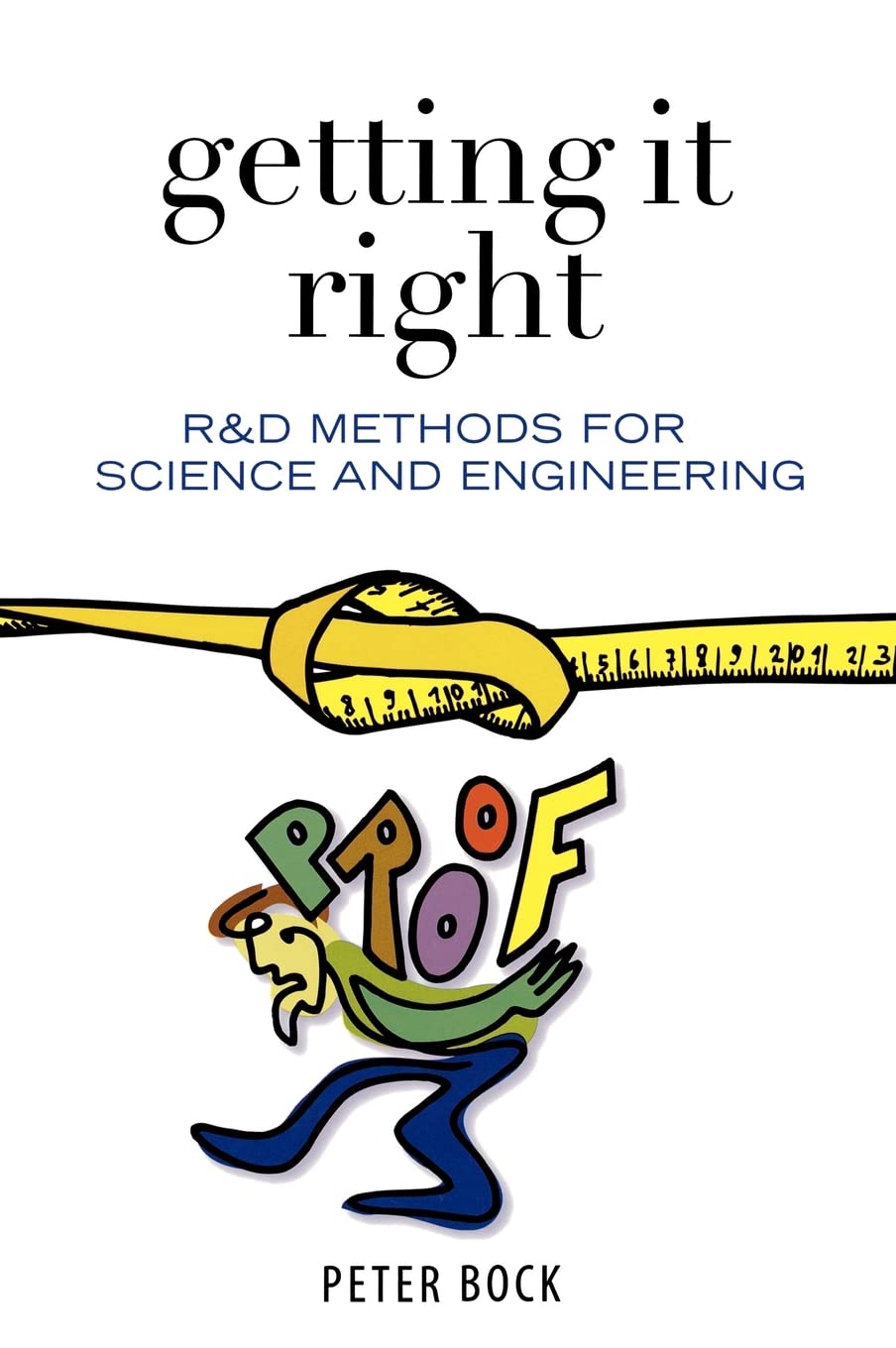
Title
Getting It Right: R&D Methods for Science and Engineering,Used
Sold by Ergodebooks, an authorized reseller.
Returns accepted within 30 days | support@ergodebooks.com
Shipping Information
- Free Standard Shipping — United States only
- Processing Time: 3–5 business days
- Estimated Delivery: 6–10 business days after dispatch
- Double-boxed, fully insured & discreetly packaged
- Tracking number sent via email once dispatched
Returns & Refund
Returns accepted within 30 days of delivery.
Damaged or Defective Item
Free return shipping + replacement or full refund
Wrong Item Received
Free return shipping + replacement or full refund
Change of Mind
Return shipping at customer's expense · 25% restocking fee applies
Payment Option

Over the past decade, the author has met with directors of R&D departments in large industrial firms, who are frustrated by the lack of coherent and consistent methodologies in R&D projects. As a direct result the author was asked to design and present a seminar to provide R&D engineers and scientists a standard methodology for conducting coherent, rigorous, comprehensible, and consistent R&D projects. The author also realized that this training should be included in engineering and science curricula in universities and colleges. To this end, he designed and presented a pilot course for his department that was received enthusiastically by students who participated. This course has now become a required course for all doctoral students in the author's department.This book has been designed to provide professional engineers, scientists, and students with a consistent and practical framework for the rigorous conduct and communication of complex research and development projects. Although courses and training in research methods are common and generally required of social science professionals, a vast majority of physical scientists and engineers have had no formal classroom training or onthejob mentoring on proper procedures for research methods. Getting It Right emphasizes the comprehensive analysis of project problems, requirements, and objectives; the use of standard and consistent terminology and procedures; the design of rigorous and reproducible experiments; the appropriate reduction and interpretation of project results; and the effective communication of project design, methods, results, and conclusions. Presents a standard methodology for conducting coherent, rigorous, comprehensible, and consistent R&D projects Thoroughly researched to appeal to the needs of R&D engineers and scientists in industry Will also appeal to students of engineering and science
⚠️ WARNING (California Proposition 65):
This product may contain chemicals known to the State of California to cause cancer, birth defects, or other reproductive harm.
For more information, please visit www.P65Warnings.ca.gov.
- Q: How many pages does the book have? A: The book has four hundred six pages. This comprehensive length allows for an in-depth exploration of R&D methodologies.
- Q: What is the binding type of the book? A: The book is hardcover. This durable binding provides longevity and protection for frequent use.
- Q: What are the dimensions of the book? A: The book measures seven point seventeen inches in length, zero point ninety-four inches in width, and ten point twenty-four inches in height. These dimensions make it a suitable size for both reading and reference.
- Q: Who is the author of the book? A: The author is Peter Bock. He has designed this book based on his extensive experience in R&D methodologies.
- Q: What is the primary focus of this book? A: The primary focus is on establishing a standard methodology for conducting coherent R&D projects. It aims to address the inconsistencies often found in research practices.
- Q: Is this book suitable for students? A: Yes, it is suitable for students of engineering and science. The author has successfully implemented this material into university curricula.
- Q: What kind of methodology does the book emphasize? A: The book emphasizes a comprehensive analysis of project problems and objectives. It promotes the use of consistent terminology and rigorous experimental design.
- Q: Can professionals in industry benefit from this book? A: Yes, professionals in R&D can greatly benefit from the methodologies presented. The content is tailored to meet the needs of engineers and scientists in industry.
- Q: Does the book include practical frameworks? A: Yes, it provides practical frameworks for conducting and communicating complex R&D projects. Readers can apply these frameworks directly to their work.
- Q: What is the target audience for this book? A: The target audience includes R&D engineers, scientists, and students. It caters to those seeking a structured approach to research methods.
- Q: Are there any prerequisites for understanding the book? A: No formal prerequisites are required. However, a basic understanding of research principles may enhance the reading experience.
- Q: Is the content of the book based on research? A: Yes, the content is thoroughly researched. It reflects the author's consultations with industry leaders about R&D challenges.
- Q: What makes this book unique compared to other R&D resources? A: This book uniquely integrates both academic and practical perspectives on R&D methodologies. It is designed to fill the gap in formal training for engineers.
- Q: What format is the book available in? A: The book is available in hardcover format. This choice is ideal for durability and ease of handling.
- Q: Is the book intended for a specific level of expertise? A: No, it is accessible to both beginners and experienced professionals. The methodologies are explained clearly to cater to various levels of expertise.
- Q: What topics does the book cover? A: The book covers topics such as project problem analysis, experimental design, and effective communication of results. It is comprehensive in its scope.