
Title
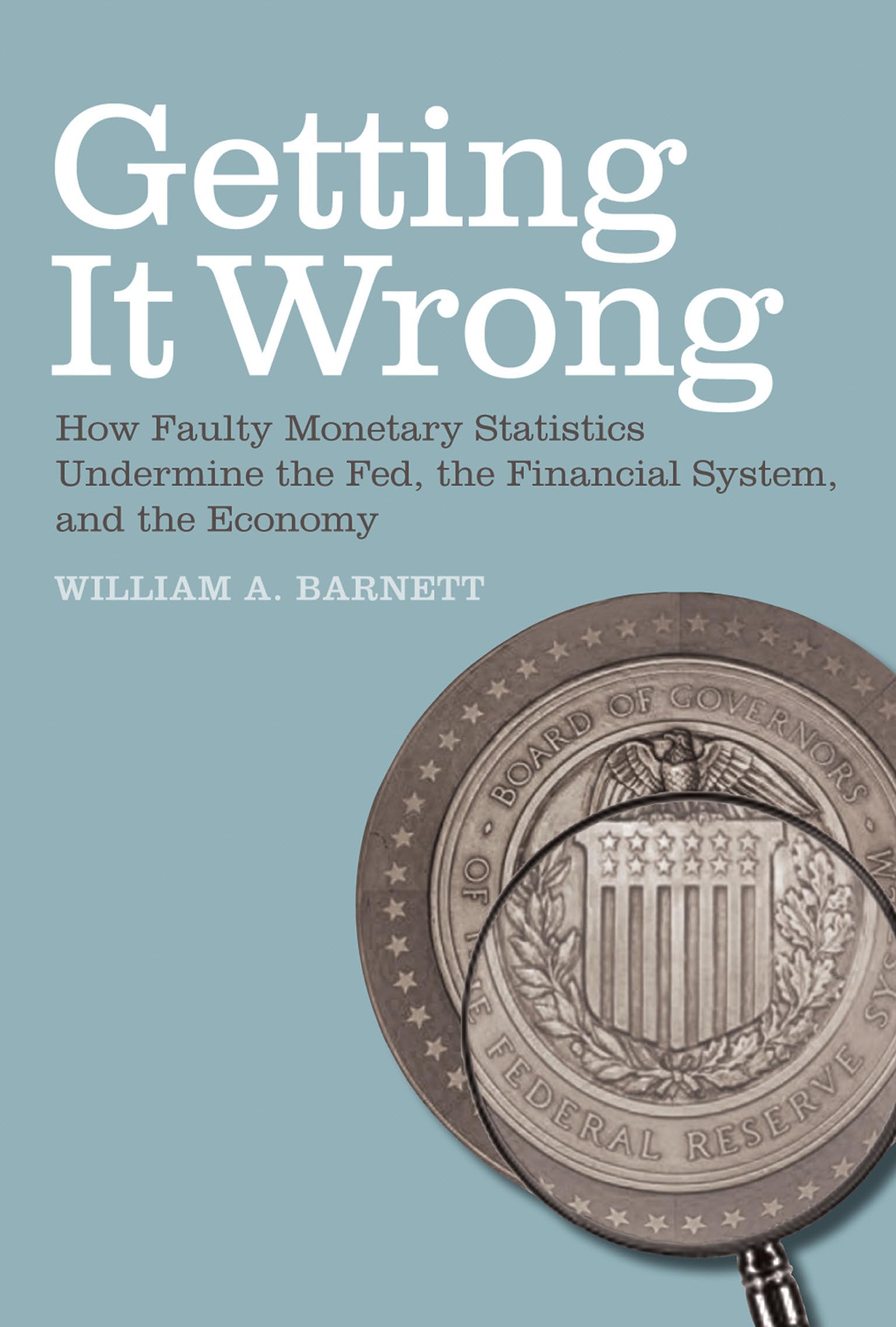
Getting it Wrong: How Faulty Monetary Statistics Undermine the Fed, the Financial System, and the Economy (Mit Press),Used
Sold by Ergodebooks, an authorized reseller.
Returns accepted within 30 days | support@ergodebooks.com
Shipping Information
- Free Standard Shipping — United States only
- Processing Time: 3–5 business days
- Estimated Delivery: 6–10 business days after dispatch
- Double-boxed, fully insured & discreetly packaged
- Tracking number sent via email once dispatched
Returns & Refund
Returns accepted within 30 days of delivery.
Damaged or Defective Item
Free return shipping + replacement or full refund
Wrong Item Received
Free return shipping + replacement or full refund
Change of Mind
Return shipping at customer's expense · 25% restocking fee applies
Payment Option

A leading economist contends that the recent financial crisis was caused not by the failure of mainstream economics but by corrupted monetary data constructed without reference to economics.Blame for the recent financial crisis and subsequent recession has commonly been assigned to everyone from Wall Street firms to individual homeowners. It has been widely argued that the crisis and recession were caused by greed and the failure of mainstream economics. In Getting It Wrong, leading economist William Barnett argues instead that there was too little use of the relevant economics, especially from the literature on economic measurement. Barnett contends that as financial instruments became more complex, the simplesum monetary aggregation formulas used by central banks, including the U.S. Federal Reserve, became obsolete. Instead, a major increase in public availability of bestpractice data was needed. Households, firms, and governments, lacking the requisite information, incorrectly assessed systemic risk and significantly increased their leverage and risktaking activities. Better financial data, Barnett argues, could have signaled the misperceptions and prevented the erroneous systemicrisk assessments.When extensive, bestpractice information is not available from the central bank, increased regulation can constrain the adverse consequences of illinformed decisions. Instead, there was deregulation. The result, Barnett argues, was a worstcase toxic mix: increasing complexity of financial instruments, inadequate and poorquality data, and declining regulation.Following his accessible narrative of the deep causes of the crisis and the long history of private and public errors, Barnett provides technical appendixes, containing the mathematical analysis supporting his arguments.
⚠️ WARNING (California Proposition 65):
This product may contain chemicals known to the State of California to cause cancer, birth defects, or other reproductive harm.
For more information, please visit www.P65Warnings.ca.gov.