If you have any questions, you are always welcome to contact us. We'll get back to you as soon as possible, withing 24 hours on weekdays.
Customer service
All questions about your order, return and delivery must be sent to our customer service team by e-mail at yourstore@yourdomain.com
Sale & Press
If you are interested in selling our products, need more information about our brand or wish to make a collaboration, please contact us at press@yourdomain.com
Help
If you have any questions, you are always welcome to contact us. We'll get back to you as soon as possible, withing 24 hours on weekdays.
Customer service
All questions about your order, return and delivery must be sent to our customer service team by e-mail at yourstore@yourdomain.com
Sale & Press
If you are interested in selling our products, need more information about our brand or wish to make a collaboration, please contact us at press@yourdomain.com
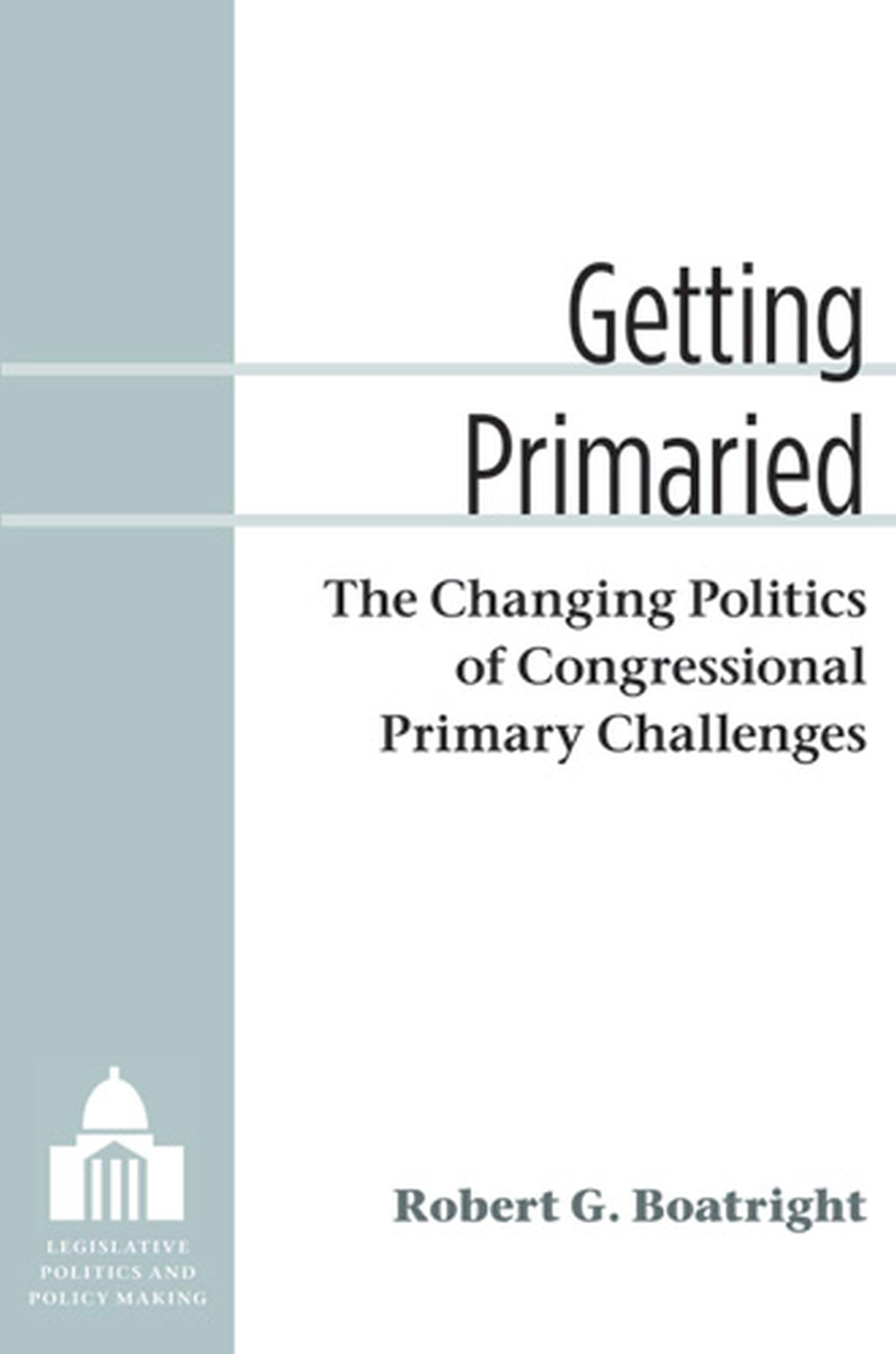
Each of the past few election cycles has featured at least one instance of "primarying," a challenge to an incumbent on the grounds that he or she is not sufficiently partisan. For many observers, such races signify an increasingly polarized electorate and an increasing threat to moderates of both parties.In Getting Primaried, Robert G. Boatright shows that primary challenges are not becoming more frequent; they wax and wane in accordance with partisan turnover in Congress. The recent rise of primarying corresponds to the rise of national fundraising bases and new types of partisan organizations supporting candidates around the country. National fundraising efforts and interest groupsupported primary challenges have garnered media attention disproportionate to their success in winning elections. Such challenges can work only if groups focus on a small number of incumbents.Getting Primaried makes several key contributions to congressional scholarship. It presents a history of congressional primary challenges over the past forty years, measuring the frequency of competitive challenges and distinguishing among types of challenges. It provides a correction to accounts of the link between primary competition and political polarization. Further, this study offers a new theoretical understanding of the role of interest groups in congressional elections.
⚠️ WARNING (California Proposition 65):
This product may contain chemicals known to the State of California to cause cancer,
birth defects, or other reproductive harm.
For MAP (Minimum Advertised Price) violations and Intellectual Property (IP) or Trademark concerns, please contact:
support@ergodebooks.com
⚠️ California Proposition 65 Warning: Some products sold on this website may expose you to chemicals known to the State of California to cause cancer, birth defects, or other reproductive harm. For more information, visit www.P65Warnings.ca.gov.