If you have any questions, you are always welcome to contact us. We'll get back to you as soon as possible, withing 24 hours on weekdays.
Customer service
All questions about your order, return and delivery must be sent to our customer service team by e-mail at yourstore@yourdomain.com
Sale & Press
If you are interested in selling our products, need more information about our brand or wish to make a collaboration, please contact us at press@yourdomain.com
Help
If you have any questions, you are always welcome to contact us. We'll get back to you as soon as possible, withing 24 hours on weekdays.
Customer service
All questions about your order, return and delivery must be sent to our customer service team by e-mail at yourstore@yourdomain.com
Sale & Press
If you are interested in selling our products, need more information about our brand or wish to make a collaboration, please contact us at press@yourdomain.com
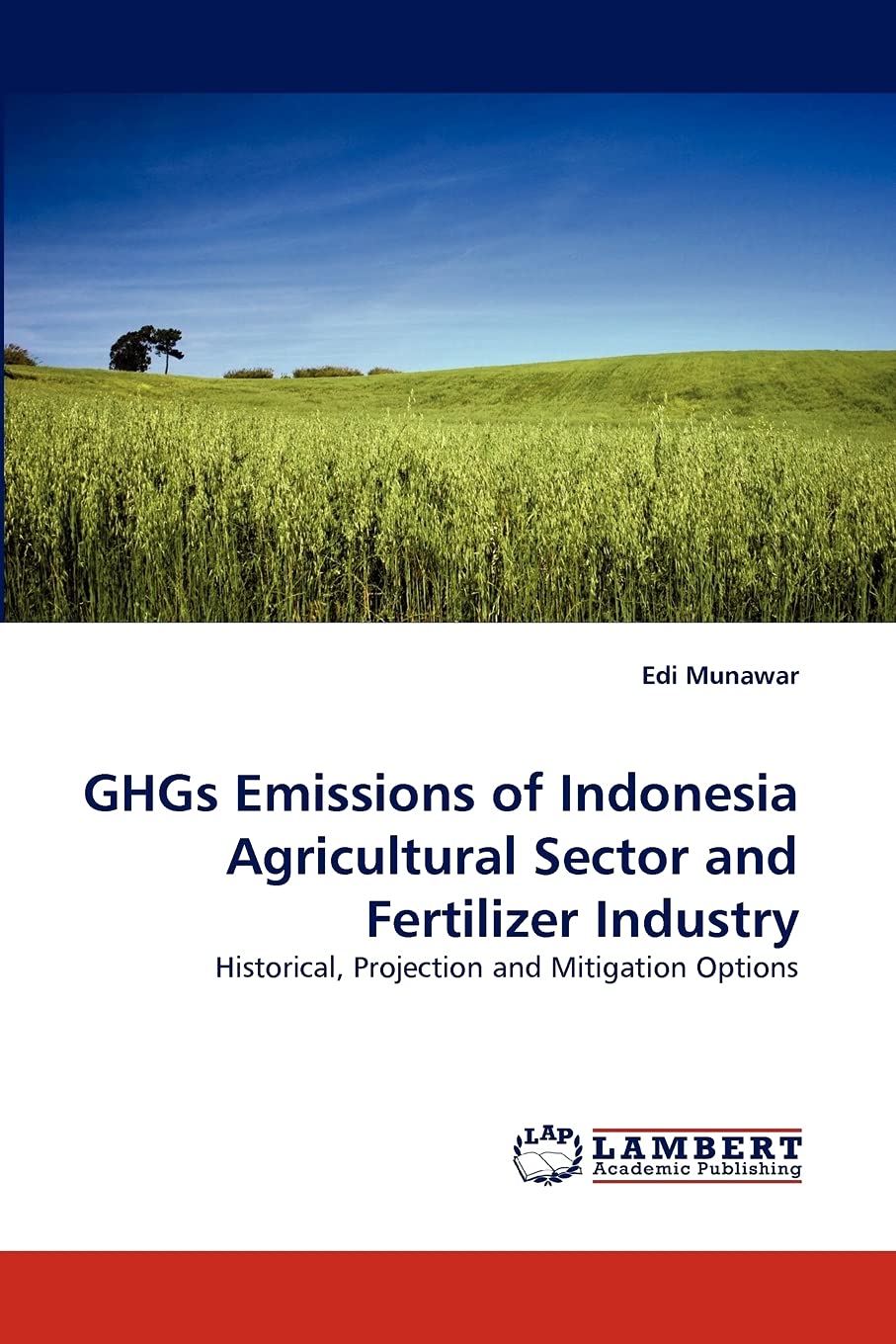
As the biggest an agricultural country in South East Asia, GHGs emission of this Indonesian agricultural sector is most important emission source after energy and transport sectors. GHGs emissions of Indonesian agricultural within three decades increase on average 1.4% per year reached 88,625 Gg CO2 equivalents by 2002. This level is increase for 53% compared to emissions level in 1970. GHGs emission of Indonesian agricultural sector projected increase to be 105,288 Gg CO2 equivalents in 2020 if there are no mitigation actions, which primary crops and livestock subsectors still major emissions sources. On the other hand, the urea fertilizer plant releases much GHGs due to fossil fuel combustion and unutilized CO2 as over production during urea production. The energy audit carryout at five urea fertilizer plant shown that around 7,997 9,946 TJ per year of fossil fuel were consumed by urea fertilizer plant, where around half of them were utilized for natural gas reforming process. In this study three mitigation options were simulated to reduce of this sector. The simulation results show, the GHGs emission of Indonesian agricultural sector by 2020 can decrease up to 5.2%.
⚠️ WARNING (California Proposition 65):
This product may contain chemicals known to the State of California to cause cancer,
birth defects, or other reproductive harm.
For MAP (Minimum Advertised Price) violations and Intellectual Property (IP) or Trademark concerns, please contact:
support@ergodebooks.com
⚠️ California Proposition 65 Warning: Some products sold on this website may expose you to chemicals known to the State of California to cause cancer, birth defects, or other reproductive harm. For more information, visit www.P65Warnings.ca.gov.