If you have any questions, you are always welcome to contact us. We'll get back to you as soon as possible, withing 24 hours on weekdays.
Customer service
All questions about your order, return and delivery must be sent to our customer service team by e-mail at yourstore@yourdomain.com
Sale & Press
If you are interested in selling our products, need more information about our brand or wish to make a collaboration, please contact us at press@yourdomain.com
Help
If you have any questions, you are always welcome to contact us. We'll get back to you as soon as possible, withing 24 hours on weekdays.
Customer service
All questions about your order, return and delivery must be sent to our customer service team by e-mail at yourstore@yourdomain.com
Sale & Press
If you are interested in selling our products, need more information about our brand or wish to make a collaboration, please contact us at press@yourdomain.com
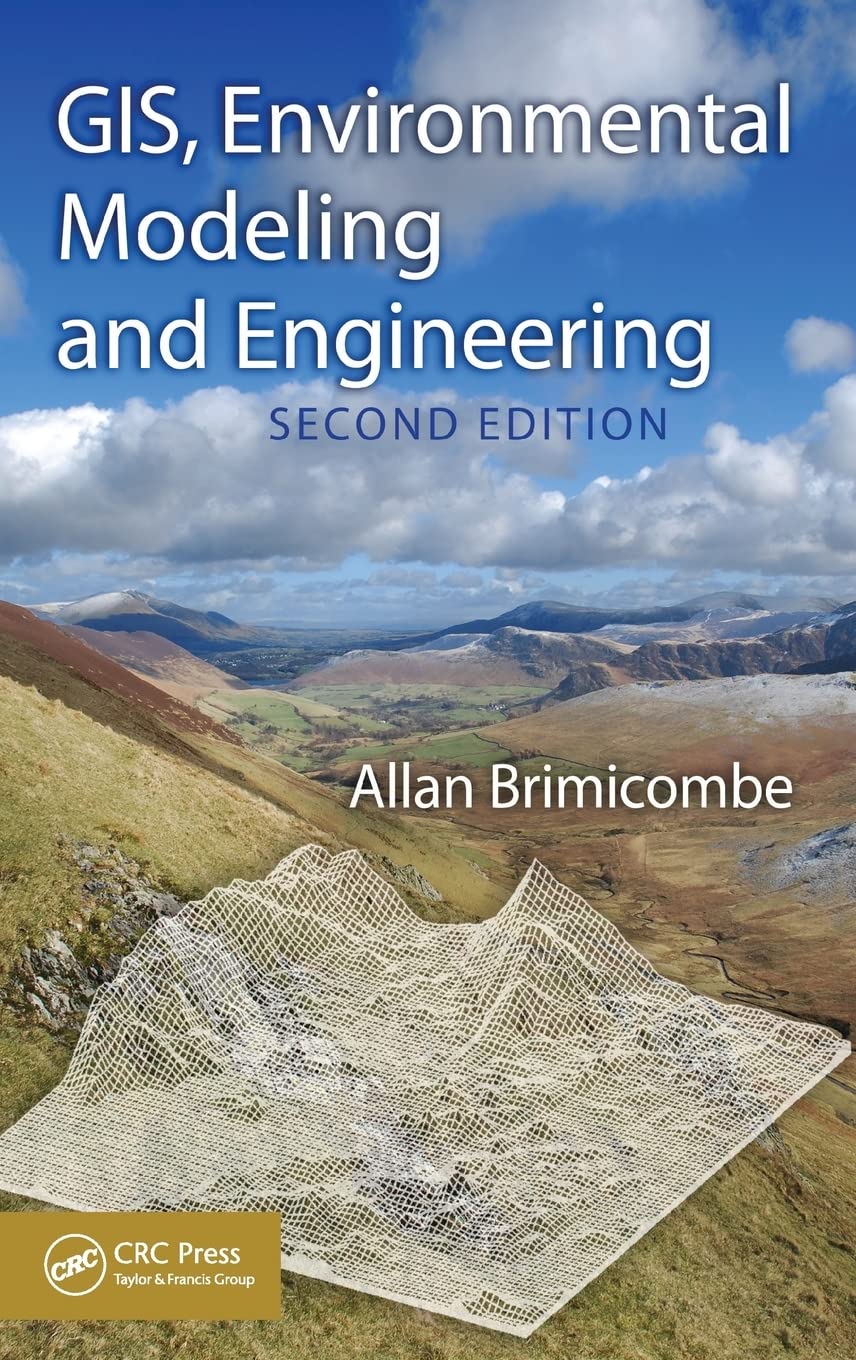
Spatial dimensions need to be properly captured if modeling and engineering techniques are to be successfully applied in addressing environmental problems. The links between the geographical information systems (GIS) that capture this data, simulation modeling, and engineering offer tremendous possibilities for building versatile support systems for managing the environment. GIS, Environmental Modeling and Engineering focuses on using GIS and external models to solve real environmental problems, promoting the critical thinking needed for the effective applications of these systems and their analytical outputs.Divided into three major sections, this textbook first concentrates on defining GIS, identifying how data is structured, and explaining common functionality. The text examines GIS from a technological perspective, exploring the evolution of its scientific basis and its synergies with other technologies within a geocomputational paradigm. The next section explores modeling from a neutral scientific perspective in its role of simulating phenomena, as well as from a more specific perspective in its role within environmental science and engineering. The third and largest section looks at how GIS and simulation modeling are joined. It provides case studies and covers issues such as interoperability, data quality, model validity, spacetime dynamics, and decisionsupport systems.This volume provides seniors and postgraduate students with a structured, coherent text that goes beyond introductory subject matter by enabling readers to think critically about the data acquisition process and the results they get from the technology.
⚠️ WARNING (California Proposition 65):
This product may contain chemicals known to the State of California to cause cancer,
birth defects, or other reproductive harm.
For MAP (Minimum Advertised Price) violations and Intellectual Property (IP) or Trademark concerns, please contact:
support@ergodebooks.com
⚠️ California Proposition 65 Warning: Some products sold on this website may expose you to chemicals known to the State of California to cause cancer, birth defects, or other reproductive harm. For more information, visit www.P65Warnings.ca.gov.