
Title
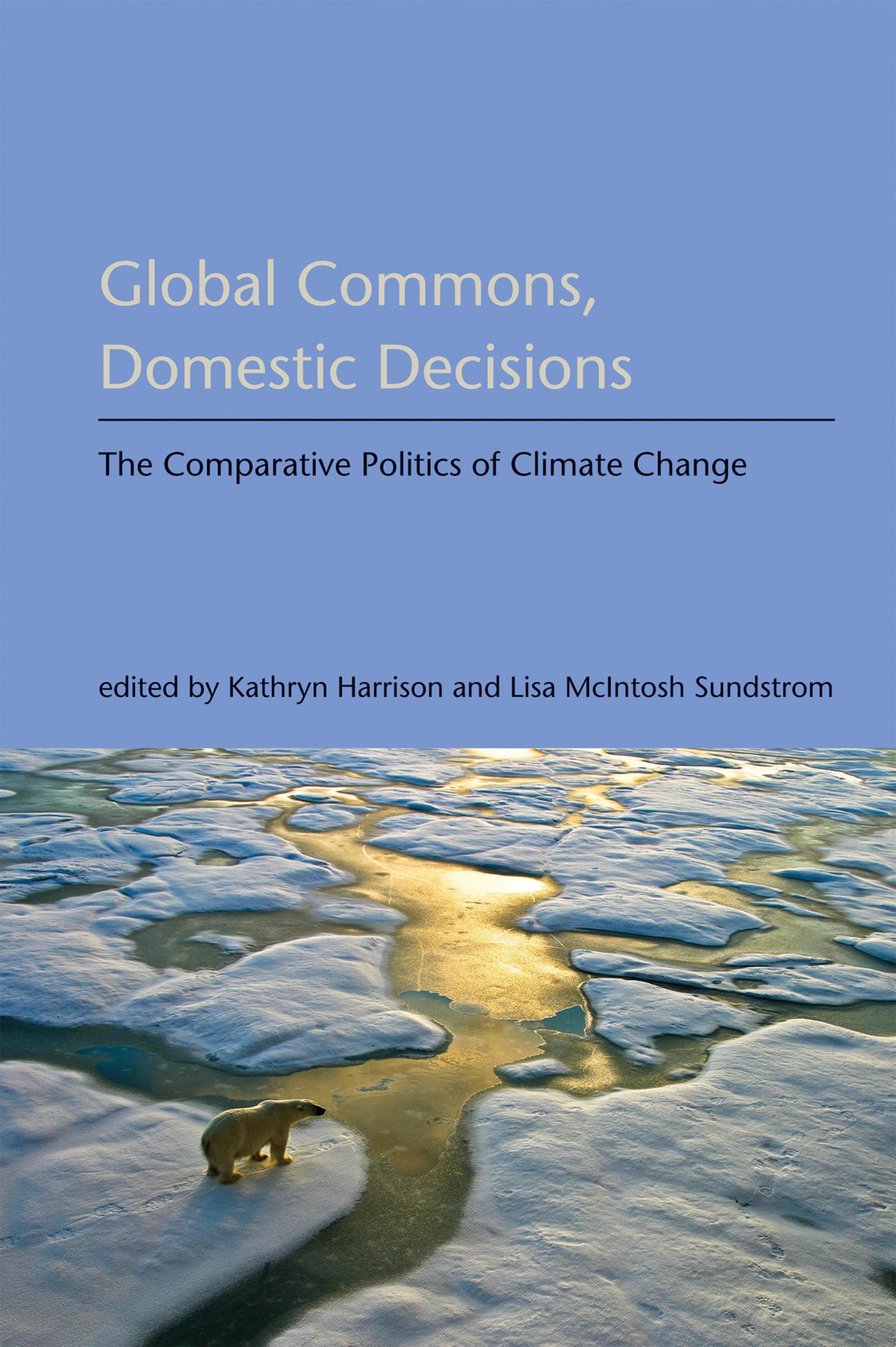
Global Commons, Domestic Decisions: The Comparative Politics of Climate Change (American and Comparative Environmental Policy),Used
Sold by Ergodebooks, an authorized reseller.
Returns accepted within 30 days | support@ergodebooks.com
Shipping Information
- Free Standard Shipping — United States only
- Processing Time: 3–5 business days
- Estimated Delivery: 6–10 business days after dispatch
- Double-boxed, fully insured & discreetly packaged
- Tracking number sent via email once dispatched
Returns & Refund
Returns accepted within 30 days of delivery.
Damaged or Defective Item
Free return shipping + replacement or full refund
Wrong Item Received
Free return shipping + replacement or full refund
Change of Mind
Return shipping at customer's expense · 25% restocking fee applies
Payment Option

Comparative case studies and analyses of the influence of domestic politics on countries' climate change policies and Kyoto ratification decisions.Climate change represents a tragedy of the commons on a global scale, requiring the cooperation of nations that do not necessarily put the Earth's wellbeing above their own national interests. And yet international efforts to address global warming have met with some success; the Kyoto Protocol, in which industrialized countries committed to reducing their collective emissions, took effect in 2005 (although without the participation of the United States). Reversing the lens used by previous scholarship on the topic, Global Commons, Domestic Decisions explains international action on climate change from the perspective of countries' domestic politics. In an effort to understand both what progress has been made and why it has been so limited, experts in comparative politics look at the experience of seven jurisdictions in deciding whether or not to ratify the Kyoto Protocol and to pursue national climate change mitigation policies. By analyzing the domestic politics and international positions of the United States, Australia, Russia, China, the European Union, Japan, and Canada, the authors demonstrate clearly that decisions about global policies are often made locally, in the context of electoral and political incentives, the normative commitments of policymakers, and domestic political institutions. Using a common analytical framework throughout, the book offers a unique comparison of the domestic political forces within each nation that affect climate change policy and provides insights into why some countries have been able to adopt innovative and aggressive positions on climate change both domestically and internationally.
⚠️ WARNING (California Proposition 65):
This product may contain chemicals known to the State of California to cause cancer, birth defects, or other reproductive harm.
For more information, please visit www.P65Warnings.ca.gov.