
Title
Global Democracy and Sustainable Jurisprudence: Deliberative Environmental Law (Mit Press),Used
Sold by Ergodebooks, an authorized reseller.
Returns accepted within 30 days | support@ergodebooks.com
Shipping Information
- Free Standard Shipping — United States only
- Processing Time: 3–5 business days
- Estimated Delivery: 6–10 business days after dispatch
- Double-boxed, fully insured & discreetly packaged
- Tracking number sent via email once dispatched
Returns & Refund
Returns accepted within 30 days of delivery.
Damaged or Defective Item
Free return shipping + replacement or full refund
Wrong Item Received
Free return shipping + replacement or full refund
Change of Mind
Return shipping at customer's expense · 25% restocking fee applies
Payment Option

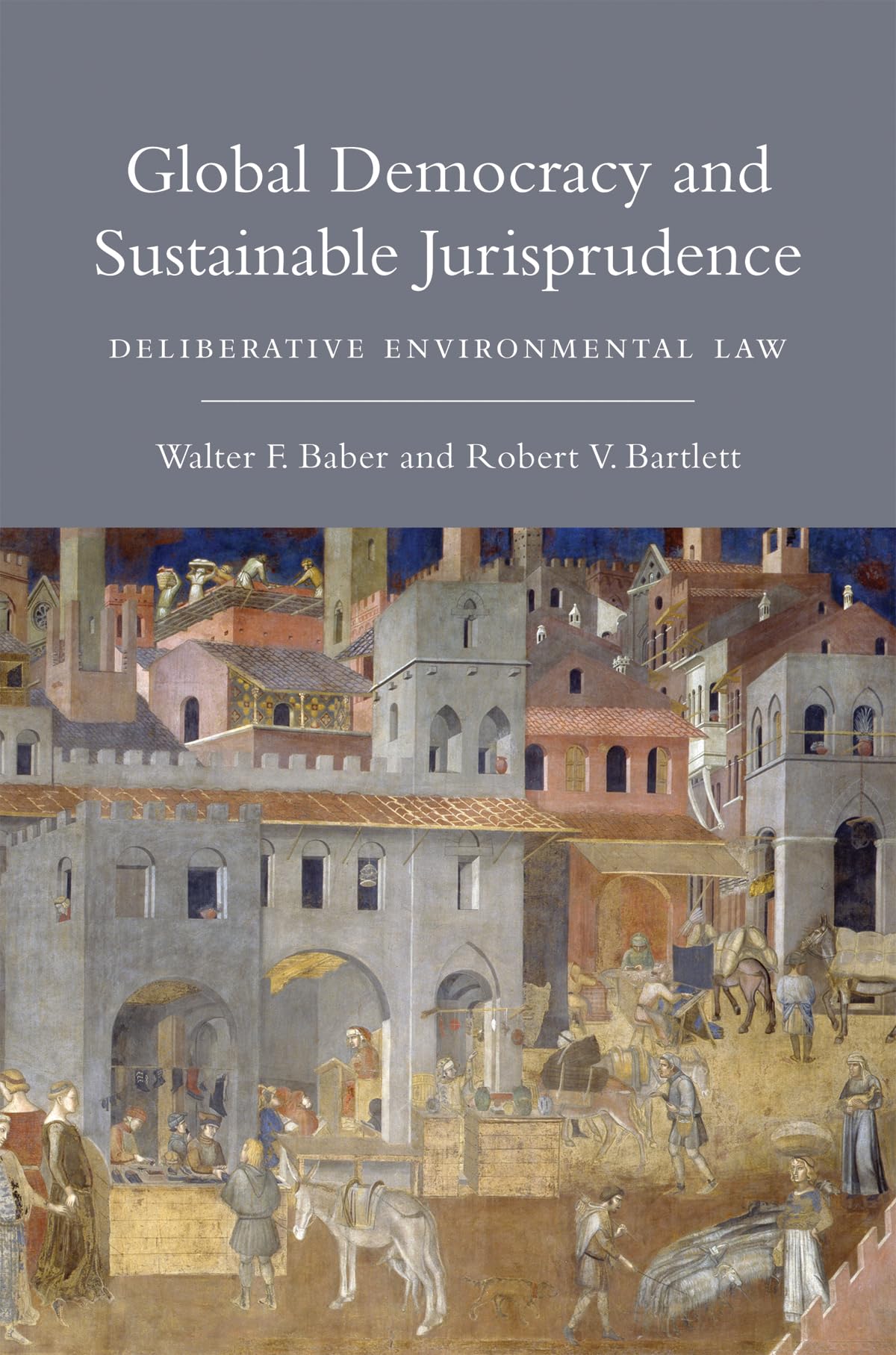
A proposal for a philosophical foundation and a realistic deliberative mechanism for creating a transnational common law for the environment.In Global Democracy and Sustainable Jurisprudence, Walter Baber and Robert Bartlett explore the necessary characteristics of a meaningful global jurisprudence, a jurisprudence that would underpin international environmental law. Arguing that theories of political deliberation offer useful insights into the current democratic deficit in international law, and using this insight as a way to approach the problem of global environmental protection, they offer both a theoretical foundation and a realistic deliberative mechanism for creating effective transnational common law for the environment. Their argument links elements not typically associated: abstract democratic theory and a practical form of deliberative democracy; the legitimacyimparting value of deliberative democracy and the possibility of legislating through adjudication; common law jurisprudence and the development of transnational environmental law; and conceptual thinking that draws on Deweyan pragmatism, Rawlsian contractarianism, Habermasian critical theory, and the full liberalism of Bohman, Gutmann, and Thompson. Baber and Bartlett offer a democratic method for creating, interpreting, and implementing international environmental norms that involves citizens and bypasses statesan innovation that can be replicated and deployed across a range of policy areas. Transnational environmental consensus would develop through a novel model of juristic democracy that would generate legitimate international environmental law based on processes of hypothetical rule making by citizen juries. This method would translate global environmental norms into international lawlaw that, unlike all current international law, would be recognized as both fact and norm because of its inherent democratic legitimacy.
⚠️ WARNING (California Proposition 65):
This product may contain chemicals known to the State of California to cause cancer, birth defects, or other reproductive harm.
For more information, please visit www.P65Warnings.ca.gov.