
Title
Global Education Inc.,Used
Sold by Ergodebooks, an authorized reseller.
Returns accepted within 30 days | support@ergodebooks.com
Shipping Information
- Free Standard Shipping — United States only
- Processing Time: 3–5 business days
- Estimated Delivery: 6–10 business days after dispatch
- Double-boxed, fully insured & discreetly packaged
- Tracking number sent via email once dispatched
Returns & Refund
Returns accepted within 30 days of delivery.
Damaged or Defective Item
Free return shipping + replacement or full refund
Wrong Item Received
Free return shipping + replacement or full refund
Change of Mind
Return shipping at customer's expense · 25% restocking fee applies
Payment Option

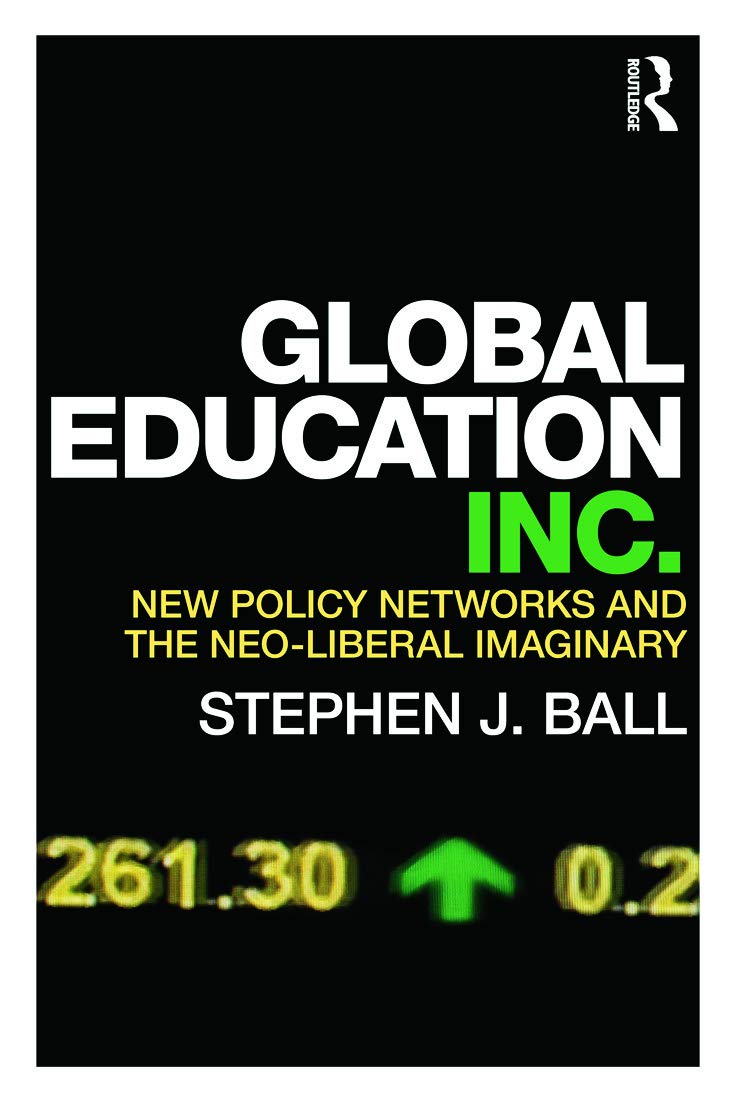
Do private and philanthropic solutions to the problems of education signal the end of state education in its welfare form?Education policy is being reformed and reworked on a global scale. Policies are flowing and converging to produce a singular vision of best practice based on the methods and tenets of the neoliberal imaginary. Philanthropy, business and the governments are coming together in new networks and sites of policy outside of the framework of the nation state. This book is a first step in recording, mapping and making sense of the most important aspects of these new relations and dynamics of policy.Using the approach of policy sociology and the methods of social network analysis, Global Education Inc. explores the policy activities of edubusinesses, neoliberal advocacy networks and policy entrepreneurs, and of social enterprises and new philanthropy. It also addresses the ways in which education and education policy itself are now being exported and bought and sold as profitable commodities and how entrenched problems of educational development and educational quality and access are now being addressed through market solutions. That is, by the involvement of private providers in the delivery of educational services, both independently and on behalf of the state.Universities, schools and education services are being acquired as assets by private equity companies. Private storefront schools are being setup by local entrepreneurs and through franchising arrangements, funded through microloans. School chains funded by philanthropy and run by multinational edubusinesses are being harnessed to the attempts of developing societies in an attempt to achieve their Millennium Development Goals and provide mass access to basic education. Curriculum materials and pedagogy software and policy ideas such as inspections, leadership, school choice and accountability are being retailed by western knowledge companies and consultants across the globe. This book argues that these new forms of policy and policymaking require new concepts and methods of policy analysis, with chapters including:Networks, Neoliberalism and Policy MobilitiesNew Philanthropy, Social Capitalism and Education PolicyPolicy as Profit: Selling and Exporting PolicyMoney, Meaning and Policy ConnectionsGlobal Education Inc. is a crucial book that will be of great interest to students of social and education policy and social and education policy analysts and researchers.
⚠️ WARNING (California Proposition 65):
This product may contain chemicals known to the State of California to cause cancer, birth defects, or other reproductive harm.
For more information, please visit www.P65Warnings.ca.gov.
- Q: How many pages does the book have? A: The book has one hundred eighty-four pages. It's a comprehensive resource for understanding global educational policies.
- Q: What is the binding type of this book? A: The book is available in paperback binding. This makes it lightweight and portable for easy reading.
- Q: What are the dimensions of the book? A: The book measures six point fourteen inches in length, zero point forty-three inches in width, and nine point twenty-one inches in height. These dimensions make it suitable for easy handling.
- Q: Who is the author of Global Education Inc.? A: The author is Stephen J. J. Ball. He is a well-known figure in the field of education policy analysis.
- Q: What category does this book fall under? A: The book falls under the category of Reform & Policy. It addresses critical issues in global education reform.
- Q: What is the primary focus of this book? A: The book focuses on the impact of private and philanthropic solutions on state education. It analyzes the new dynamics in educational policy.
- Q: Is this book suitable for education policy students? A: Yes, it is suitable for students of social and education policy. The book provides valuable insights into contemporary educational reforms.
- Q: Can I use this book for research purposes? A: Yes, it is an excellent resource for researchers in education policy. It offers a thorough analysis of modern educational dynamics.
- Q: Does this book contain any case studies? A: Yes, it includes various case studies on educational policies and practices. These case studies help illustrate the book’s key concepts.
- Q: What themes are explored in Global Education Inc.? A: The book explores themes such as neo-liberalism, philanthropy, and the commercialization of education. It critically examines the intersections of these elements.
- Q: How can I keep this book in good condition? A: To keep the book in good condition, store it in a cool, dry place and avoid exposure to direct sunlight. Handle it gently to preserve the binding.
- Q: Is this book a good option for educators? A: Yes, it is a valuable option for educators. It helps them understand the changing landscape of educational policies globally.
- Q: What can I expect from the writing style? A: The writing style is academic yet accessible. It balances theoretical insights with practical examples, making it engaging for readers.
- Q: Are there any notable critiques in the book? A: Yes, the book critiques the influence of market solutions on educational quality and access. It questions the sustainability of such approaches.
- Q: Is there a focus on international education in this book? A: Yes, the book focuses on international education and policy mobilities. It discusses how education is being exported and commercialized globally.