
Title

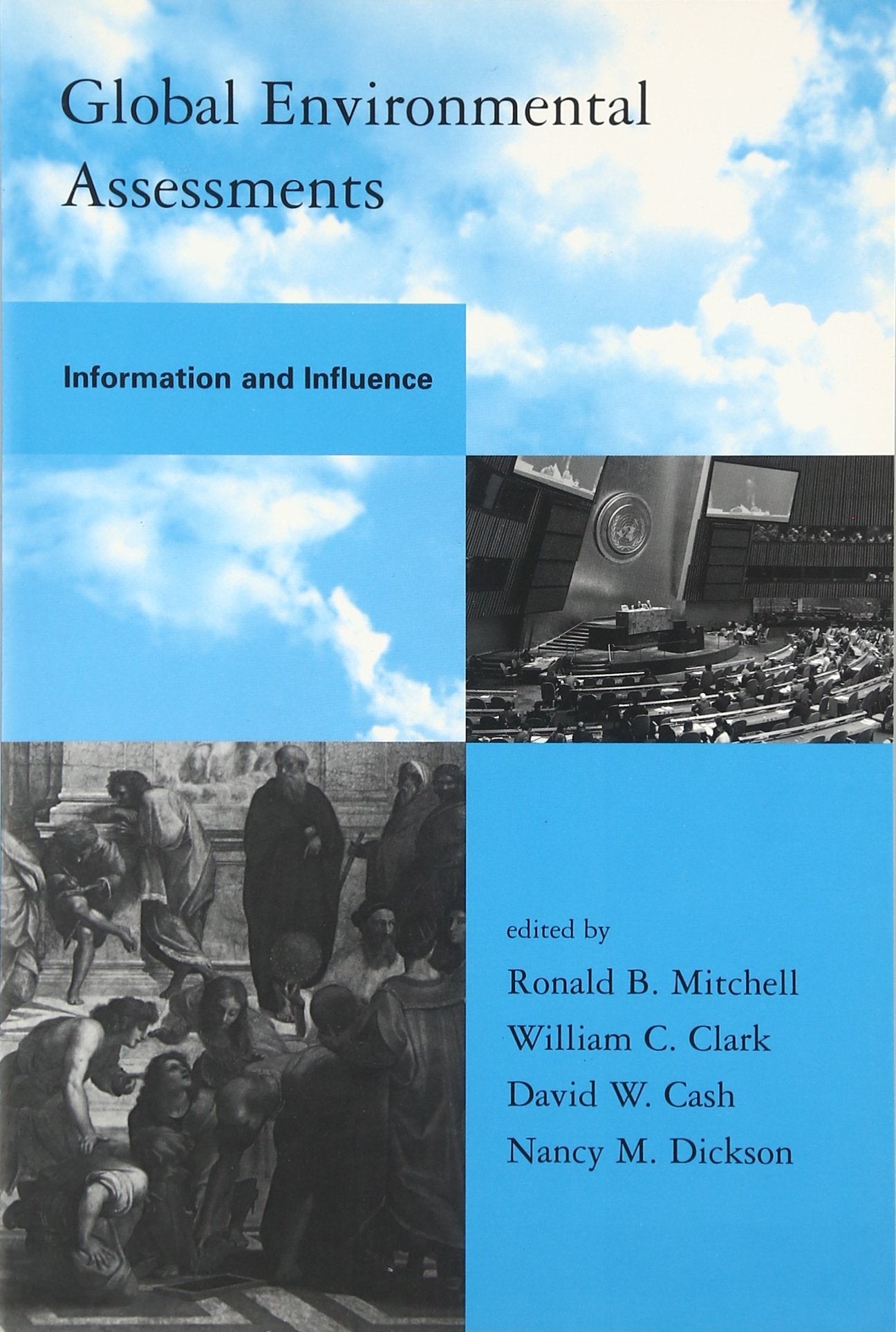
Global Environmental Assessments: Information And Influence (Global Environmental Accord: Strategies for Sustainability And Inst,Used
Sold by Ergodebooks, an authorized reseller.
Returns accepted within 30 days | support@ergodebooks.com
Shipping Information
- Free Standard Shipping — United States only
- Processing Time: 3–5 business days
- Estimated Delivery: 6–10 business days after dispatch
- Double-boxed, fully insured & discreetly packaged
- Tracking number sent via email once dispatched
Returns & Refund
Returns accepted within 30 days of delivery.
Damaged or Defective Item
Free return shipping + replacement or full refund
Wrong Item Received
Free return shipping + replacement or full refund
Change of Mind
Return shipping at customer's expense · 25% restocking fee applies
Payment Option

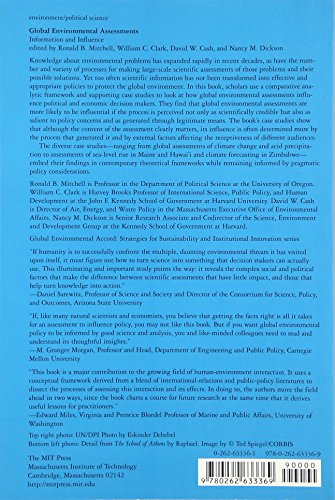
Knowledge about environmental problems has expanded rapidly in recent decades, as have the number and variety of processes for making largescale scientific assessments of those problems and their possible solutions. Yet too often scientific information has not been transformed into effective and appropriate policies to protect the global environment. In this book, scholars use a comparative analytic framework and supporting case studies to evaluate the impact of environmental assessments, looking at how, and under what conditions, global environmental assessments influence political and economic decision makers. They find that global environmental assessments are more likely to be influential if the process is perceived not only as scientifically credible but also as salient to policy concerns and as generated through legitimate means. The studies show that although the content of the assessment clearly matters, its influence is often determined more by the process that generated it and by external factors affecting the receptiveness of different audiences. Assessments that involve ongoing interactions among scientists, stakeholders, and policymakers prove particularly likely to influence behaviors.The diverse case studiesranging from global assessments of climate change and acid precipitation to assessments of sealevel rise in Maine and Hawai'i and climate forecasting in Zimbabweembed their findings in contemporary theoretical frameworks while remaining informed by pragmatic policy considerations.ContributorsLiliana B. Andonova, Frank Biermann, David W. Cash, William C. Clark, Aarti Gupta, Ronald B. Mitchell, Susanne C. Moser, Anthony Patt, Noelle Eckley Selin, Wendy E. F. Torrance, Stacy D. VanDeveer
⚠️ WARNING (California Proposition 65):
This product may contain chemicals known to the State of California to cause cancer, birth defects, or other reproductive harm.
For more information, please visit www.P65Warnings.ca.gov.