
Title
Globalization and Social Movements: Islamism, Feminism, and the Global Justice Movement,Used
Sold by Ergodebooks, an authorized reseller.
Returns accepted within 30 days | support@ergodebooks.com
Shipping Information
- Free Standard Shipping — United States only
- Processing Time: 3–5 business days
- Estimated Delivery: 6–10 business days after dispatch
- Double-boxed, fully insured & discreetly packaged
- Tracking number sent via email once dispatched
Returns & Refund
Returns accepted within 30 days of delivery.
Damaged or Defective Item
Free return shipping + replacement or full refund
Wrong Item Received
Free return shipping + replacement or full refund
Change of Mind
Return shipping at customer's expense · 25% restocking fee applies
Payment Option

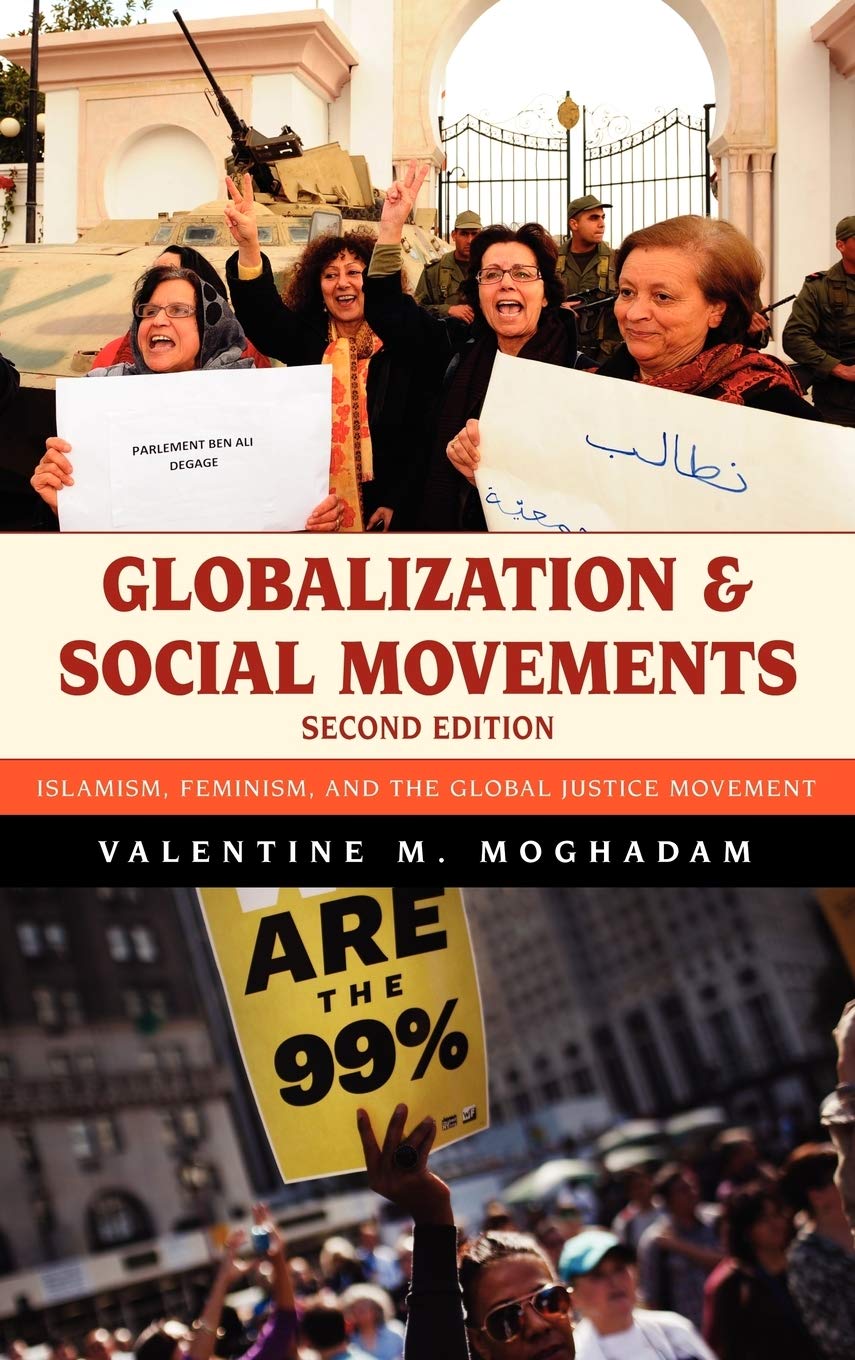
This clear and concise book examines social movements and transnational networks in the context of globalization in all its formseconomic, political, cultural, and technological alike. Deftly combining nuanced theory with rich empirical examples, leading scholar Valentine M. Moghadam focuses especially on three transnational social movementsIslamism, feminism, and global justice. Now updated to explore the European antiausterity protests, the Arab Spring, and Occupy Wall Street, the book considers the ways in which these sociopolitical protests were affected especially by the role of young people and social networking media. The book also includes a new chapter on the democratic nature of social movements, or the ways in which social movements contribute to democratization at both national and global levels. Defining globalization as a complex process in which the movement of capital, peoples, organizations, movements, and ideas takes on an increasingly international form, the author shows how growing physical and electronic mobility has helped to create dynamic global social movements.Exploring the historical roots of Islamism, feminism, and global justice, the book also shows how these movements have been stimulated by relatively recent globalization processes. Moghadam examines similarities and differences among the three movements, along with internal differentiation within each. Her argument is informed by feminist, worldsystems, world polity, and social movement theories in a seamlessly integrated framework that will be essential reading for all students of globalization.
⚠️ WARNING (California Proposition 65):
This product may contain chemicals known to the State of California to cause cancer, birth defects, or other reproductive harm.
For more information, please visit www.P65Warnings.ca.gov.