
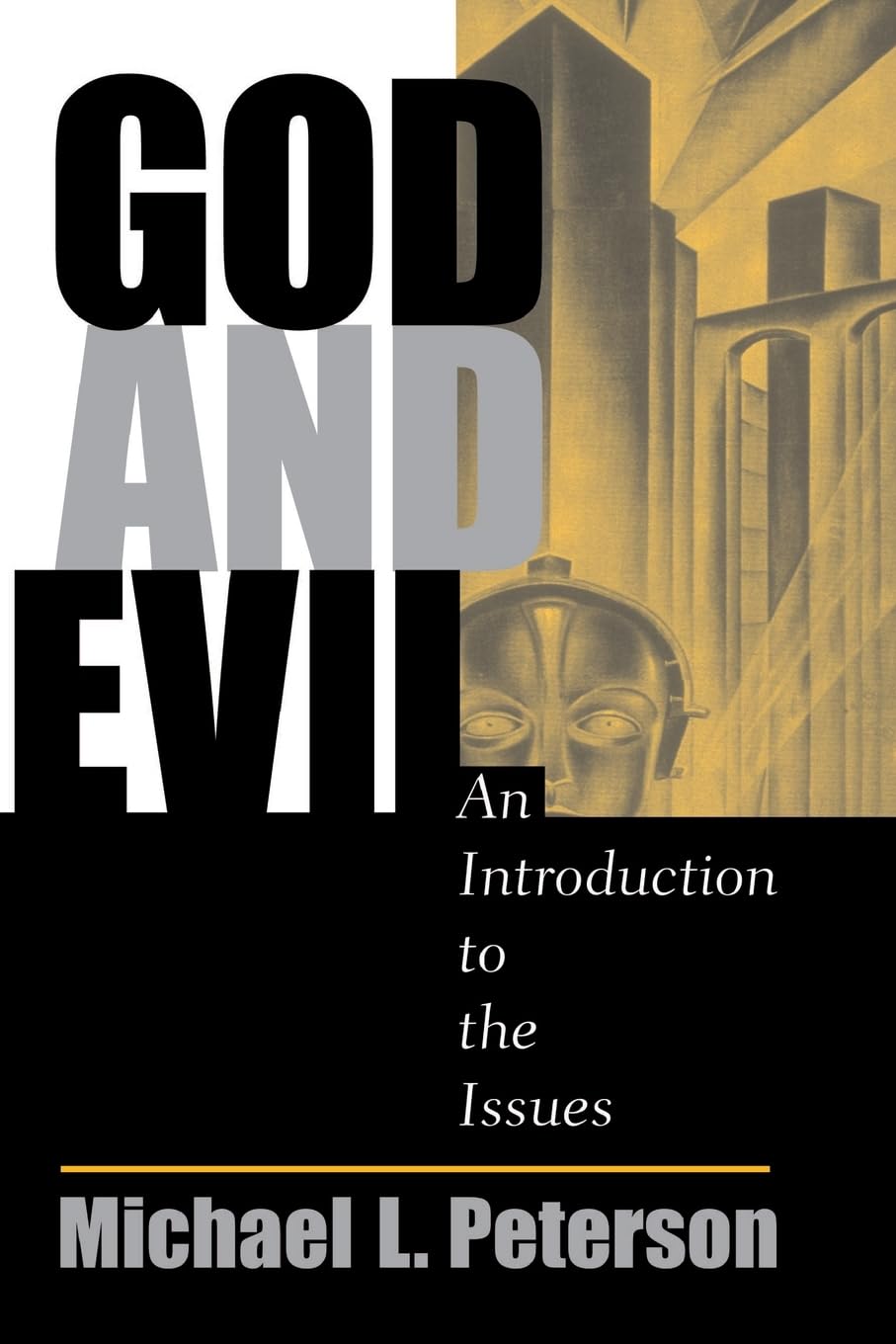
Title
God And Evil: An Introduction To The Issues,New
Sold by Ergodebooks, an authorized reseller.
Returns accepted within 30 days | support@ergodebooks.com
Shipping Information
- Free Standard Shipping — United States only
- Processing Time: 3–5 business days
- Estimated Delivery: 6–10 business days after dispatch
- Double-boxed, fully insured & discreetly packaged
- Tracking number sent via email once dispatched
Returns & Refund
Returns accepted within 30 days of delivery.
Damaged or Defective Item
Free return shipping + replacement or full refund
Wrong Item Received
Free return shipping + replacement or full refund
Change of Mind
Return shipping at customer's expense · 25% restocking fee applies
Payment Option

This concise, wellstructured survey examines the problem of evil in the context of the philosophy of religion. One of the core topics in that field, the problem of evil is an enduring challenge that Western philosophers have pondered for almost two thousand years. The main problem of evil consists in reconciling belief in a just and loving God with the evil and suffering in the world. Michael Peterson frames this issue by working through questions such as the following: What is the relation of rational belief to religious faith? What different conceptual moves are possible on either side of the issue? What responses have important thinkers advanced and which seem most promising? Is it possible to maintain religious commitment in light of evil? Peterson relies on the helpful distinction between moral and natural evil to clarify our understanding of the different aspects of the problem as well as avenues for response.The overall format of the text rests on classifying various types of argument from evil: the logical, the probabilistic, the evidential, and the existential arguments. Each type of argument has its own strategy which both theists and nontheists must recognize and develop. Giving both theistic and nontheistic perspectives fair representation, the text works through the issues of whether evil shows theistic belief to be inconsistent, improbable, discredited by the evidence, or threatened by personal crisis.Peterson explains how defensive strategies are particularly geared for responding to the logical and probabilistic arguments from evil while theodicy is an appropriate response to the evidential argument. Theodicy has traditionally been understood as the attempt to justify belief in a God who is allpowerful and allgood in light of evil. The text discusses the theodicies of Augustine, Leibniz, Hick, and Whitehead as enlightening examples of theodicy. This discussion allows Peterson to identify and evaluate a rather dominant theme in most theodicies: that evil can be justified by designating a greater good. In the end, Peterson even explores how certain types of theodicy, based on specifically Christian renditions of theism, might provide a basis for addressing the existential problem of evil. The reader of this book gains not only an intellectual grasp of the debate over God and evil in professional philosophy but also the personal benefit of thinking through one of the most important issues in human life.
⚠️ WARNING (California Proposition 65):
This product may contain chemicals known to the State of California to cause cancer, birth defects, or other reproductive harm.
For more information, please visit www.P65Warnings.ca.gov.
- Q: How many pages does the book have? A: This book has one hundred forty-four pages. It provides a concise examination of the philosophical problem of evil.
- Q: What is the binding type of the book? A: The book is available in paperback binding. This makes it lightweight and easy to handle.
- Q: What are the dimensions of the book? A: The book measures six point two six inches in length, zero point five one inches in width, and nine point two five inches in height. These dimensions make it portable for reading.
- Q: What is the main theme of the book? A: The main theme is the problem of evil in relation to the philosophy of religion. It explores the tension between belief in a loving God and the existence of evil.
- Q: Who is the author of the book? A: The author of this book is Michael L. Peterson. He is known for his work in philosophy and theology.
- Q: Is this book suitable for beginners in philosophy? A: Yes, the book is suitable for beginners. It provides a structured overview of complex philosophical issues in an accessible manner.
- Q: Can this book be used in academic courses? A: Yes, it can be used in academic courses. Its concise survey format makes it a useful resource for students studying philosophy.
- Q: How can I best engage with the content of this book? A: To engage with the content, it's recommended to take notes while reading. Reflecting on the arguments presented can enhance understanding.
- Q: Is there a specific audience this book targets? A: The book targets an audience interested in philosophy and theology. It appeals to both theistic and nontheistic perspectives.
- Q: How should I store the book to keep it in good condition? A: Store the book in a cool, dry place away from direct sunlight. This will help preserve its quality over time.
- Q: Are there any specific care instructions for the book? A: No specific care instructions are needed beyond general book care. Avoid bending or damaging the spine.
- Q: What if I receive a damaged copy of the book? A: If you receive a damaged copy, you should contact the seller for a return or exchange. Most sellers have a customer service policy for such issues.
- Q: Is there a warranty or return policy for the book? A: Typically, there is a return policy for books. Check with the retailer for specific terms regarding returns or exchanges.
- Q: Can I find alternative perspectives in this book? A: Yes, the book presents both theistic and nontheistic perspectives. It aims to provide a balanced view of the problem of evil.
- Q: What makes this book different from other philosophy books? A: This book is unique due to its focused examination of the problem of evil. It combines historical context with contemporary philosophical debates.