If you have any questions, you are always welcome to contact us. We'll get back to you as soon as possible, withing 24 hours on weekdays.
Customer service
All questions about your order, return and delivery must be sent to our customer service team by e-mail at yourstore@yourdomain.com
Sale & Press
If you are interested in selling our products, need more information about our brand or wish to make a collaboration, please contact us at press@yourdomain.com
Help
If you have any questions, you are always welcome to contact us. We'll get back to you as soon as possible, withing 24 hours on weekdays.
Customer service
All questions about your order, return and delivery must be sent to our customer service team by e-mail at yourstore@yourdomain.com
Sale & Press
If you are interested in selling our products, need more information about our brand or wish to make a collaboration, please contact us at press@yourdomain.com
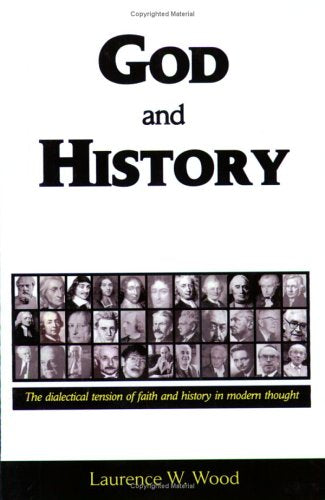
This book argues for an integrative dialectic of faith and history. It is a fresh examination of the problem of faith and history. Instead of being a mere liability, it is argued here that the strength of the Christian faith is its historicity. Although modern thought was not always friendly to Christian faith because of its deeply embedded dualism, it raised the critical intellectual issues that Christian theology needed to address. Advancing a more critical understanding of the nature of history than modern thought was generally able to achieve because of its dualistic thinking, this work argues for an integrative dialectic of historical probability and the certainty of faith. 'This book gives a comprehensive and fascinating account of the development of the idea of history in correspondence to changing conceptions of the divine reality, from its origin in Ancient Israel and in Greece all the way to the contemporary discussion. It focuses on the rise of critical historical investigation in modern times and on the struggle of modern theology to come to terms with it. It is an important contribution to this discussion. The split between fact and meaning is persuasively identified as a main obstacle and it is shown to be overcome in the reconstruction of history in the light of the eschatological future. Also very helpful is the final chapter on time (spacetime) and eternity with its emphasis on Boethius and with its critical remarks on nontrinitarian theistic notions of a personal God.' Wolfhart Pannenberg, University of Munich
⚠️ WARNING (California Proposition 65):
This product may contain chemicals known to the State of California to cause cancer,
birth defects, or other reproductive harm.
For MAP (Minimum Advertised Price) violations and Intellectual Property (IP) or Trademark concerns, please contact:
support@ergodebooks.com
⚠️ California Proposition 65 Warning: Some products sold on this website may expose you to chemicals known to the State of California to cause cancer, birth defects, or other reproductive harm. For more information, visit www.P65Warnings.ca.gov.