If you have any questions, you are always welcome to contact us. We'll get back to you as soon as possible, withing 24 hours on weekdays.
Customer service
All questions about your order, return and delivery must be sent to our customer service team by e-mail at yourstore@yourdomain.com
Sale & Press
If you are interested in selling our products, need more information about our brand or wish to make a collaboration, please contact us at press@yourdomain.com
Help
If you have any questions, you are always welcome to contact us. We'll get back to you as soon as possible, withing 24 hours on weekdays.
Customer service
All questions about your order, return and delivery must be sent to our customer service team by e-mail at yourstore@yourdomain.com
Sale & Press
If you are interested in selling our products, need more information about our brand or wish to make a collaboration, please contact us at press@yourdomain.com
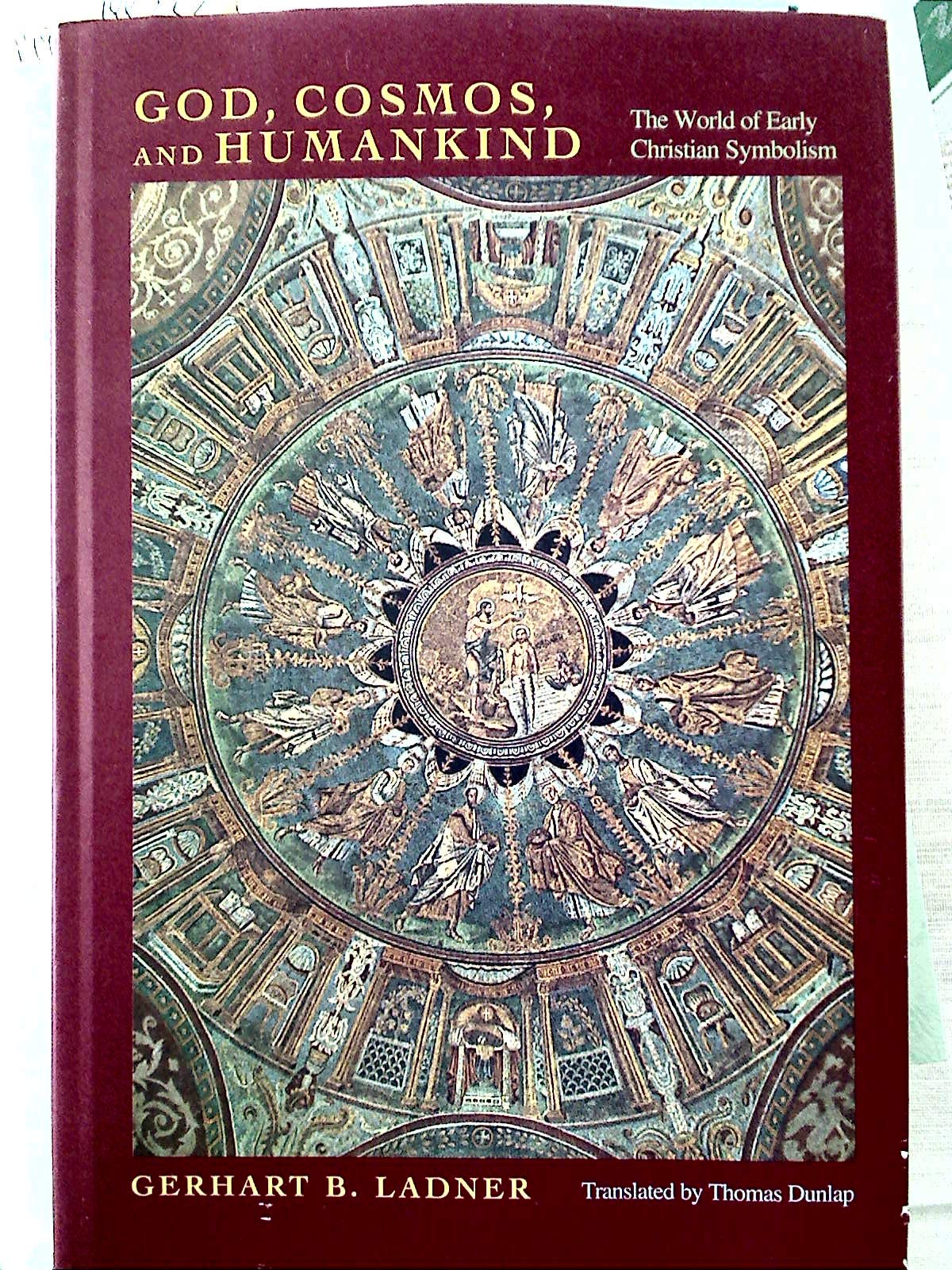
A work of remarkable scholarship and great conceptual range, God, Cosmos, and Humankind is the final book by one of the world's preeminent authorities on Medieval history and religion. A bold synthesis of art and intellectual history and the history of religion, it will certainly become recognized as the definitive study of symbolism during the first five hundred years of Christianity.The early Christians, as Gerhart Ladner shows, lived in a world where everything was seen to be both real and representative of something else, mainly God. Drawing on a wealth of primary materialsincluding the works of PseudoDionysius the Areopagite, a disciple of the apostle Paul, and the mystical zoologist PhysiologusLadner interprets for a modern audience the myriad of symbols used in late antiquity and the early Middle Ages. In doing so, he provides an essential key not only to the artwork but to the entire worldview of the period.Under three broad categoriesthe symbolism of theology, of the cosmos, and of humankindthe author maps the complete system of symbols by which the early Christians conceived of and gave order to their existence. We learn, for instance, that fire and water could mean both life and death and why three and seven were considered perfect numbers. Throughout, Ladner grounds his discussion with references to extant art, illustrations of which are interspersed liberally with the text.
⚠️ WARNING (California Proposition 65):
This product may contain chemicals known to the State of California to cause cancer,
birth defects, or other reproductive harm.
For MAP (Minimum Advertised Price) violations and Intellectual Property (IP) or Trademark concerns, please contact:
support@ergodebooks.com
⚠️ California Proposition 65 Warning: Some products sold on this website may expose you to chemicals known to the State of California to cause cancer, birth defects, or other reproductive harm. For more information, visit www.P65Warnings.ca.gov.