If you have any questions, you are always welcome to contact us. We'll get back to you as soon as possible, withing 24 hours on weekdays.
Customer service
All questions about your order, return and delivery must be sent to our customer service team by e-mail at yourstore@yourdomain.com
Sale & Press
If you are interested in selling our products, need more information about our brand or wish to make a collaboration, please contact us at press@yourdomain.com
Help
If you have any questions, you are always welcome to contact us. We'll get back to you as soon as possible, withing 24 hours on weekdays.
Customer service
All questions about your order, return and delivery must be sent to our customer service team by e-mail at yourstore@yourdomain.com
Sale & Press
If you are interested in selling our products, need more information about our brand or wish to make a collaboration, please contact us at press@yourdomain.com
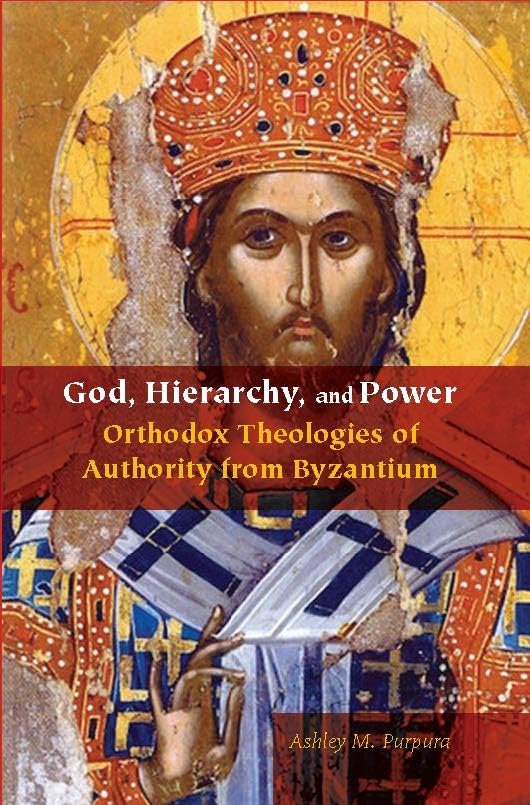
In the current age where democratic and egalitarian ideals have preeminence, Eastern Orthodox Christianity, among other hierarchically organized religious traditions, faces the challenging questions: Why is hierarchy maintained as the model of organizing the church, and what are the theological justifications for its persistence? These questions are especially significant for historically and contemporarily understanding how Orthodox Christians negotiate their spiritual ideals with the challenges of their social and ecclesiastical realities.To critically address these questions, this book offers four case studies of historically disparate Byzantine theologians from the sixth to the fourteenthcenturiesDionysius the Areopagite, Maximus the Confessor, Niketas Stethatos, and Nicholas Cabasilaswho significantly reflect on the relationship between spiritual authority, power, and hierarchy in theoretical, liturgical, and practical contexts. Although Dionysius the Areopagite has been the subject of much scholarly interest in recent years, the applied theological legacy of his development of hierarchy in the Christian East has not before been explored.Relying on a common Dionysian heritage, these Byzantine authors are brought into a common dialogue to reveal a tradition of constructing authentic ecclesiastical hierarchy as foremost that which communicates divinity.
⚠️ WARNING (California Proposition 65):
This product may contain chemicals known to the State of California to cause cancer,
birth defects, or other reproductive harm.
For MAP (Minimum Advertised Price) violations and Intellectual Property (IP) or Trademark concerns, please contact:
support@ergodebooks.com
⚠️ California Proposition 65 Warning: Some products sold on this website may expose you to chemicals known to the State of California to cause cancer, birth defects, or other reproductive harm. For more information, visit www.P65Warnings.ca.gov.