If you have any questions, you are always welcome to contact us. We'll get back to you as soon as possible, withing 24 hours on weekdays.
Customer service
All questions about your order, return and delivery must be sent to our customer service team by e-mail at yourstore@yourdomain.com
Sale & Press
If you are interested in selling our products, need more information about our brand or wish to make a collaboration, please contact us at press@yourdomain.com
Help
If you have any questions, you are always welcome to contact us. We'll get back to you as soon as possible, withing 24 hours on weekdays.
Customer service
All questions about your order, return and delivery must be sent to our customer service team by e-mail at yourstore@yourdomain.com
Sale & Press
If you are interested in selling our products, need more information about our brand or wish to make a collaboration, please contact us at press@yourdomain.com
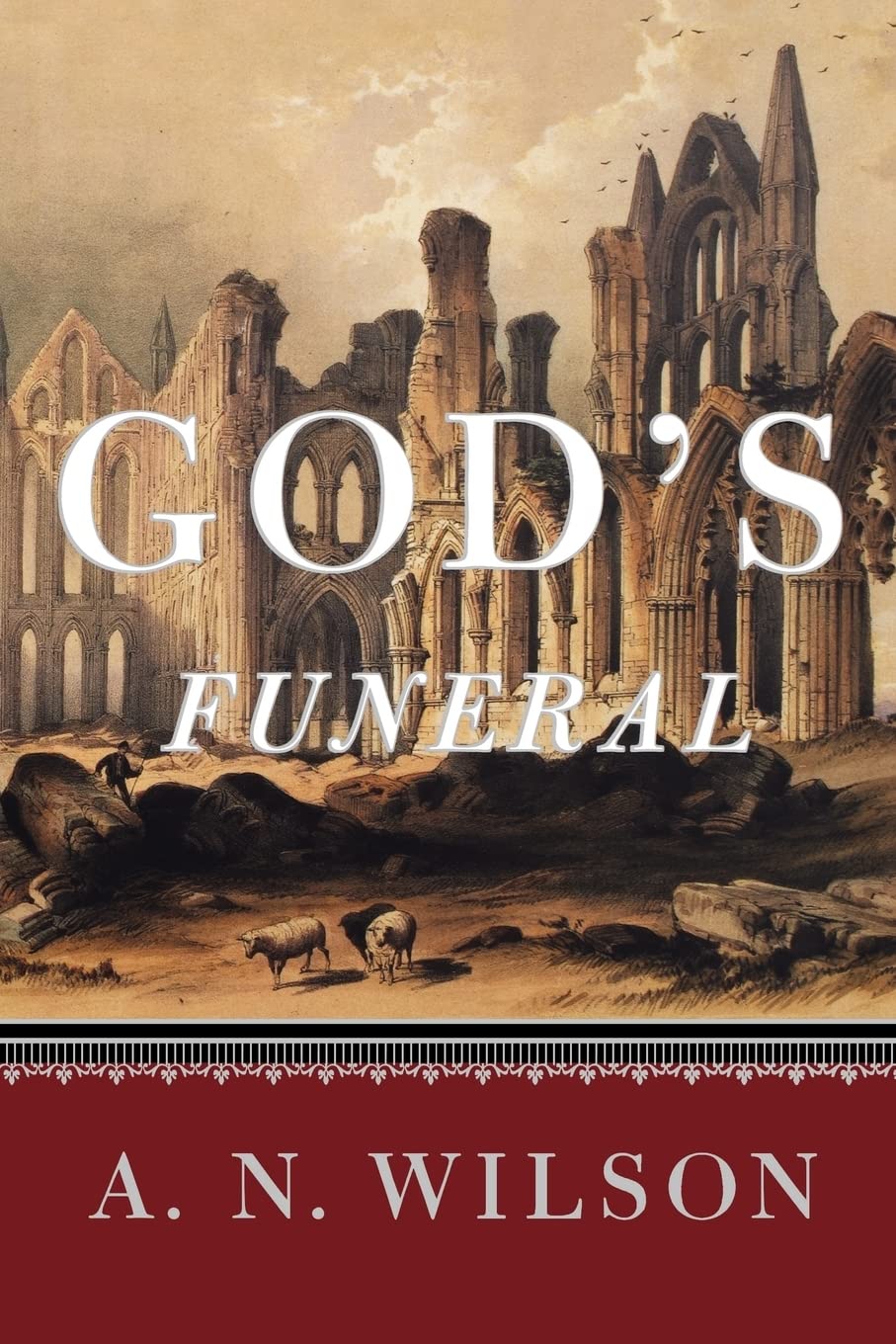
A magisterial, colorful narrative illuminating the central tragedy of the nineteenth century: that God (or man's faith in him) died, but the need to worship remained as a torment to those who thought they had buried Him.By the end of the nineteenth century, almost all the great writers, artists, and intellectuals had abandoned Christianity, and many abandoned belief in God altogether. This was partly the result of scientific discovery, particularly the work of Charles Darwin in The Origin of Species. (No reader here will soon forget the venomous Oxford debate between Thomas Huxley, brilliant defender of Darwin, and Bishop Wilberforce in 1860.) But as Wilson demonstrates in such fascinatingly diverse lives as those of Gibbon, Kant, Marx, Carlyle, George Eliot, and Sigmund Freud, the doubt about religion had many sources. By 1900, the Church of England, so vastly rich, so politically and socially powerful, could be pronounced spiritually empty, however full its pews might be on a Sunday. Echoes of the "Death of God" could be found practically everywhere: in the revolutionary politics of Garibaldi and Lenin; in the poetry of Tennyson and the novels of Hardy; in the work of Freud, connecting this "death" to our deepest wishes; and in the decline of hierarchical (male) authority and the first stirrings of feminism. Wilson's exquisitely detailed argument reveals the growth of a new imaginative order of unbelief that supplanted organized religion, and left in its wake a devastating sense of loss extending to our own times.
⚠️ WARNING (California Proposition 65):
This product may contain chemicals known to the State of California to cause cancer,
birth defects, or other reproductive harm.
For MAP (Minimum Advertised Price) violations and Intellectual Property (IP) or Trademark concerns, please contact:
support@ergodebooks.com
⚠️ California Proposition 65 Warning: Some products sold on this website may expose you to chemicals known to the State of California to cause cancer, birth defects, or other reproductive harm. For more information, visit www.P65Warnings.ca.gov.