
Title
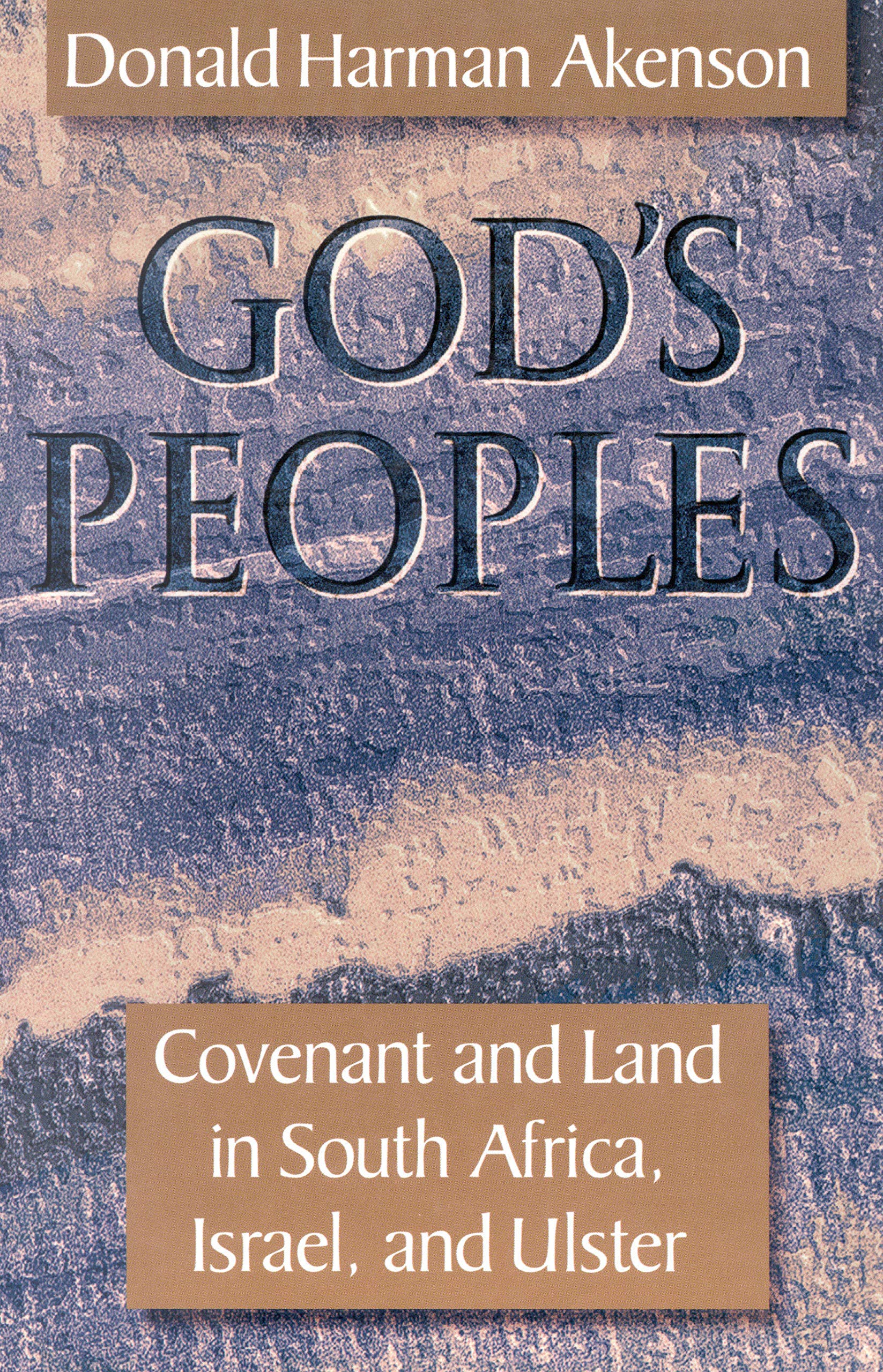
God'S Peoples: Covenant And Land In South Africa, Israel, And Ulster (Volume 10) (Mcgillqueens Studies In The Hist Of Re)
Sold by Ergodebooks, an authorized reseller.
Returns accepted within 30 days | support@ergodebooks.com
Shipping Information
- Free Standard Shipping — United States only
- Processing Time: 3–5 business days
- Estimated Delivery: 6–10 business days after dispatch
- Double-boxed, fully insured & discreetly packaged
- Tracking number sent via email once dispatched
Returns & Refund
Returns accepted within 30 days of delivery.
Damaged or Defective Item
Free return shipping + replacement or full refund
Wrong Item Received
Free return shipping + replacement or full refund
Change of Mind
Return shipping at customer's expense · 25% restocking fee applies
Payment Option

To See The Voortrekker Monument In Pretoria Is To Recognize At Once That It Was Built To Humble The Observer. With Walls As Thick As Parts Of The Maginot Line, And Ambushments That Would Do Credit To A Medieval Fortress, This South African National Museum Would Serve Equally As Well As A Defensive Outpost. What Mentality Would Create Such An Imposing Structure? We Can Find The Same Outlook Half A World Away In The Fortified Homesteads That Ulsterscots Built To Protect Themselves Against Indigenous Catholics, And In The Military Settlements Of West Bank Israeli Farmers. Akenson First Examines How The Pattern Of Relations Between God And The Prophets Recorded In The Scriptures Became The Template For All Three Cultures. He Identifies Several Beliefs Which Are Common To Afrikaners, Israelis, And Ulsterscots: Devotion To An Anthropomorphized And Warlike God, Belief In The Threat Of An External Enemy, Commitment To A Particular Land And To The Legacy Of An Exodus Experience, Belief In The Importance Of Social Law, And Acceptance Of An Ethos Of Group Purity. He Then Reconstructs The Preconditions Of A Covenantal Culture, Showing How Each Nation Became Fully Covenantal Only After It Was Able To Take Control Of The State With The Partition Of Ireland In 1920 And The Independence Of The Republic Of South Africa And Of Israel In 1948. Turning To Recent Political History, He Considers The Strategies Each Of The Peoples Used To Secure Its Status, Varying From Diverse Forms Of Preference To, In The Case Of Apartheid, Formal Exclusion Of Noncovenantal Peoples. Akenson Also Assesses The Future Prospects Of These Societies, Identifying A Gradual Dissolution Of The Covenantal Mindset In Individuals In Contemporary South Africa And Northern Ireland. However, In The Land Whose People First Sketched Out The Notion Of Covenant In The Late Bronze Age, He Detects No Softening Of The Adamantine Commitment To Its Fulfilment. God'S Peoples Will Be Vital Reading For Anyone Concerned With Issues Of Human Rights And Religious Freedom, Including Policy Makers, Cultural And Religious Historians, Sociologists, Social Psychologists, Political Scientists, And Others Interested In The Histories Of South Africa, Northern Ireland, And The Middle East.
⚠️ WARNING (California Proposition 65):
This product may contain chemicals known to the State of California to cause cancer, birth defects, or other reproductive harm.
For more information, please visit www.P65Warnings.ca.gov.
- Q: What is the size of the book? A: The book measures six point two inches in length, one point two inches in width, and nine point one inches in height.
- Q: How many pages does it have? A: This book contains four hundred sixteen pages, providing an in-depth exploration of its subject matter.
- Q: What type of binding does it use? A: The book is bound in hardcover, ensuring durability and a premium feel.
- Q: Who is the author of the book? A: The author is Donald Harman Akenson, known for his expertise in cultural and religious histories.
- Q: What themes are covered in this book? A: It explores themes of covenant, land, and cultural identity among South Africa, Israel, and Ulster.
- Q: Is this book suitable for academic research? A: Yes, it is vital reading for policy makers, cultural historians, and political scientists.
- Q: What is the main focus of the book? A: The book examines the relationships between God and the Prophets across three distinct cultures.
- Q: Can this book be used in classroom settings? A: Yes, it is suitable for educational use in discussions about human rights and religious freedom.
- Q: How should I care for this book? A: Store it in a dry place, away from direct sunlight, to maintain its condition.
- Q: Is there a specific way to clean the book? A: To clean the book, use a soft, dry cloth to gently wipe the cover and pages.
- Q: Does this book contain adult content? A: No, the book is focused on historical and cultural analysis and is appropriate for general audiences.
- Q: What if I receive a damaged book? A: If the book arrives damaged, contact customer service to inquire about return or replacement options.
- Q: How can I return the book if needed? A: You can initiate a return by following the instructions provided on the retailer's website.
- Q: Is this book good for casual readers? A: While it is academically focused, casual readers interested in history will also find it engaging.
- Q: What makes this book different from others on the same topic? A: It uniquely connects the covenantal cultures of three different regions, offering a comprehensive perspective.
- Q: Are there any additional resources related to this book? A: Yes, the author has published other works that delve into similar historical themes.