
Title
Going on Being: Buddhism and the Way of Change,Used
Sold by Ergodebooks, an authorized reseller.
Returns accepted within 30 days | support@ergodebooks.com
Shipping Information
- Free Standard Shipping — United States only
- Processing Time: 3–5 business days
- Estimated Delivery: 6–10 business days after dispatch
- Double-boxed, fully insured & discreetly packaged
- Tracking number sent via email once dispatched
Returns & Refund
Returns accepted within 30 days of delivery.
Damaged or Defective Item
Free return shipping + replacement or full refund
Wrong Item Received
Free return shipping + replacement or full refund
Change of Mind
Return shipping at customer's expense · 25% restocking fee applies
Payment Option

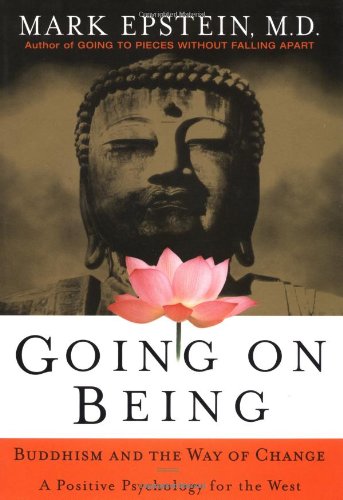
The bestselling author of Going to Pieces Without Falling Apart combines a memoir of his own journey as a student of Buddhism and psychology with a powerful message about how cultivating true selfawareness and adopting a Buddhist understanding of change can free the mind."Meditation was the vehicle that opened me up to myself, but psychotherapy, in the right hands, has similar potential. It was actually through my own therapy and my own studies of Western psychoanalytic thought that I began to understand what meditation made possible. As compelling as the language of Buddhism was for me, I needed to figure things out in Western concepts as well. Psychotherapy came after meditation in my life, but it reinforced what meditation had shown me."Before Mark Epstein became a medical student at Harvard and began training as a psychiatrist, he immersed himself in Buddhism through experiences with such influential Buddhist teachers as Ram Dass, Joseph Goldstein, and Jack Kornfield. The positive outlook of Buddhism and the meditative principle of living in the moment came to influence his study and practice of psychotherapy profoundly. Going on Beingis Epsteins memoir of his early years as a student of Buddhism and of how Buddhism shaped his approach to therapy. It is also a practical guide to how a Buddhist understanding of psychological problems makes change for the better possible.In psychotherapy, Epstein discovered a vital interpersonal parallel to meditation, but he also recognized Western psychologys tendency to focus on problems, either by attempting to eliminate them or by going into them more deeply, and how this too often results in a frustrating paralysis of analysis. Buddhism opened his eyes to another way of change. Drawing on his own life and stories of his patients, he illuminates the concept of going on being, the capacity we all have to live in a fully aware and creative state unimpeded by constraints or expectations.By chronicling how Buddhism and psychotherapy shaped his own growth, Mark Epstein has written an intimate chronicle of the evolution of spirit and psyche, and a highly inviting guide for anyone seeking a new path and a new outlook on life.
⚠️ WARNING (California Proposition 65):
This product may contain chemicals known to the State of California to cause cancer, birth defects, or other reproductive harm.
For more information, please visit www.P65Warnings.ca.gov.
- Q: How many pages does the book have? A: The book has two hundred forty pages. This length provides ample space for the author to explore themes of Buddhism and psychotherapy.
- Q: What type of binding does this book have? A: The book features a hardcover binding. This durable format is ideal for long-term use and enhances the overall reading experience.
- Q: What are the dimensions of the book? A: The book measures five point eight eight inches in length, zero point eight seven inches in width, and eight point five six inches in height. These dimensions make it portable and easy to handle.
- Q: How should I read this book? A: You can read this book at your own pace, as it is suitable for readers interested in Buddhism and psychotherapy. It provides insights into self-awareness and personal growth.
- Q: Is this book appropriate for beginners in Buddhism? A: Yes, this book is appropriate for beginners. It combines personal narrative with practical insights, making it accessible for those new to Buddhist concepts.
- Q: What age group is this book suitable for? A: This book is suitable for adults and older teens. It delves into complex themes of change and self-awareness that resonate with mature audiences.
- Q: How do I keep the book in good condition? A: To maintain the book's condition, store it in a cool, dry place away from direct sunlight. Handle it gently to avoid damage to the cover and pages.
- Q: Can I clean the book if it gets dirty? A: Yes, you can gently wipe the cover with a soft, dry cloth to remove dust. Avoid using water or cleaners that might damage the pages.
- Q: Is this book safe for children? A: No, this book is not specifically intended for children. It covers mature themes related to psychology and Buddhism that may not be suitable for younger readers.
- Q: What if the book arrives damaged? A: If the book arrives damaged, you should contact the seller for a return or exchange. Most retailers have policies in place to handle such issues.
- Q: How does this book compare to other Buddhist texts? A: This book combines personal memoir with practical guidance, differentiating it from traditional Buddhist texts that may focus solely on teachings. It offers a unique perspective on psychology and Buddhism.
- Q: Is the author of the book well-known? A: Yes, Mark Epstein is a well-known author and psychiatrist. His work is recognized for bridging Western psychology and Buddhist philosophy.
- Q: What are the main themes of this book? A: The main themes include self-awareness, the nature of change, and the integration of Buddhist principles into psychotherapy. These concepts are explored through personal anecdotes.
- Q: Are there any notable quotes from the book? A: Yes, the book contains several notable quotes that reflect the author's insights on meditation and therapy. These quotes often highlight the intersection of Buddhist thought and psychological practice.
- Q: Does this book include exercises or practical guidance? A: Yes, the book includes practical guidance on applying Buddhist principles to everyday life and psychological challenges. This makes it a useful resource for personal growth.