
Title
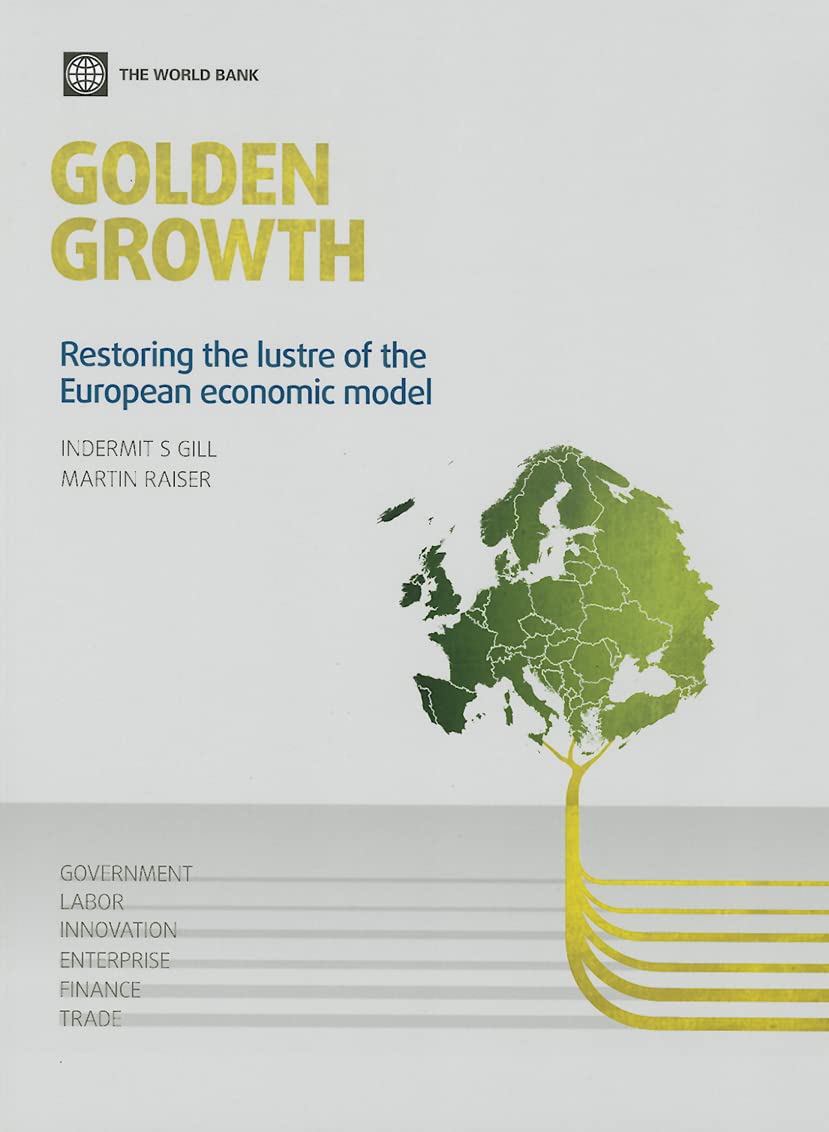
Golden Growth: Restoring the Lustre of the European Economic Model (Europe and Central Asia Studies),Used
Sold by Ergodebooks, an authorized reseller.
Returns accepted within 30 days | support@ergodebooks.com
Shipping Information
- Free Standard Shipping — United States only
- Processing Time: 3–5 business days
- Estimated Delivery: 6–10 business days after dispatch
- Double-boxed, fully insured & discreetly packaged
- Tracking number sent via email once dispatched
Returns & Refund
Returns accepted within 30 days of delivery.
Damaged or Defective Item
Free return shipping + replacement or full refund
Wrong Item Received
Free return shipping + replacement or full refund
Change of Mind
Return shipping at customer's expense · 25% restocking fee applies
Payment Option

The public debt crisis in Europe has shaken the confidence not just in the Euro, but in the European model. Aging and uneconomical Europeans are being squeezed between innovative Americans and efficient Asians, it is said. With debt and demographics dragging down them down, one hears that European economies will not grow much unless radically new ways are discovered. The end of complacency in Europe is a good thing, but this loss of confidence could be dangerous. The danger is that in a rush to rejuvenate growth, the attractive attributes of the European development model could be abandoned along with the weak. In fact, the European growth model has many strong points and enviable accomplishments. One can say without exaggeration that Europe had invented a convergence machine, taking in poor countries and helping them become high income economies. World Bank research has identified 27 countries that have grown from middleincome to high income since 1987: a few thanks to the discovery and exploitation of massive natural resources (e.g.: oil in Oman and Trinidad and Tobago), several others like Japan, Hong Kong, Singapore, Taiwan, and South Korea, embracing aggressive exportled strategies which involved working and saving a lot, postponing political liberties, and looking out only for themselves. But half of the countries that have grown from middle income to high incomeCroatia, Cyprus, Czech Republic, Estonia, Greece, Hungary, Latvia, Malta, Poland, Portugal, Slovak Republic, and Sloveniaare actually in Europe. This is why the European model was so attractive and unique, and why with some well designed efforts it ought to be made right again.
⚠️ WARNING (California Proposition 65):
This product may contain chemicals known to the State of California to cause cancer, birth defects, or other reproductive harm.
For more information, please visit www.P65Warnings.ca.gov.