
Title


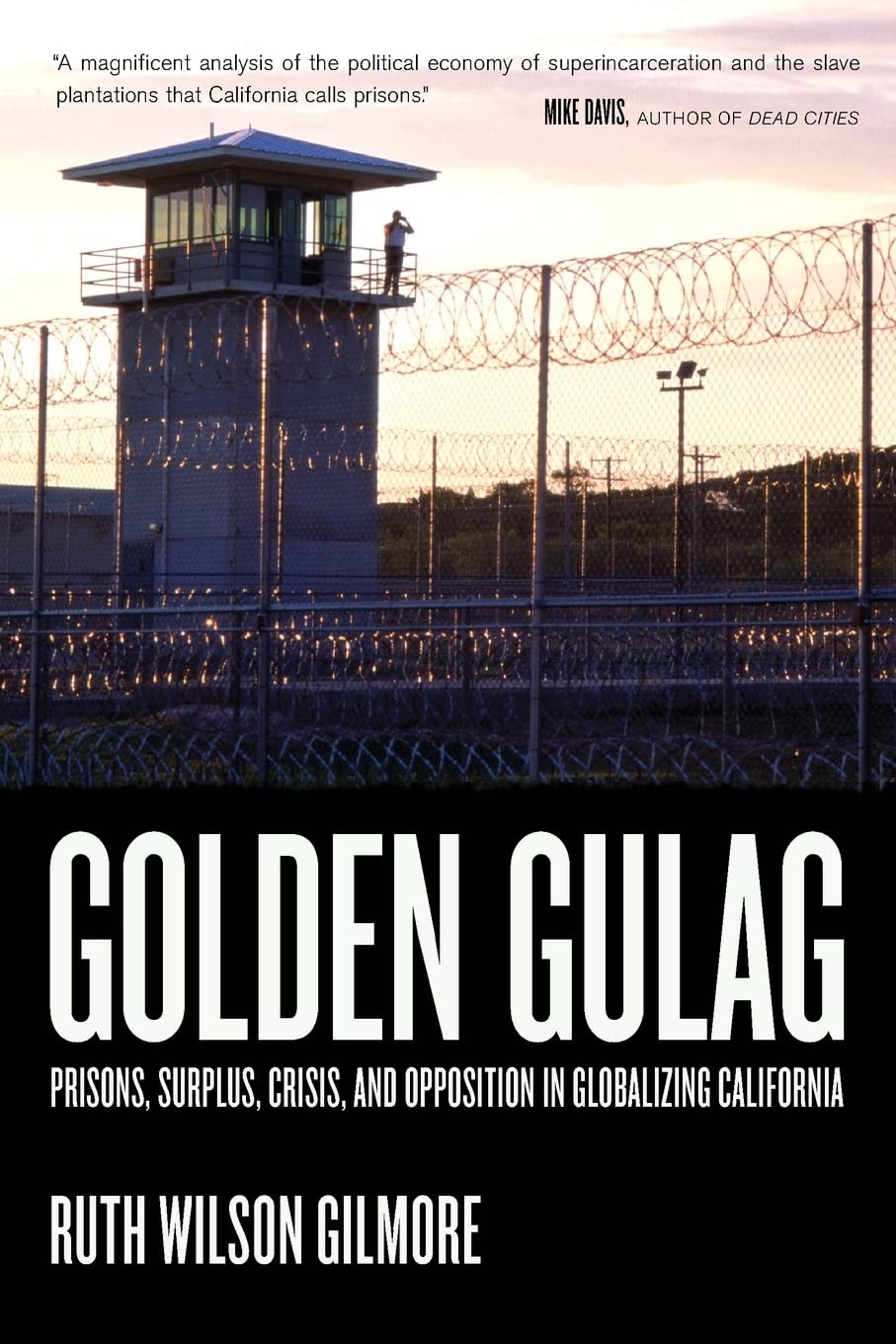
Golden Gulag: Prisons, Surplus, Crisis, and Opposition in Globalizing California (American Crossroads) (Volume 21),New
Sold by Ergodebooks, an authorized reseller.
Returns accepted within 30 days | support@ergodebooks.com
Shipping Information
- Free Standard Shipping — United States only
- Processing Time: 3–5 business days
- Estimated Delivery: 6–10 business days after dispatch
- Double-boxed, fully insured & discreetly packaged
- Tracking number sent via email once dispatched
Returns & Refund
Returns accepted within 30 days of delivery.
Damaged or Defective Item
Free return shipping + replacement or full refund
Wrong Item Received
Free return shipping + replacement or full refund
Change of Mind
Return shipping at customer's expense · 25% restocking fee applies
Payment Option

Since 1980, the number of people in U.S. prisons has increased more than 450%. Despite a crime rate that has been falling steadily for decades, California has led the way in this explosion, with what a state analyst called the biggest prison building project in the history of the world. Golden Gulag provides the first detailed explanation for that buildup by looking at how political and economic forces, ranging from global to local, conjoined to produce the prison boom.In an informed and impassioned account, Ruth Wilson Gilmore examines this issue through statewide, rural, and urban perspectives to explain how the expansion developed from surpluses of finance capital, labor, land, and state capacity. Detailing crises that hit Californias economy with particular ferocity, she argues that defeats of radical struggles, weakening of labor, and shifting patterns of capital investment have been key conditions for prison growth. The resultsa vast and expensive prison system, a huge number of incarcerated young people of color, and the increase in punitive justice such as the three strikes lawpose profound and troubling questions for the future of California, the United States, and the world. Golden Gulag provides a rich context for this complex dilemma, and at the same time challenges many cherished assumptions about who benefits and who suffers from the states commitment to prison expansion.
⚠️ WARNING (California Proposition 65):
This product may contain chemicals known to the State of California to cause cancer, birth defects, or other reproductive harm.
For more information, please visit www.P65Warnings.ca.gov.
- Q: What is the main topic of 'Golden Gulag'? A: 'Golden Gulag' discusses the dramatic increase in the prison population in California since 1980, analyzing the political and economic factors that contributed to this phenomenon.
- Q: Who is the author of 'Golden Gulag'? A: The book is authored by Ruth Wilson Gilmore, a scholar known for her work on prisons and social justice.
- Q: What is the page count of 'Golden Gulag'? A: 'Golden Gulag' contains 416 pages, providing a comprehensive examination of its subject matter.
- Q: When was 'Golden Gulag' published? A: 'Golden Gulag' was published on January 8, 2007.
- Q: What type of binding does 'Golden Gulag' have? A: 'Golden Gulag' is available in paperback binding, making it accessible for readers who prefer physical copies.
- Q: What are some key themes explored in 'Golden Gulag'? A: The book explores themes such as the economic crises in California, the growth of the prison system, and the implications for marginalized communities.
- Q: Is 'Golden Gulag' suitable for academic study? A: Yes, 'Golden Gulag' is suitable for academic study, particularly in fields related to sociology, criminal justice, and political science.
- Q: What edition of 'Golden Gulag' is available? A: 'Golden Gulag' is available in its first edition.
- Q: Does 'Golden Gulag' include any case studies or examples? A: Yes, the book includes various case studies and examples that illustrate the impact of prison growth on communities in California.
- Q: What audience is 'Golden Gulag' intended for? A: 'Golden Gulag' is intended for readers interested in social justice, criminal justice reform, and the socio-economic factors affecting the prison system.