
Title
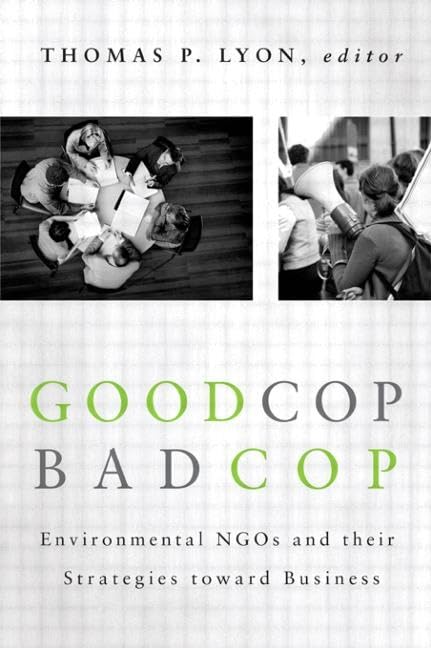
Good Cop/Bad Cop: Environmental NGOs and Their Strategies toward Business,Used
Sold by Ergodebooks, an authorized reseller.
Returns accepted within 30 days | support@ergodebooks.com
Shipping Information
- Free Standard Shipping — United States only
- Processing Time: 3–5 business days
- Estimated Delivery: 6–10 business days after dispatch
- Double-boxed, fully insured & discreetly packaged
- Tracking number sent via email once dispatched
Returns & Refund
Returns accepted within 30 days of delivery.
Damaged or Defective Item
Free return shipping + replacement or full refund
Wrong Item Received
Free return shipping + replacement or full refund
Change of Mind
Return shipping at customer's expense · 25% restocking fee applies
Payment Option

Nongovernmental organizations (NGOs) play an increasingly prominent role in addressing complex environmental issues such as climate change, persistent bioaccumulative pollutants, and the conservation of biodiversity. At the same time, the landscape in which they operate is changing rapidly. Markets, and direct engagement with industry, rather than traditional government regulation, are often the tools of choice for NGOs seeking to change corporate behavior today. Yet these new strategies are poorly understoodby business, academics, and NGOs themselves. How will NGOs choose which battles to fight, differentiate themselves from one another in order to attract membership and funding, and decide when to form alliances and when to work separately? In Good Cop/Bad Cop, Thomas P. Lyon brings together perspectives on environmental NGOs from leading social scientists, as well as leaders from within the NGO and corporate worlds, to assess the state of knowledge on the tactics and the effectiveness of environmental groups. Contributions from Greenpeace, Rainforest Action Network, the Environmental Defense Fund, and the World Wildlife Fund describe each organizations structure and key objectives, and present case studies that illustrate how each organization makes a difference, especially with regard to its strategies toward corporate engagement. To provide additional perspective, highlevel executives from BP and Ford share their views on what causes these relationships between companies and NGOs to either succeed or fail. For students of the social sciences and NGO practitioners, this book takes an important step in addressing an urgent need for objective study of NGO operations and their effectiveness.
⚠️ WARNING (California Proposition 65):
This product may contain chemicals known to the State of California to cause cancer, birth defects, or other reproductive harm.
For more information, please visit www.P65Warnings.ca.gov.