
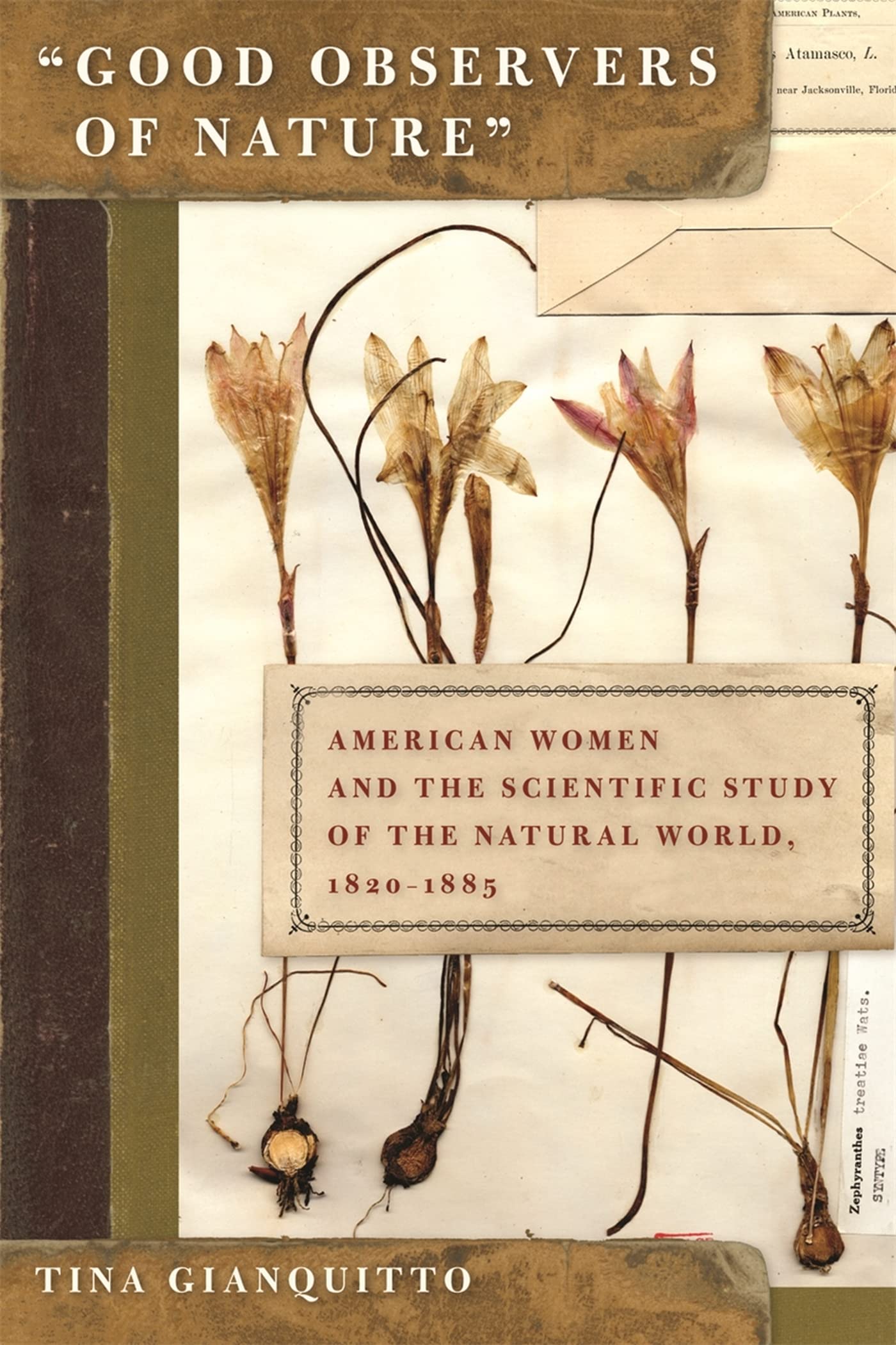
Title
Good Observers Of Nature: American Women And The Scientific Study Of The Natural World, 18201885
Sold by Ergodebooks, an authorized reseller.
Returns accepted within 30 days | support@ergodebooks.com
Shipping Information
- Free Standard Shipping — United States only
- Processing Time: 3–5 business days
- Estimated Delivery: 6–10 business days after dispatch
- Double-boxed, fully insured & discreetly packaged
- Tracking number sent via email once dispatched
Returns & Refund
Returns accepted within 30 days of delivery.
Damaged or Defective Item
Free return shipping + replacement or full refund
Wrong Item Received
Free return shipping + replacement or full refund
Change of Mind
Return shipping at customer's expense · 25% restocking fee applies
Payment Option

In Good Observers Of Nature Tina Gianquitto Examines Nineteenthcentury American Women'S Intellectual And Aesthetic Experiences Of Nature And Investigates The Linguistic, Perceptual, And Scientific Systems That Were Available To Women To Describe Those Experiences.Many Women Writers Of This Period Used The Natural World As A Platform For Discussing Issues Of Domesticity, Education, And The Nation. To What Extent, Asks Gianquitto, Did These Writers Challenge The Prevalent Sentimental Narrative Modes (Like Those Used In The Popular Flower Language Books) And Use Scientific Terminology To Describe The World Around Them? The Book Maps The Intersections Of The Main Historical And Narrative Trajectories That Inform The Answer To This Question: The Changing Literary Representations Of The Natural World In Texts Produced By Women From The 1820S To The 1880S And The Developments In Science From The Enlightenment To The Advent Of Evolutionary Biology. Though Gianquitto Considers A Range Of Women'S Nature Writing (Botanical Manuals, Plant Catalogs, Travel Narratives, Seasonal Journals, Scientific Essays), She Focuses On Four Writers And Their Most Influential Works: Almira Phelps (Familiar Lectures On Botany, 1829), Margaret Fuller (Summer On The Lakes, In 1843), Susan Fenimore Cooper (Rural Hours, 1850), And Mary Treat (Home Studies In Nature, 1885).From These Writings Emerges A Set Of Common Concerns About The Interaction Of Reason And Emotion In The Study Of Nature, The Best Vocabularies For Representing Objects In Nature (Local, Scientific, Or Moral), And The Competing Systems For Ordering The Natural World (Theological, Taxonomic, Or Aesthetic). This Is An Illuminating Study About The Culturally Assumed Relationship Between Women, Morality, And Science.
⚠️ WARNING (California Proposition 65):
This product may contain chemicals known to the State of California to cause cancer, birth defects, or other reproductive harm.
For more information, please visit www.P65Warnings.ca.gov.
- Q: How many pages does the book have? A: The book has two hundred thirty-two pages. This length allows for a comprehensive exploration of women's contributions to the scientific study of nature.
- Q: What is the binding type of this book? A: The book is paperback bound. This makes it lightweight and flexible, ideal for easy reading and transport.
- Q: What dimensions does the book have? A: The book measures six inches in length, zero point five nine inches in width, and nine point zero two inches in height. These dimensions make it a convenient size for home libraries or carrying.
- Q: Who is the author of this book? A: The author is Tina Gianquitto. She specializes in the intersection of women's studies and the natural sciences.
- Q: What genre does this book belong to? A: The book falls under the genre of Criticism and Theory. It examines historical perspectives on women's relationship with nature.
- Q: What is the main topic of the book? A: The book discusses American women's scientific study of nature from eighteen twenty to eighteen eighty-five. It highlights their intellectual and aesthetic experiences.
- Q: How should I approach reading this book? A: You can read this book as a historical study or as a critique of women's roles in science. It's suitable for anyone interested in women's contributions to nature writing.
- Q: Is this book suitable for academic study? A: Yes, this book is suitable for academic study. It provides in-depth analysis and references relevant to women's studies and environmental literature.
- Q: Does this book include discussions of specific authors? A: Yes, the book discusses specific authors such as Almira Phelps, Margaret Fuller, Susan Fenimore Cooper, and Mary Treat. Each author is analyzed for their contributions to nature writing.
- Q: Are there illustrations or images in the book? A: No, the book does not include illustrations or images. It focuses on textual analysis and historical narrative.
- Q: How can I best preserve the book? A: To preserve the book, keep it in a dry place away from direct sunlight. Avoid bending the spine to maintain its condition.
- Q: Is there a warranty for this book? A: No, there is no warranty for this book. However, you can check the return policy at the place of purchase.
- Q: What should I do if the book arrives damaged? A: If the book arrives damaged, contact the seller immediately for a return or exchange. Most retailers have a customer service policy for damaged items.
- Q: Can I gift this book to someone interested in science? A: Yes, this book makes a great gift for anyone interested in science or women's studies. Its historical context and analysis will appeal to readers in those fields.
- Q: What kind of writing styles are explored in the book? A: The book explores various writing styles, including botanical manuals, travel narratives, and scientific essays. It highlights how women shaped these genres.