
Title
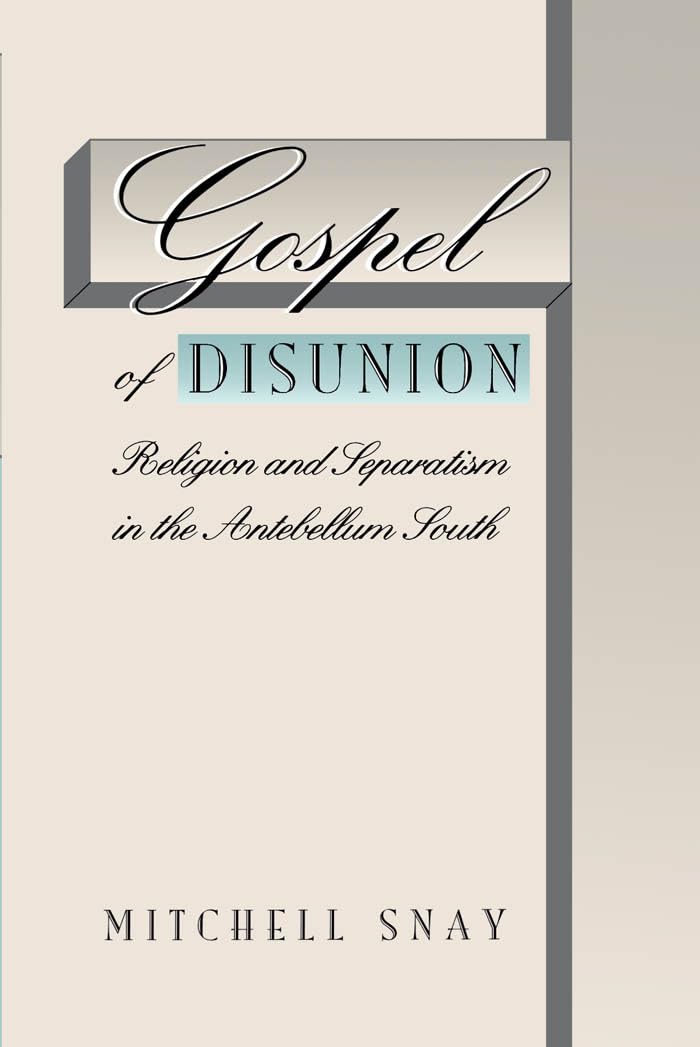
Gospel of Disunion: Religion and Separatism in the Antebellum South,Used
Sold by Ergodebooks, an authorized reseller.
Returns accepted within 30 days | support@ergodebooks.com
Shipping Information
- Free Standard Shipping — United States only
- Processing Time: 3–5 business days
- Estimated Delivery: 6–10 business days after dispatch
- Double-boxed, fully insured & discreetly packaged
- Tracking number sent via email once dispatched
Returns & Refund
Returns accepted within 30 days of delivery.
Damaged or Defective Item
Free return shipping + replacement or full refund
Wrong Item Received
Free return shipping + replacement or full refund
Change of Mind
Return shipping at customer's expense · 25% restocking fee applies
Payment Option

The centrality of religion in the life of the Old South, the strongly religious nature of the sectional controversy over slavery, and the close affinity between religion and antebellum American nationalism all point toward the need to explore the role of religion in the development of southern sectionalism. In Gospel of Disunion Mitchell Snay examines the various ways in which religion adapted to and influenced the development of a distinctive southern culture and politics before the Civil War, adding depth and form to the movement that culminated in secession. From the abolitionist crisis of 1835 through the formation of the Confederacy in 1861, Snay shows how religion worked as an active agent in translating the sectional conflict into a struggle of the highest moral significance. At the same time, the slavery controversy sectionalized southern religion, creating separate institutions and driving theology further toward orthodoxy. By establishing a biblical sanction for slavery, developing a slaveholding ethic for Christian masters, and demonstrating the viability of separation from the North through the denominational schisms of the 1830s and 1840s, religion reinforced central elements in southern political culture and contributed to a moral consensus that made secession possible.
⚠️ WARNING (California Proposition 65):
This product may contain chemicals known to the State of California to cause cancer, birth defects, or other reproductive harm.
For more information, please visit www.P65Warnings.ca.gov.
- Q: What is the main topic of 'Gospel of Disunion'? A: 'Gospel of Disunion' explores the role of religion in the development of southern sectionalism in the antebellum South, particularly its influence on the slavery controversy and the events leading up to the Civil War.
- Q: Who is the author of this book? A: The author of 'Gospel of Disunion' is Mitchell Snay, who examines the intersection of religion and politics in the Old South.
- Q: What is the condition of the book? A: 'Gospel of Disunion' is listed as a new book, ensuring that readers receive a fresh and unmarked copy.
- Q: How many pages does the book have? A: 'Gospel of Disunion' contains 280 pages, providing an in-depth analysis of its subject matter.
- Q: What type of binding does this book have? A: This book is available in paperback binding, making it lightweight and portable for readers.
- Q: When was 'Gospel of Disunion' published? A: 'Gospel of Disunion' was published on September 29, 1997, and is available in a reprint edition.
- Q: What category does this book fall under? A: 'Gospel of Disunion' is categorized under Abolition, reflecting its focus on the religious aspects of the slavery debate.
- Q: What are the key features of the book? A: Key features of 'Gospel of Disunion' include its scholarly examination of religion’s role in southern culture and politics prior to the Civil War.
- Q: Is this book suitable for academic study? A: 'Gospel of Disunion' is suitable for academic study, particularly for those interested in American history, religion, and the antebellum period.
- Q: What unique perspectives does the book offer? A: 'Gospel of Disunion' provides unique perspectives on how religion influenced southern identity and the moral arguments surrounding secession.