If you have any questions, you are always welcome to contact us. We'll get back to you as soon as possible, withing 24 hours on weekdays.
Customer service
All questions about your order, return and delivery must be sent to our customer service team by e-mail at yourstore@yourdomain.com
Sale & Press
If you are interested in selling our products, need more information about our brand or wish to make a collaboration, please contact us at press@yourdomain.com
Help
If you have any questions, you are always welcome to contact us. We'll get back to you as soon as possible, withing 24 hours on weekdays.
Customer service
All questions about your order, return and delivery must be sent to our customer service team by e-mail at yourstore@yourdomain.com
Sale & Press
If you are interested in selling our products, need more information about our brand or wish to make a collaboration, please contact us at press@yourdomain.com
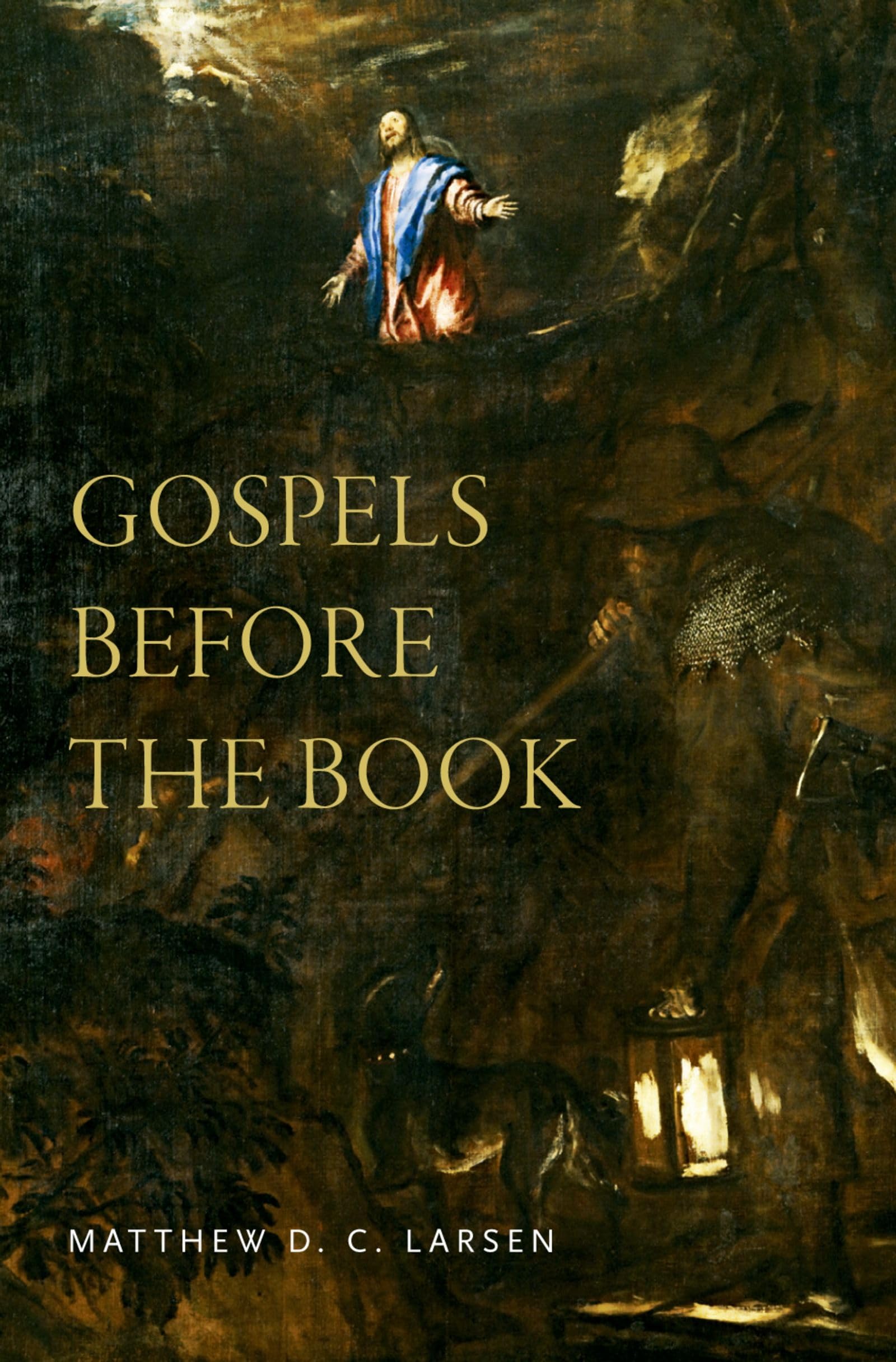
What does it look like to read the texts we now call the gospels like first and secondcentury readers? There is no evidence of anyone regarding the gospel as a book published by an author until the end of the second century. So, put differently, what does it mean to read the gospels 'before the book'? For centuries, the ways people discuss the gospels have been shaped by later ideas that have more to do with the printing press and modern notions of the author than ancient writing and reading practices. In Gospels before the Book, Matthew D. C. Larsen challenges several subtle yet problematic assumptions about authors, books, and publication at work in early Christian studies. He then explores a host of underappreciated elements of ancient textual culture such as unfinished texts, accidental publication, postpublication revision, and the existence of multiple authorized versions of the same work. Turning to the gospels, he argues that the earliest readers and users of the text we now call the Gospel according to Mark treated it not as a book published by an author, but as an unfinished, open, and fluid collection of notes (hypomnmata). In such a scenario, the Gospel according to Matthew would not be regarded as a separate book published by a different author, but as a continuation of the same unfinished gospel tradition. Similarly it is not the case that, of the five different endings in the textual tradition we now call the Gospel according to Mark, one is 'right' and the others are 'wrong.' Rather each represents its own effort to fill a perceived deficiency in the gospel. Larsen offers a new methodological framework for future scholarship on early Christian gospels.
⚠️ WARNING (California Proposition 65):
This product may contain chemicals known to the State of California to cause cancer,
birth defects, or other reproductive harm.
For MAP (Minimum Advertised Price) violations and Intellectual Property (IP) or Trademark concerns, please contact:
support@ergodebooks.com
⚠️ California Proposition 65 Warning: Some products sold on this website may expose you to chemicals known to the State of California to cause cancer, birth defects, or other reproductive harm. For more information, visit www.P65Warnings.ca.gov.