If you have any questions, you are always welcome to contact us. We'll get back to you as soon as possible, withing 24 hours on weekdays.
Customer service
All questions about your order, return and delivery must be sent to our customer service team by e-mail at yourstore@yourdomain.com
Sale & Press
If you are interested in selling our products, need more information about our brand or wish to make a collaboration, please contact us at press@yourdomain.com
Help
If you have any questions, you are always welcome to contact us. We'll get back to you as soon as possible, withing 24 hours on weekdays.
Customer service
All questions about your order, return and delivery must be sent to our customer service team by e-mail at yourstore@yourdomain.com
Sale & Press
If you are interested in selling our products, need more information about our brand or wish to make a collaboration, please contact us at press@yourdomain.com
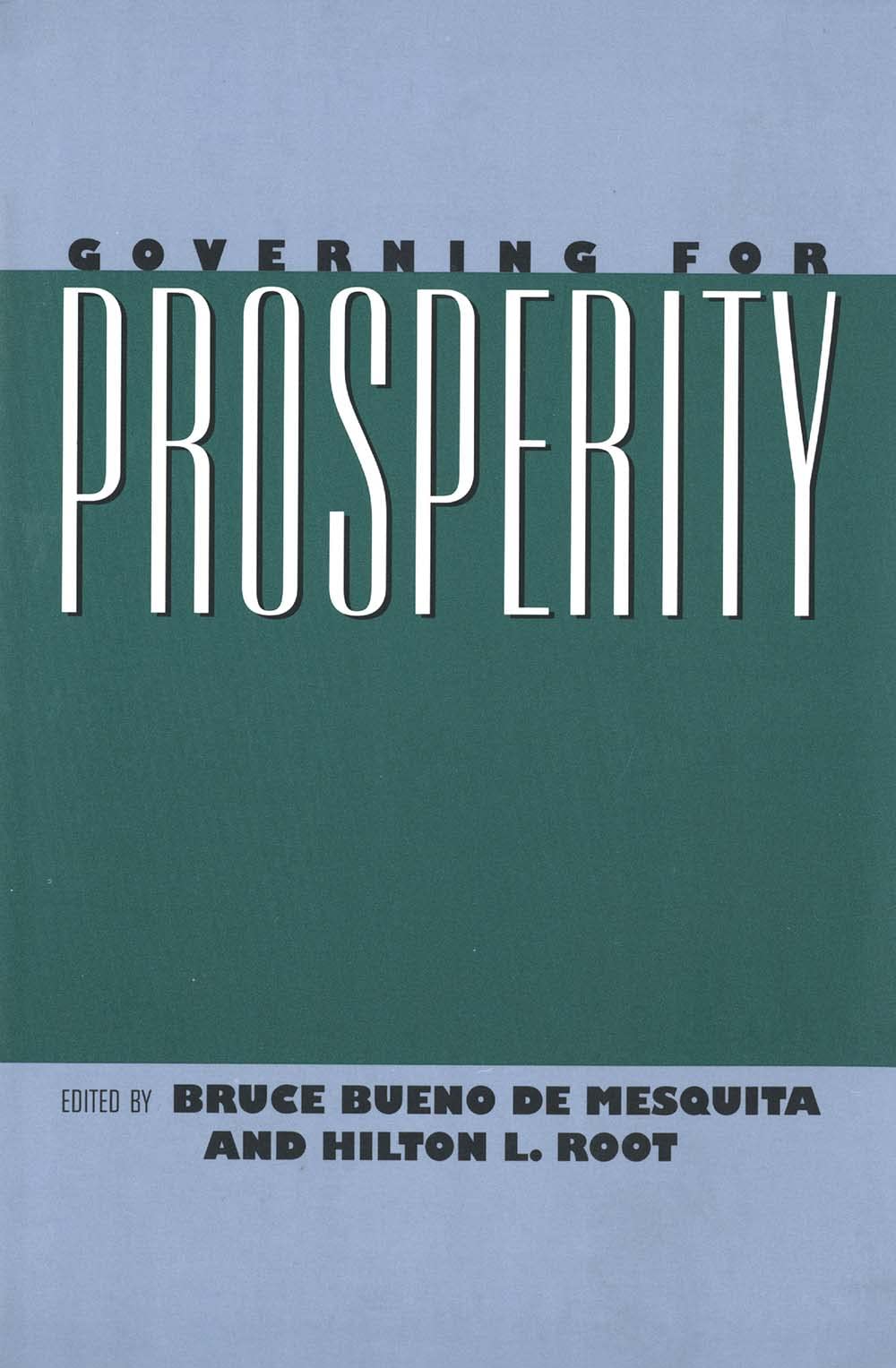
How do political institutions help promote prosperity in some countries and poverty in others? What can be done to encourage leaders to govern not for patronage but for economic growth? In this book, such distinguished political economists as Douglass North, Robert Barro, and Stephen Haber answer these questions, providing a solution to one of the most important policy puzzles of the new century: how to govern for prosperity.The authors begin from a premise that political leaders are selfinterested politicians rather than benign agents of the people they lead. When leaders depend on only a few backers to stay in power, they dole out privileges to those people, thereby dissipating their countrys total resources and national growth potential. On the other hand, leaders who need large coalitions to stay in office implement policies that generally foster growth and political competition over ideas. The result is that those who promote policies that lead to stagnation tend to stay in office for a long time, and those who produce prosperity tend to lose their jobs. Analyzing countries in North and South America and Asia, the authors discuss the range of political regimes that permit or even encourage leaders to rule by mismanaging their nations resources. And they show that nations must forge institutions that allow all social groups to participate in and benefit from the economy as well as force political leaders to be responsible for policy outcomes.
⚠️ WARNING (California Proposition 65):
This product may contain chemicals known to the State of California to cause cancer,
birth defects, or other reproductive harm.
For MAP (Minimum Advertised Price) violations and Intellectual Property (IP) or Trademark concerns, please contact:
support@ergodebooks.com
⚠️ California Proposition 65 Warning: Some products sold on this website may expose you to chemicals known to the State of California to cause cancer, birth defects, or other reproductive harm. For more information, visit www.P65Warnings.ca.gov.