
Title
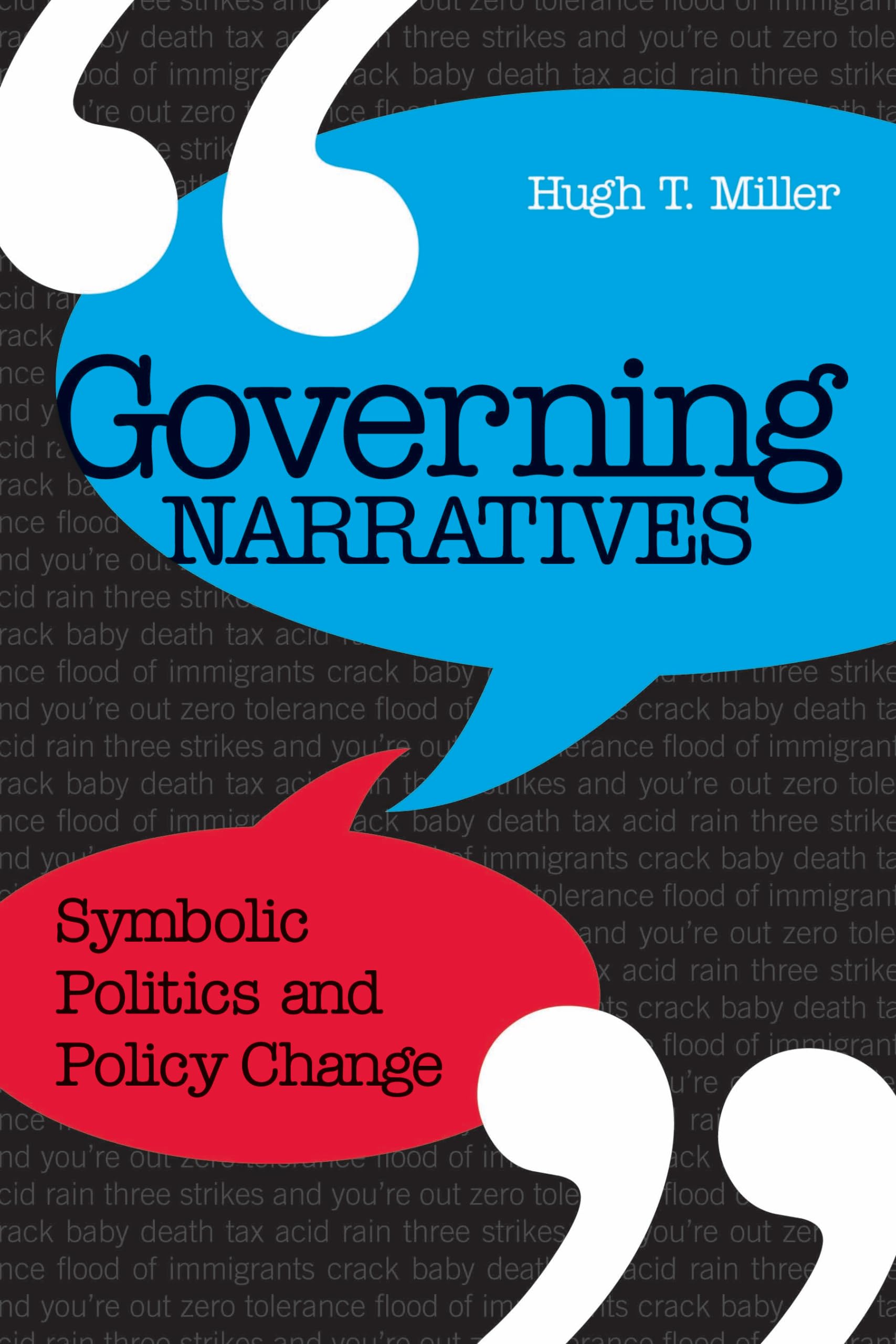
Governing Narratives: Symbolic Politics and Policy Change (Public Administration: Criticism and Creativity),Used
Processing time: 1-3 days
US Orders Ships in: 3-5 days
International Orders Ships in: 8-12 days
Return Policy: 15-days return on defective items
Payment Option

By highlighting the degree to which meaning making in public policy is more a cultural struggle than a rational and analytical project, Governing Narratives brings public administration back into a political context.In Governing Narratives, Hugh T. Miller takes a narrative approach in conceptualizing the politics of public policy. In this approach, signs and ideographsthat is, constellations of images, feelings, values, and conceptualizationare woven into policy narratives through the use of story lines. For example, the ideograph acid rain is part of an environmental narrative that links dead trees to industrial air pollution. The struggle for meaning capture is a political struggle, most in evidence during times of change or when status quo practices are questioned.Public policy is often considered to be the end result of empirical studies, quantitative analyses, and objective evaluation. But the empirical norms of science and rationality that have informed public policy research have also hidden from view those vexing aspects of public policy discourse outside of methodological rigor.Phrases such as three strikes and youre out or flood of immigrants or dont ask, dont tell or crack baby or the death tax have come to play crucial roles in public policy, not because of the reality they are purported to reflect, but because the meanings, emotions, and imagery connoted by these symbolizations resonate in our culture.Social practices, the very material of social order and cultural stability, are inextricably linked to the policy discourse that accompanies social change. Eventually a winning narrative dominates and becomes institutionalized into practice and implemented via public administration. Policy is symbiotically associated with these winning narratives. Practices might change again, but this inevitably entails renewed political contestation. The competition among symbolizations does not imply that the best narrative wins, only that a narrative has won for the time being. However, unsettling the established narrative is a difficult political task, particularly when the narrative has evolved into habitual institutionalized practice.Governing Narratives convincingly links public policy to the discourse and rhetoric of deliberative politics.
⚠️ WARNING (California Proposition 65):
This product may contain chemicals known to the State of California to cause cancer, birth defects, or other reproductive harm.
For more information, please visit www.P65Warnings.ca.gov.
- Q: How many pages does this book have? A: This book has one hundred sixty pages. It provides an in-depth exploration of symbolic politics and public policy narratives.
- Q: What is the binding type of this book? A: This book is hardcover. The hardcover binding ensures durability and a professional appearance.
- Q: Who is the author of 'Governing Narratives'? A: The author is Dr. Hugh T. Miller, who holds a Ph.D. and specializes in public administration.
- Q: What is the size of the book? A: The book measures six inches in length, zero point ninety-one inches in width, and nine point zero two inches in height.
- Q: What genre does this book belong to? A: This book is categorized under Politics and Government. It examines the intersection of culture and public policy.
- Q: How do I read 'Governing Narratives'? A: You can read this book like any standard novel or academic text. It is suitable for individuals interested in public policy and politics.
- Q: Is this book suitable for beginners in political studies? A: Yes, this book is suitable for beginners. It provides accessible insights into political narratives and public administration.
- Q: Can I use this book for academic research? A: Yes, this book is an excellent resource for academic research in political science and public administration.
- Q: Is there a specific audience for this book? A: The primary audience includes students, scholars, and practitioners interested in public policy and politics.
- Q: How should I store this book? A: Store this book in a dry, cool place, upright on a shelf to maintain its shape and condition.
- Q: Can I clean the cover of this hardcover book? A: Yes, you can gently wipe the cover with a dry cloth to remove dust. Avoid using water or cleaning solutions.
- Q: What if I receive a damaged book? A: If you receive a damaged book, contact the seller for a return or replacement. Most sellers have policies for such incidents.
- Q: What is the return policy for this book? A: The return policy varies by seller, but most allow returns within a specific timeframe if the book is in its original condition.
- Q: Is there a warranty for this book? A: No, books typically do not come with a warranty. However, check with the seller for any specific guarantees.
- Q: What if I have trouble understanding the concepts in this book? A: If you have trouble, consider joining a study group or seeking additional resources to help clarify the concepts presented.
- Q: Are there any supplementary materials for this book? A: Supplementary materials are not typically included, but you may find online resources or lectures related to its themes.