
Title
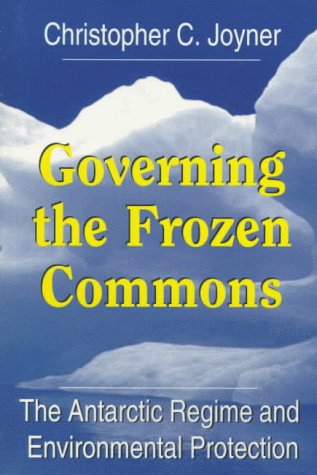
Governing the Frozen Commons: The Antarctic Regime and Environmental Protection (Governing the Global Commons),New
Sold by Ergodebooks, an authorized reseller.
Returns accepted within 30 days | support@ergodebooks.com
Shipping Information
- Free Standard Shipping — United States only
- Processing Time: 3–5 business days
- Estimated Delivery: 6–10 business days after dispatch
- Double-boxed, fully insured & discreetly packaged
- Tracking number sent via email once dispatched
Returns & Refund
Returns accepted within 30 days of delivery.
Damaged or Defective Item
Free return shipping + replacement or full refund
Wrong Item Received
Free return shipping + replacement or full refund
Change of Mind
Return shipping at customer's expense · 25% restocking fee applies
Payment Option

Assesses the international community's management of Antarctica as a global commonsAntarctica, the last great wilderness on earth, is a continent of extremes. It is the coldest, highest, driest, windiest, remotest, most desolate place on the planet. Yet despite these profoundly forbidding characteristics the Antarctic commons has attracted increasing political, economic, and diplomatic attention in recent years. This interest has been stimulated by the tremendous bounty of living marine resources, concern over ozone depletion and environmental degradation, and exaggerated public speculation about the potential of exploiting mineral wealth, especially hydrocarbons, on and around the continent. Governing the Frozen Commons examines the Antarctic Treaty System as a complex legal regime for managing resource activities in the Antarctic and assesses what innovative legal arrangements might be needed to regulate future political and economic developments there. In this study, Christopher C. Joyner analyzes a number of critical considerations affecting the circumpolar south, including the status of Antarctica as a global commons; the legal regime currently in place for managing Antarctic affairs; the legal, economic, and political implications of applying a common heritage of mankind regime to the Antarctic; the viability of the legal regimes now established for resource management, conservation, environmental protection, and scientific investigation in the Antarctic; and the prospect that Antarctica might be considered a world park.Specific attention focuses on the relevance for Antarctica of several legal regimes, particularly those concerning conservation and management of natural resources on and around the continent. Using this conceptual framework, the study critically assesses broad policyoriented concerns for the Antarctic: the scope of sovereignty implications for Antarctica as a global commons area; the Antarctic Treaty regime as it relates to the evolving law of common space regimes; regional resource management and conservation in circumpolar Antarctic seas; and environmental protection and preservation of the Antarctic ecosystem.
⚠️ WARNING (California Proposition 65):
This product may contain chemicals known to the State of California to cause cancer, birth defects, or other reproductive harm.
For more information, please visit www.P65Warnings.ca.gov.