
Title
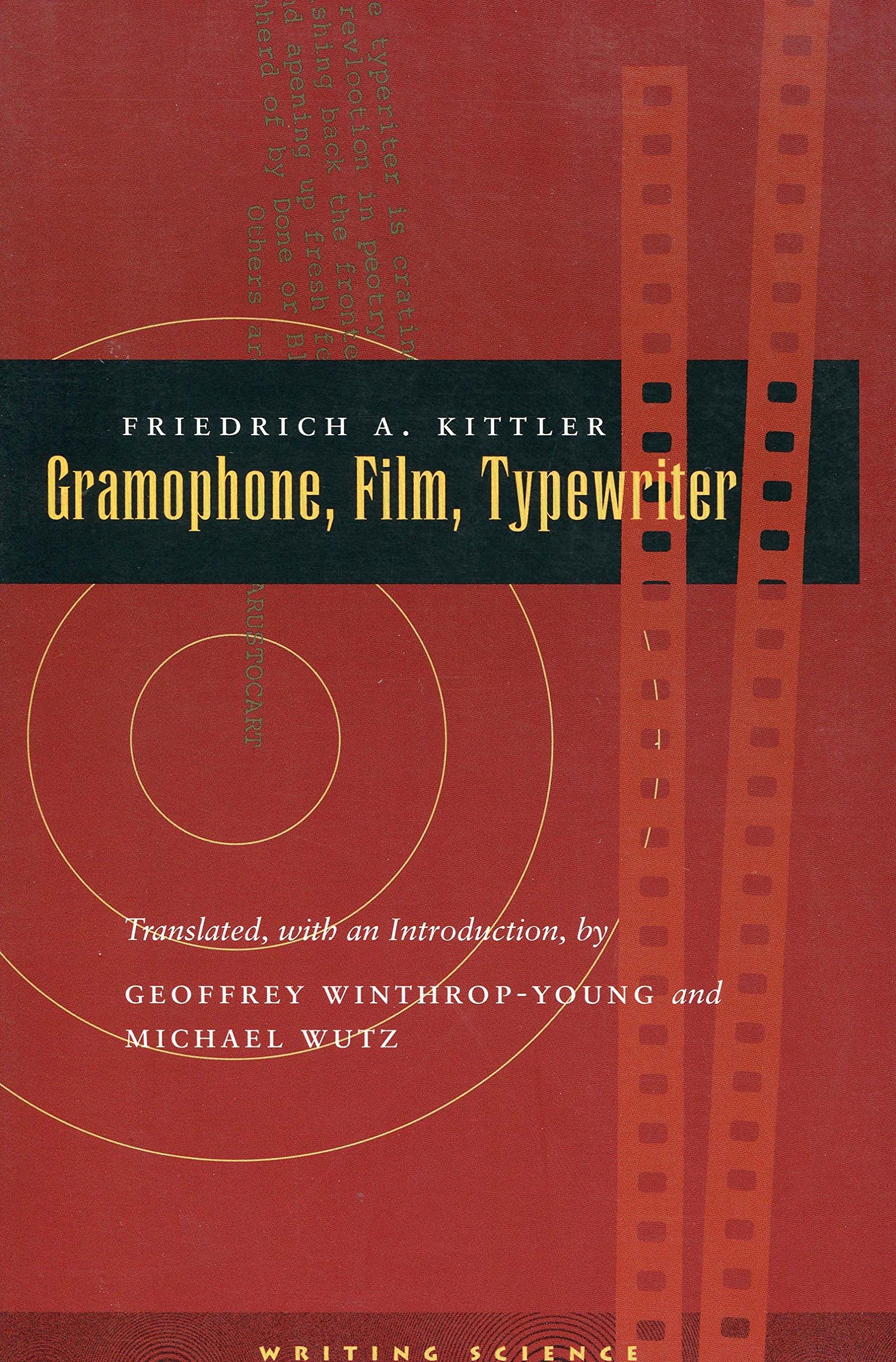
Gramophone, Film, Typewriter (Writing Science),Used
Sold by Ergodebooks, an authorized reseller.
Returns accepted within 30 days | support@ergodebooks.com
Shipping Information
- Free Standard Shipping — United States only
- Processing Time: 3–5 business days
- Estimated Delivery: 6–10 business days after dispatch
- Double-boxed, fully insured & discreetly packaged
- Tracking number sent via email once dispatched
Returns & Refund
Returns accepted within 30 days of delivery.
Damaged or Defective Item
Free return shipping + replacement or full refund
Wrong Item Received
Free return shipping + replacement or full refund
Change of Mind
Return shipping at customer's expense · 25% restocking fee applies
Payment Option

Toward The End Of The Nineteenth Century, The Hegemony Of The Printed Word Was Shattered By The Arrival Of New Media Technologies That Offered Novel Ways Of Communicating And Storing Data. Previously, Writing Had Operated By Way Of Symbolic Mediationall Data Had To Pass Through The Needle'S Eye Of The Written Signifierbut Phonography, Photography, And Cinematography Stored Physical Effects Of The Real In The Shape Of Sound Waves And Light. The Entire Question Of Referentiality Had To Be Recast In Light Of These New Media Technologies; In Addition, The Use Of The Typewriter Changed The Perception Of Writing From That Of A Unique Expression Of A Literate Individual To That Of A Sequence Of Naked Material Signifiers. Part Technological History Of The Emergent New Media In The Late Nineteenth Century, Part Theoretical Discussion Of The Responses To These Mediaincluding Texts By Rilke, Kafka, And Heidegger, As Well As Elaborations By Edison, Bell, Turing, And Other Innovatorsgramophone, Film, Typewriter Analyzes This Momentous Shift Using Insights From The Work Of Foucault, Lacan, And Mcluhan. Fusing Discourse Analysis, Structuralist Psychoanalysis, And Media Theory, The Author Adds A Vital Historical Dimension To The Current Debates Over The Relationship Between Electronic Literacy And Poststructuralism, And The Extent To Which We Are Constituted By Our Technologies. The Book Ties The Establishment Of New Discursive Practices To The Introduction Of New Media Technologies, And It Shows How Both Determine The Ways In Which Psychoanalysis Conceives Of The Psychic Apparatus In Terms Of Information Machines. Gramophone, Film, Typewriter Is, Among Other Things, A Continuation As Well As A Detailed Elaboration Of The Second Part Of The Author'S Discourse Networks, 1800/1900 (Stanford, 1990). As Such, It Bridges The Gap Between Kittler'S Discourse Analysis Of The 1980'S And His Increasingly Computeroriented Work Of The 1990'S.
⚠️ WARNING (California Proposition 65):
This product may contain chemicals known to the State of California to cause cancer, birth defects, or other reproductive harm.
For more information, please visit www.P65Warnings.ca.gov.
- Q: How many pages does the book have? A: This book contains three hundred sixty pages. It offers an in-depth analysis of the impacts of media technologies.
- Q: What is the binding type of the book? A: The book has a paperback binding. This makes it lightweight and portable for easy reading.
- Q: What are the dimensions of the book? A: The book measures six inches in length, zero point eight three inches in width, and nine point zero two inches in height.
- Q: Who is the author of Gramophone, Film, Typewriter? A: The author is Friedrich A. Kittler. He is known for his work in media theory and discourse analysis.
- Q: What is the genre of this book? A: This book falls under the category of World literature. It combines historical and theoretical discussions.
- Q: How do I read this book effectively? A: To read this book effectively, consider taking notes on the main theories presented. Engaging with the texts discussed can enhance understanding.
- Q: Is this book suitable for beginners in media theory? A: Yes, the book is suitable for beginners. However, some familiarity with theoretical concepts may enhance comprehension.
- Q: What kind of audience is this book intended for? A: This book is intended for academic readers and those interested in media studies. It appeals to scholars and students alike.
- Q: How should I store this book? A: Store this book in a cool, dry place. Keeping it upright on a shelf helps maintain its shape and condition.
- Q: Can I lend this book to others? A: Yes, you can lend this book to others. However, ensure they handle it carefully to avoid damage.
- Q: What do I do if the book arrives damaged? A: If the book arrives damaged, contact the seller for return options. Most sellers offer a return policy for damaged goods.
- Q: Is there a warranty for this book? A: No, there is typically no warranty for books. However, check with the seller for their specific return policies.
- Q: What if I have questions about the content of the book? A: You can look for academic forums or discussions online. Engaging with fellow readers can provide additional insights.
- Q: Is this book considered a classic in media studies? A: Yes, this book is considered a classic. It bridges important theoretical discussions in the field of media studies.
- Q: Are there any references to other notable authors in the book? A: Yes, the book references authors like Rilke, Kafka, and Heidegger. It contextualizes their works within media theory.