If you have any questions, you are always welcome to contact us. We'll get back to you as soon as possible, withing 24 hours on weekdays.
Customer service
All questions about your order, return and delivery must be sent to our customer service team by e-mail at yourstore@yourdomain.com
Sale & Press
If you are interested in selling our products, need more information about our brand or wish to make a collaboration, please contact us at press@yourdomain.com
Help
If you have any questions, you are always welcome to contact us. We'll get back to you as soon as possible, withing 24 hours on weekdays.
Customer service
All questions about your order, return and delivery must be sent to our customer service team by e-mail at yourstore@yourdomain.com
Sale & Press
If you are interested in selling our products, need more information about our brand or wish to make a collaboration, please contact us at press@yourdomain.com
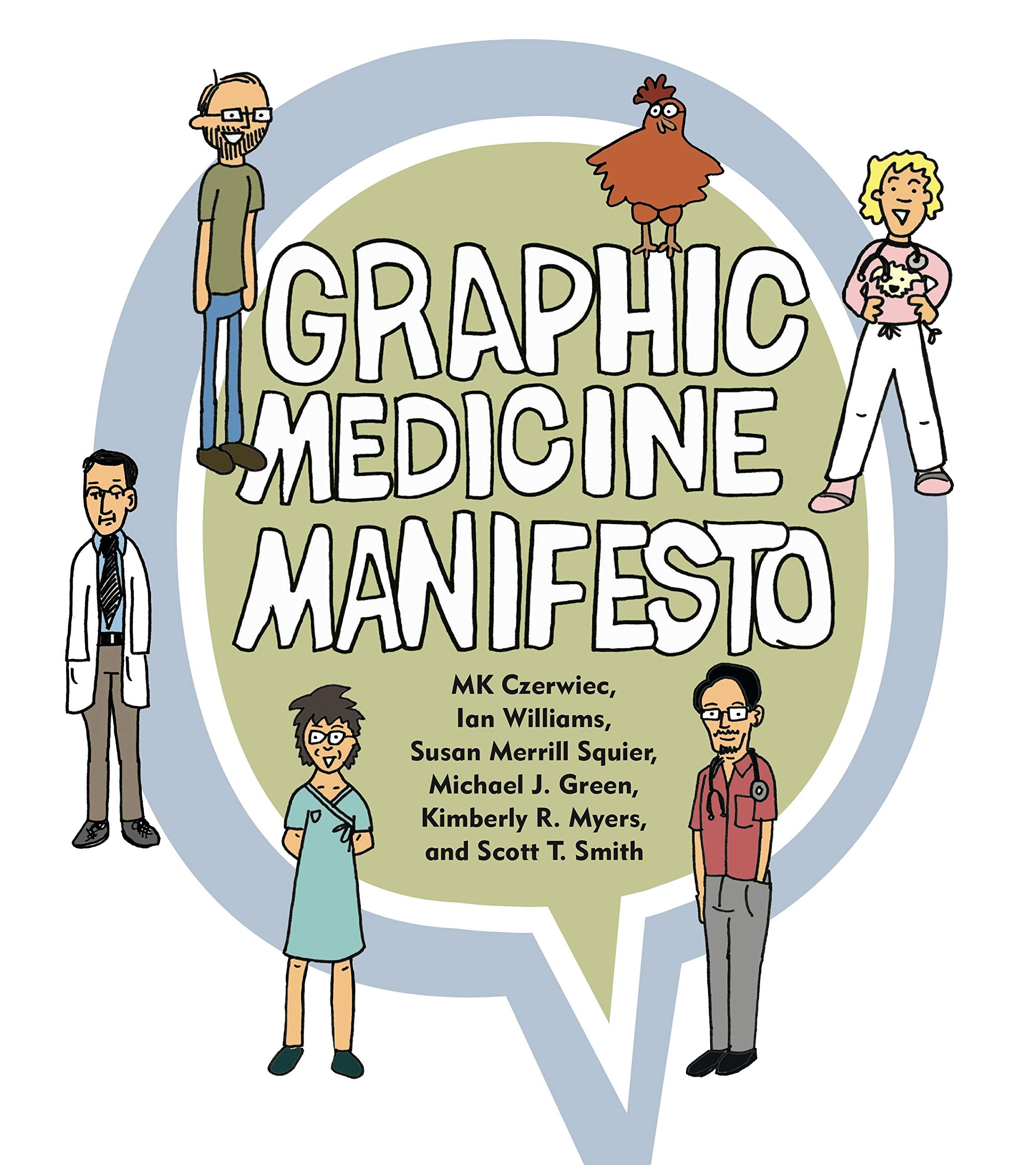
This inaugural volume in the Graphic Medicine series establishes the principles of graphic medicine and begins to map the field. The volume combines scholarly essays by members of the editorial team with previously unpublished visual narratives by Ian Williams and MK Czerwiec, and it includes arresting visual work from a wide range of graphic medicine practitioners. The books first section, featuring essays by Scott Smith and Susan Squier, argues that as a new area of scholarship, research on graphic medicine has the potential to challenge the conventional boundaries of academic disciplines, raise questions about their foundations, and reinvigorate literary scholarshipand the notion of the literary textfor a broader audience. The second section, incorporating essays by Michael Green and Kimberly Myers, demonstrates that graphic medicine narratives can engage members of the health professions with literary and visual representations and symbolic practices that offer patients, family members, physicians, and other caregivers new ways to experience and work with the complex challenges of the medical experience. The final section, by Ian Williams and MK Czerwiec, focuses on the practice of creating graphic narratives, iconography, drawing as a social practice, and the nature of comics as visual rhetoric. A conclusion (in comics form) testifies to the diverse and growing graphic medicine community. Two valuable bibliographies guide readers to comics and scholarly works relevant to the field.
⚠️ WARNING (California Proposition 65):
This product may contain chemicals known to the State of California to cause cancer,
birth defects, or other reproductive harm.
Q: What is the main focus of the Graphic Medicine Manifesto?A: The Graphic Medicine Manifesto focuses on establishing the principles of graphic medicine, exploring how visual narratives can enhance understanding in medical contexts.
Q: Who are the authors of the Graphic Medicine Manifesto?A: The book is authored by MK Czerwiec and Ian Williams, alongside contributions from other members of the editorial team.
Q: How many pages does the Graphic Medicine Manifesto have?A: The Graphic Medicine Manifesto contains 208 pages.
Q: What type of binding does the Graphic Medicine Manifesto have?A: This book is available in paperback binding.
Q: When was the Graphic Medicine Manifesto published?A: The Graphic Medicine Manifesto was published on May 15, 2015.
Q: What kind of content can I expect from the Graphic Medicine Manifesto?A: The book includes scholarly essays, visual narratives, and bibliographies related to graphic medicine and its practice.
Q: Is the Graphic Medicine Manifesto suitable for academic use?A: Yes, the Graphic Medicine Manifesto presents scholarly essays and research that can be valuable for academic study in fields related to medicine and literature.
Q: What audience is the Graphic Medicine Manifesto intended for?A: The Graphic Medicine Manifesto targets a broad audience, including healthcare professionals, scholars, and general readers interested in the intersection of graphic art and medicine.
Q: Does the Graphic Medicine Manifesto include illustrations?A: Yes, the book features previously unpublished visual narratives and artwork from various graphic medicine practitioners.
Q: Can the Graphic Medicine Manifesto help with understanding patient experiences?A: Yes, it offers insights into how graphic medicine narratives can help patients and caregivers engage with the complexities of medical experiences.
For MAP (Minimum Advertised Price) violations and Intellectual Property (IP) or Trademark concerns, please contact:
support@ergodebooks.com
⚠️ California Proposition 65 Warning: Some products sold on this website may expose you to chemicals known to the State of California to cause cancer, birth defects, or other reproductive harm. For more information, visit www.P65Warnings.ca.gov.