
Title
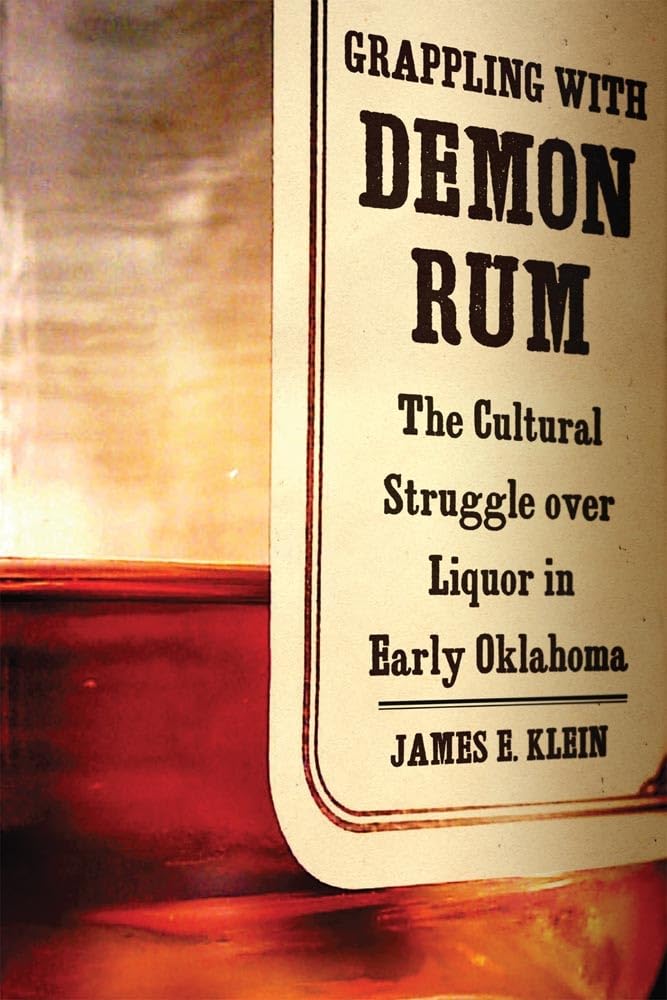
Grappling With Demon Rum: The Cultural Struggle Over Liquor In Early Oklahoma,Used
Sold by Ergodebooks, an authorized reseller.
Returns accepted within 30 days | support@ergodebooks.com
Shipping Information
- Free Standard Shipping — United States only
- Processing Time: 3–5 business days
- Estimated Delivery: 6–10 business days after dispatch
- Double-boxed, fully insured & discreetly packaged
- Tracking number sent via email once dispatched
Returns & Refund
Returns accepted within 30 days of delivery.
Damaged or Defective Item
Free return shipping + replacement or full refund
Wrong Item Received
Free return shipping + replacement or full refund
Change of Mind
Return shipping at customer's expense · 25% restocking fee applies
Payment Option

Social classes collide over morality and social propriety in a brandnew stateWell before the Volstead (or National Prohibition) Act of 1919, Oklahoma was dry. Oklahomans banned liquor at their states inception in 1907 and maintained the ban even after the repeal of national prohibition. In this book, James E. Klein examines the social and cultural conflicts that led Oklahomans to outlaw liquor and discusses the economic and political consequences of the ban.Grappling with Demon Rum identifies who favored and who opposed prohibition, showing that its proponents were largely middleclass citizens who disdained public drinking establishments and who sought respectability for a young state still considered a frontier society. Klein tells how the Oklahoma AntiSaloon League orchestrated a dry campaign to raise moral standards, reduce crime, and improve the quality of life, twice convincing voters to support prohibition.Going beyond the usual evangelicalversusritualist, ruralversusurban, and ethnocultural oppositions used by other historians to explain prohibition, Klein shows that Oklahomas immigrant and Catholic populations were too small to account for those voting against the measureor for the large customer base that supported bootleggers. He points instead to the large number of workingclass Oklahomans who patronized saloons, whether legal or not, and focuses on class conflict in early efforts to control alcohol. He also describes the trials of enforcement officers who worked to plug leaks in statewide and later national prohibition.A cultural and social history of liquor in early Oklahoma, Grappling with Demon Rum provides a fresh look at crusaders against vice at the regional level. In portraying this conflict between middle and workingclass definitions of social propriety, Klein provides new insight into forces at work throughout America during the Progressive Era.
⚠️ WARNING (California Proposition 65):
This product may contain chemicals known to the State of California to cause cancer, birth defects, or other reproductive harm.
For more information, please visit www.P65Warnings.ca.gov.