
Title
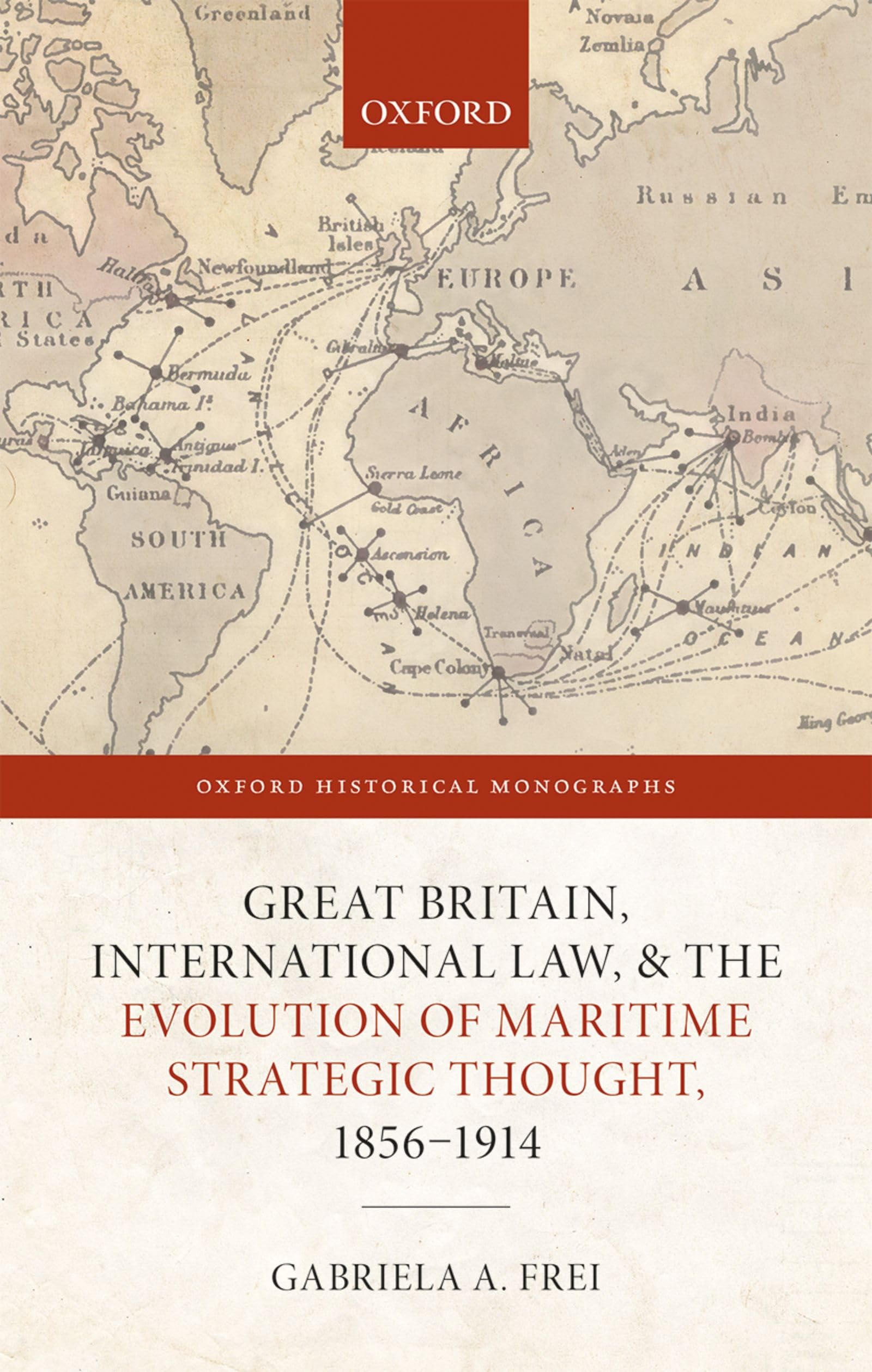
Great Britain, International Law, and the Evolution of Maritime Strategic Thought, 18561914 (Oxford Historical Monographs),Used
Sold by Ergodebooks, an authorized reseller.
Returns accepted within 30 days | support@ergodebooks.com
Shipping Information
- Free Standard Shipping — United States only
- Processing Time: 3–5 business days
- Estimated Delivery: 6–10 business days after dispatch
- Double-boxed, fully insured & discreetly packaged
- Tracking number sent via email once dispatched
Returns & Refund
Returns accepted within 30 days of delivery.
Damaged or Defective Item
Free return shipping + replacement or full refund
Wrong Item Received
Free return shipping + replacement or full refund
Change of Mind
Return shipping at customer's expense · 25% restocking fee applies
Payment Option

Gabriela A. Frei addresses the interaction between international maritime law and maritime strategy in a historical context, arguing that both international law and maritime strategy are based on longterm state interests. Great Britain as the predominant sea power in the nineteenth and early twentieth centuries shaped the relationship between international law and maritime strategy like no other power. This study explores how Great Britain used international maritime law as an instrument of foreign policy to protect its strategic and economic interests, and how maritime strategic thought evolved in parallel to the development of international legal norms.Frei offers an analysis of British state practice as well as an examination of the efforts of the international community to codify international maritime law in the late nineteenth and early twentieth centuries. Great Britain as the predominant sea power as well as the world's largest carrier of goods had to balance its interests as both a belligerent and a neutral power. With the growing importance of international law in international politics, the volume examines the role of international lawyers, strategists, and government officials who shaped state practice. Great Britain's neutrality for most of the period between 1856 and 1914 influenced its state practice and its perceptions of a future maritime conflict. Yet, the codification of international maritime law at the Hague and London conferences at the beginning of the twentieth century demanded a reassessment of Great Britain's legal position.
⚠️ WARNING (California Proposition 65):
This product may contain chemicals known to the State of California to cause cancer, birth defects, or other reproductive harm.
For more information, please visit www.P65Warnings.ca.gov.