
Title
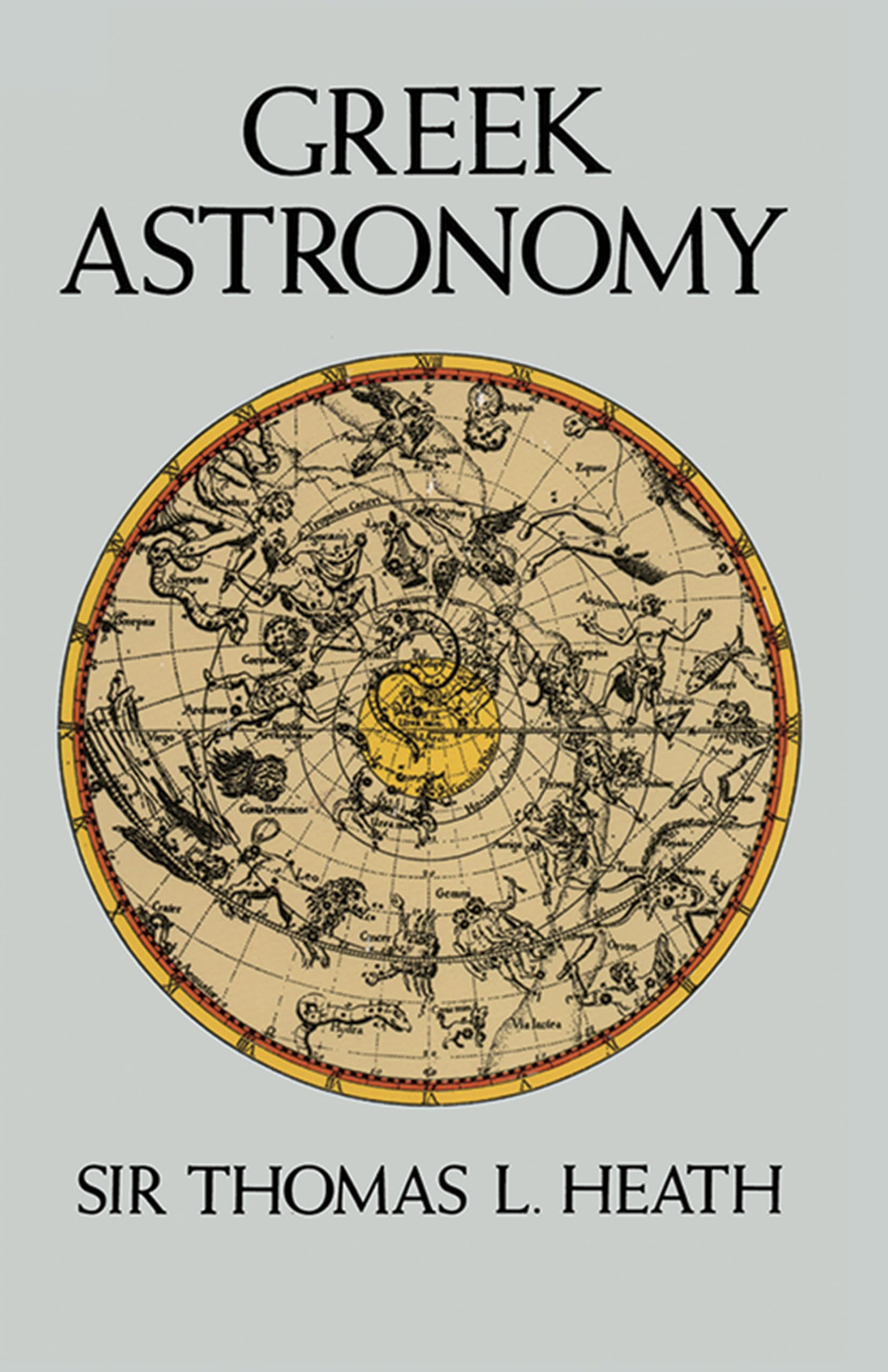
Greek Astronomy (Dover Books On Astronomy),New
Sold by Ergodebooks, an authorized reseller.
Returns accepted within 30 days | support@ergodebooks.com
Shipping Information
- Free Standard Shipping — United States only
- Processing Time: 3–5 business days
- Estimated Delivery: 6–10 business days after dispatch
- Double-boxed, fully insured & discreetly packaged
- Tracking number sent via email once dispatched
Returns & Refund
Returns accepted within 30 days of delivery.
Damaged or Defective Item
Free return shipping + replacement or full refund
Wrong Item Received
Free return shipping + replacement or full refund
Change of Mind
Return shipping at customer's expense · 25% restocking fee applies
Payment Option

Astronomy As A Science Began With The Ionian Philosophers, With Whom Greek Philosophy And Mathematics Also Began. While The Egyptians And Babylonians Had Accomplished Much Of Astronomical Worth, It Remained For The Unrivalled Speculative Genius Of The Greeks, In Particular, Their Mathematical Genius, To Lay The Foundations Of The True Science Of Astronomy. In This Classic Study, A Noted Scholar Discusses In Lucid Detail The Specific Advances Made By The Greeks, Many Of Whose Ideas Anticipated The Discoveries Of Modern Astronomy.Pythagoras, Born At Samos About 572 B.C., Was Probably The First To Hold That The Earth Is Spherical In Shape, While His Later Followers Anticipated Copernicus With The Thenstartling Hypothesis That The Earth Was Not The Center Of The Universe But A Planet Like The Others. Heraclides Of Pontus (C. 388315 B.C.), A Pupil Of Plato, Declared That The Apparent Daily Rotation Of The Heavenly Bodies Is Due, Not To A Rotation Of The Heavenly Sphere About An Axis Through The Center Of The Earth, But To The Rotation Of The Earth Itself Around Its Own Axis. Secondly, Heraclides Discovered That Venus And Mercury Revolve Around The Sun Like Satellites. Perhaps The Greatest Astronomer Of Antiquity Was Hipparchus, Who Flourished Between 161 And 126 B.C. He Compiled A Catalog Of Fixed Stars To The Number 850 Or More, Made Great Improvements In The Instruments Used For Astronomical Observations, And Discovered The Precession Of The Equinoxes, Among Other Accomplishments. The Astronomy Of Hipparchus Takes Its Definitive Form In The Syntaxis (Commonly Called The Almagest) Of Ptolemy, Written About A.D. 150, Which Held The Field Until The Time Of Copernicus.The Extraordinary Achievements Of These And Many More Greek Theorists Are Given Full Coverage In This Erudite Account, Which Blends Exceptional Clarity With A Readable Style To Produce A Work That Is Not Only Indispensable For Astronomers And Historians Of Science But Easily Accessible To Scienceminded Lay Readers.
⚠️ WARNING (California Proposition 65):
This product may contain chemicals known to the State of California to cause cancer, birth defects, or other reproductive harm.
For more information, please visit www.P65Warnings.ca.gov.
- Q: How many pages does the book have? A: This book has two hundred fifty-six pages. It provides a comprehensive overview of Greek astronomy and its historical significance.
- Q: What is the binding type of this book? A: This book is a paperback edition. The paperback binding makes it lightweight and easy to handle.
- Q: What are the dimensions of the book? A: The book measures five point four inches in length, zero point four nine inches in width, and eight point four six inches in height. These dimensions make it a convenient size for reading.
- Q: Who is the author of this book? A: The author is Sir Thomas L. Heath. He is a noted scholar in the field of astronomy and ancient science.
- Q: What genre does this book belong to? A: This book is categorized under Performing Arts. It focuses on the historical and scientific achievements of Greek astronomers.
- Q: What is the recommended age for readers? A: This book is suitable for adult readers and science-minded laypeople. It is accessible yet informative, making it ideal for anyone interested in astronomy.
- Q: How should I store this book? A: Store this book in a cool, dry place away from direct sunlight. This will help preserve its condition over time.
- Q: Can I clean the book if it gets dirty? A: Yes, you can gently wipe the cover with a soft, dry cloth. Avoid using water or cleaning solutions to prevent damage.
- Q: Is this book safe for children? A: While the book is not specifically aimed at children, it can be read by older teens with an interest in science. Parental guidance is recommended.
- Q: What if the book arrives damaged? A: If the book arrives damaged, you should contact the seller for a replacement or refund. Most sellers have return policies in place.
- Q: Is this book suitable for beginners in astronomy? A: Yes, this book is suitable for beginners. It explains complex ideas in a clear and accessible manner.
- Q: How does this book compare to other astronomy books? A: This book focuses specifically on Greek contributions to astronomy, making it unique compared to general astronomy texts. It offers deep insights into historical advancements.
- Q: What topics are covered in the book? A: The book covers various topics, including the works of Pythagoras, Heraclides, and Hipparchus. It delves into their theories and discoveries.
- Q: Is there a glossary or index in the book? A: Yes, the book includes an index for easy reference. This feature helps readers locate specific topics or names quickly.
- Q: Does the book include illustrations or diagrams? A: No, this book does not include illustrations or diagrams. It focuses on written explanations of astronomical concepts.
- Q: Can I read this book online? A: The availability of an online version depends on the publisher. Check with the publisher or major online retailers for digital formats.