
Title
Greek Science After Aristotle,New
Sold by Ergodebooks, an authorized reseller.
Returns accepted within 30 days | support@ergodebooks.com
Shipping Information
- Free Standard Shipping — United States only
- Processing Time: 3–5 business days
- Estimated Delivery: 6–10 business days after dispatch
- Double-boxed, fully insured & discreetly packaged
- Tracking number sent via email once dispatched
Returns & Refund
Returns accepted within 30 days of delivery.
Damaged or Defective Item
Free return shipping + replacement or full refund
Wrong Item Received
Free return shipping + replacement or full refund
Change of Mind
Return shipping at customer's expense · 25% restocking fee applies
Payment Option

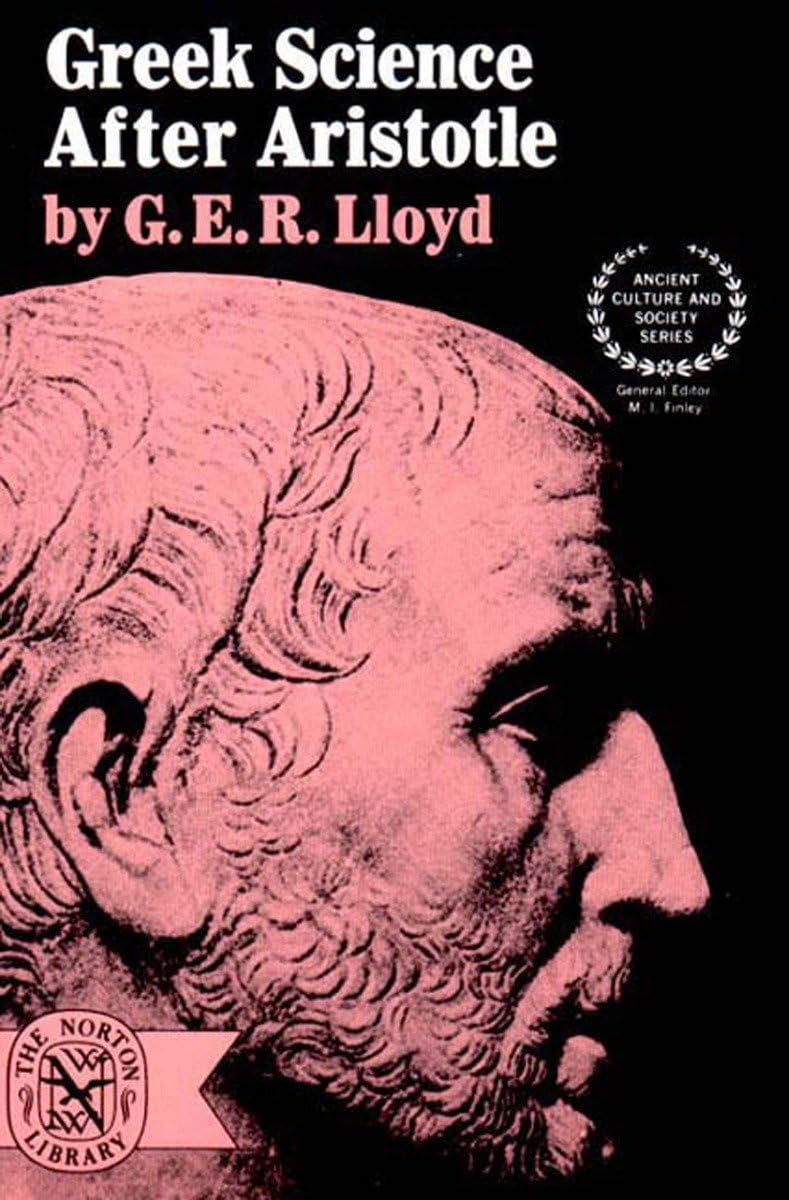
Although there is no exact equivalent to our term 'science' in Greek, Western science may still be said to originate with the Greeks. In this volume, the author discusses the fundamental Greek contributions to science, drawing on the rich literary and archaeological sources for the period after Aristotle. Particular attention is paid to the Greeks' conceptions of the inquiries they were engaged on, and to the interrelations of science and philosophy, science and religion, and science and technology. In the first part of the book the author considers the two hundred years after the death of Aristotle, devoting separate chapters to mathematics, astronomy, and biology. He goes on to deal with Ptolemy and Galen and concludes with a discussion of later writers and of the problems raised by the question of the decline of ancient science.
⚠️ WARNING (California Proposition 65):
This product may contain chemicals known to the State of California to cause cancer, birth defects, or other reproductive harm.
For more information, please visit www.P65Warnings.ca.gov.
- Q: How many pages is 'Greek Science After Aristotle'? A: This book has two hundred eight pages. It provides an in-depth discussion of Greek contributions to science.
- Q: What is the binding type of this book? A: The binding type is paperback. This makes it lightweight and easy to carry.
- Q: What are the dimensions of 'Greek Science After Aristotle'? A: The dimensions are five point two inches in length, zero point six inches in width, and seven point eight inches in height. It's a compact volume suitable for reading.
- Q: Who is the author of 'Greek Science After Aristotle'? A: The author is G. E. R. Lloyd. He is known for his scholarly work on the history of science.
- Q: What category does this book belong to? A: This book is categorized under History. It explores ancient Greek contributions to science.
- Q: Is this book suitable for beginners in science? A: Yes, it is suitable for beginners. The author explains complex concepts in an accessible manner.
- Q: What topics are covered in this book? A: The book covers mathematics, astronomy, biology, and the works of Ptolemy and Galen. It delves into the interrelations of science and philosophy.
- Q: How does the book discuss the decline of ancient science? A: The author addresses the problems raised by the decline of ancient science towards the end of the book. This provides a comprehensive historical perspective.
- Q: Is 'Greek Science After Aristotle' appropriate for academic study? A: Yes, it is appropriate for academic study. The book draws on rich literary and archaeological sources.
- Q: How should I store this paperback book? A: Store the book in a cool, dry place to protect it. Avoid direct sunlight to prevent fading of the cover.
- Q: Can I easily carry this book with me? A: Yes, its lightweight paperback format makes it easy to carry. It's ideal for reading on the go.
- Q: How should I clean this book if it gets dirty? A: To clean the book, gently wipe the cover with a dry cloth. Avoid using liquids that could damage the paper.
- Q: What if the book arrives damaged? A: If the book arrives damaged, contact the retailer for a return or exchange. Most retailers have policies for such situations.
- Q: Is there a warranty for 'Greek Science After Aristotle'? A: There is no warranty for this book. However, check with the seller for their specific return policies.
- Q: Are there any illustrations in the book? A: The book primarily focuses on text and scholarly discussion, so there are no illustrations. It emphasizes literary and archaeological sources.