If you have any questions, you are always welcome to contact us. We'll get back to you as soon as possible, withing 24 hours on weekdays.
Customer service
All questions about your order, return and delivery must be sent to our customer service team by e-mail at yourstore@yourdomain.com
Sale & Press
If you are interested in selling our products, need more information about our brand or wish to make a collaboration, please contact us at press@yourdomain.com
Help
If you have any questions, you are always welcome to contact us. We'll get back to you as soon as possible, withing 24 hours on weekdays.
Customer service
All questions about your order, return and delivery must be sent to our customer service team by e-mail at yourstore@yourdomain.com
Sale & Press
If you are interested in selling our products, need more information about our brand or wish to make a collaboration, please contact us at press@yourdomain.com
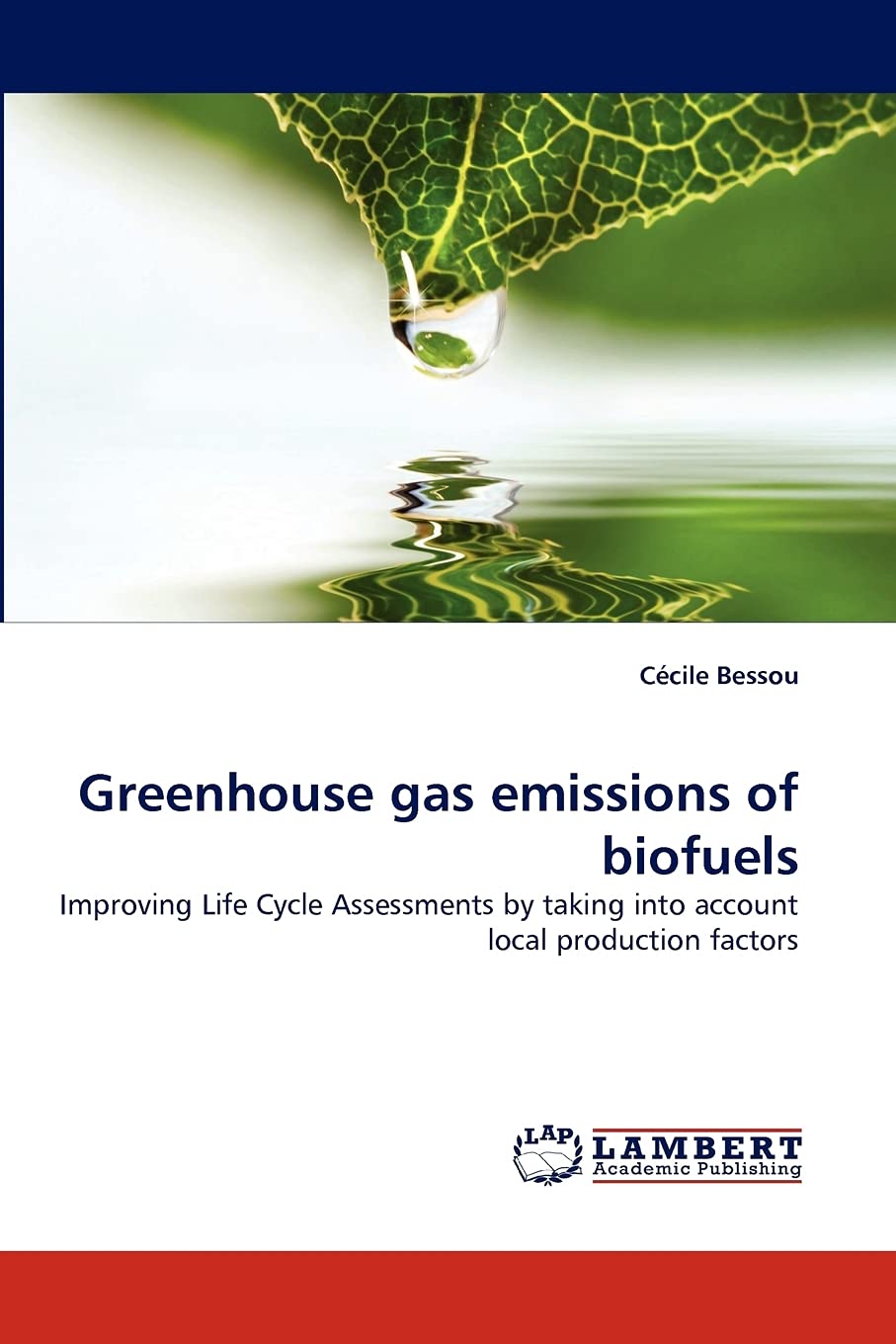
Biofuels are produced from biomass that can be shortly renewed contrarily to fossil fuels. Emphasis has been put on biofuels for transportation as this sector represents a major fast growing source of anthropogenic greenhouse gases (GHG). Compared to fossil fuels, biofuels emit less GHG, if CO2 savings through photosynthesis are not overwhelmed by other GHG emissions throughout the biofuel life cycle. Life Cycle Assessments (LCA) are therefore necessary to check for all polluting emissions and potential environmental impacts. This book first reviews the literature on biofuels, their GHG impact, and the reasons why results of biofuel LCA vary critically among published studies. It then presents the results of research works on how to improve the modelling of GHG emissions in agricultural fields and how to increase the relevance of biofuel LCA from agricultural feedstock by taking into account the local production factors. From a broader overview on bioenergy to a specific scientific insight into the determinism of GHG emissions, this book should help shed some light on biofuels for a large public and should be especially useful to professionals in Bioenergy and Environment fields.
⚠️ WARNING (California Proposition 65):
This product may contain chemicals known to the State of California to cause cancer,
birth defects, or other reproductive harm.
For MAP (Minimum Advertised Price) violations and Intellectual Property (IP) or Trademark concerns, please contact:
support@ergodebooks.com
⚠️ California Proposition 65 Warning: Some products sold on this website may expose you to chemicals known to the State of California to cause cancer, birth defects, or other reproductive harm. For more information, visit www.P65Warnings.ca.gov.