If you have any questions, you are always welcome to contact us. We'll get back to you as soon as possible, withing 24 hours on weekdays.
Customer service
All questions about your order, return and delivery must be sent to our customer service team by e-mail at yourstore@yourdomain.com
Sale & Press
If you are interested in selling our products, need more information about our brand or wish to make a collaboration, please contact us at press@yourdomain.com
Help
If you have any questions, you are always welcome to contact us. We'll get back to you as soon as possible, withing 24 hours on weekdays.
Customer service
All questions about your order, return and delivery must be sent to our customer service team by e-mail at yourstore@yourdomain.com
Sale & Press
If you are interested in selling our products, need more information about our brand or wish to make a collaboration, please contact us at press@yourdomain.com
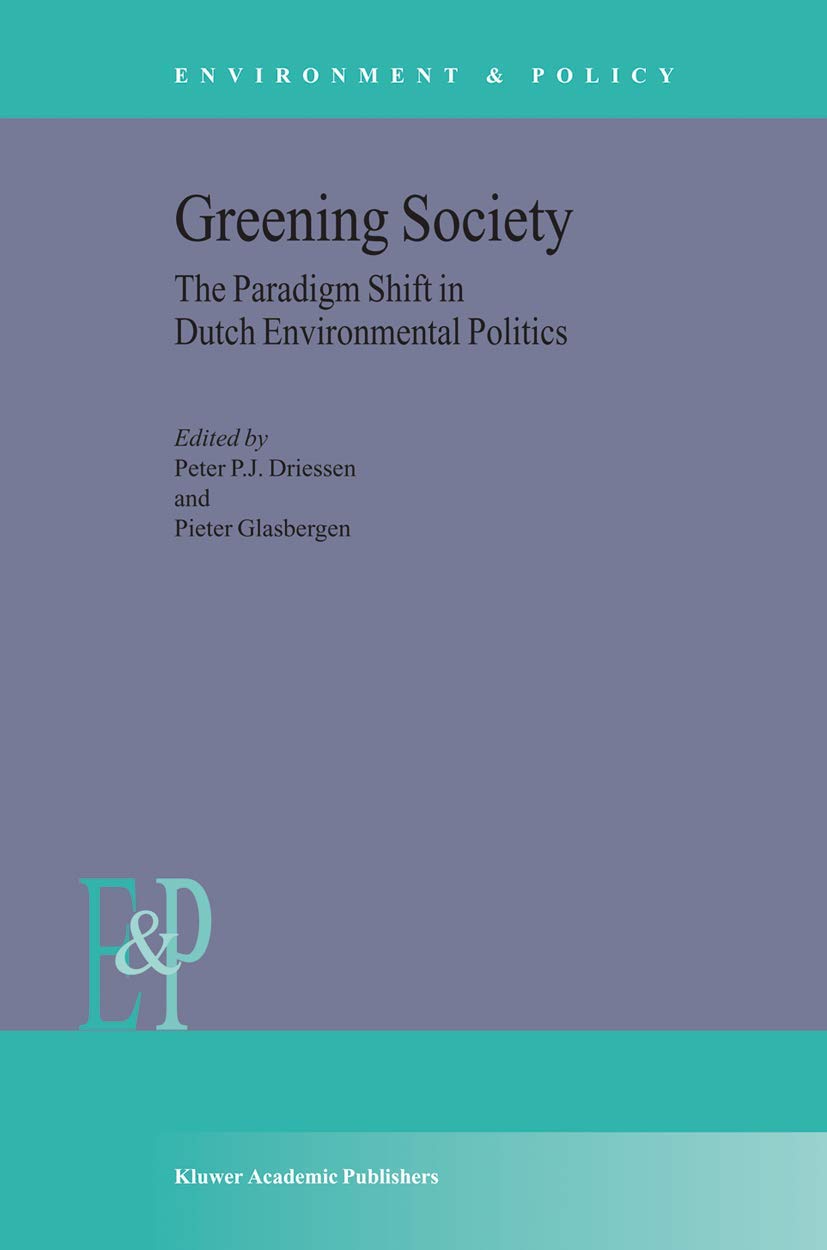
This book can be regarded as a monograph on the debates and developments in Dutch environmental policy. It has been written with a specific perspective in mind. First and foremost, the line of approach we have taken was from a multidisciplinary social science point of view. The trend in environmental policy is looked at from the angle of sociology, policy studies and political science. Secondly, all analyses depart from the paradigm shift concept. This particular paradigm shift is based on the fact that a radical change has taken shape over the years in the way environmental issues are handled. Previously, environmental policy had always been characterised by is topdown approach in which government determined the actual objectives of policy and assumed that it could win over business, non governmental organisations and citizens to act in line with those objectives. There was also a great deal of faith in the technical solutions to environmental issues. Today's environmental policy is based on a totally different philosophy. Environmental objectives are now reached in association with business, nongovernmental organisations and citizens. These actors are also involved in bringing environmental policy into practice. In other words, the implementation of policy has a more interactive nature. New relationships emerge between government, the market and civil society, and policy discourses also become integrated. The environmental interest is more often weighed against the econom1c interests, the spatial development and against social justice.
⚠️ WARNING (California Proposition 65):
This product may contain chemicals known to the State of California to cause cancer,
birth defects, or other reproductive harm.
For MAP (Minimum Advertised Price) violations and Intellectual Property (IP) or Trademark concerns, please contact:
support@ergodebooks.com
⚠️ California Proposition 65 Warning: Some products sold on this website may expose you to chemicals known to the State of California to cause cancer, birth defects, or other reproductive harm. For more information, visit www.P65Warnings.ca.gov.