
Title
Greening The Wind: Environmental And Social Considerations For Wind Power Development(World Bank Studies),New
Sold by Ergodebooks, an authorized reseller.
Returns accepted within 30 days | support@ergodebooks.com
Shipping Information
- Free Standard Shipping — United States only
- Processing Time: 3–5 business days
- Estimated Delivery: 6–10 business days after dispatch
- Double-boxed, fully insured & discreetly packaged
- Tracking number sent via email once dispatched
Returns & Refund
Returns accepted within 30 days of delivery.
Damaged or Defective Item
Free return shipping + replacement or full refund
Wrong Item Received
Free return shipping + replacement or full refund
Change of Mind
Return shipping at customer's expense · 25% restocking fee applies
Payment Option

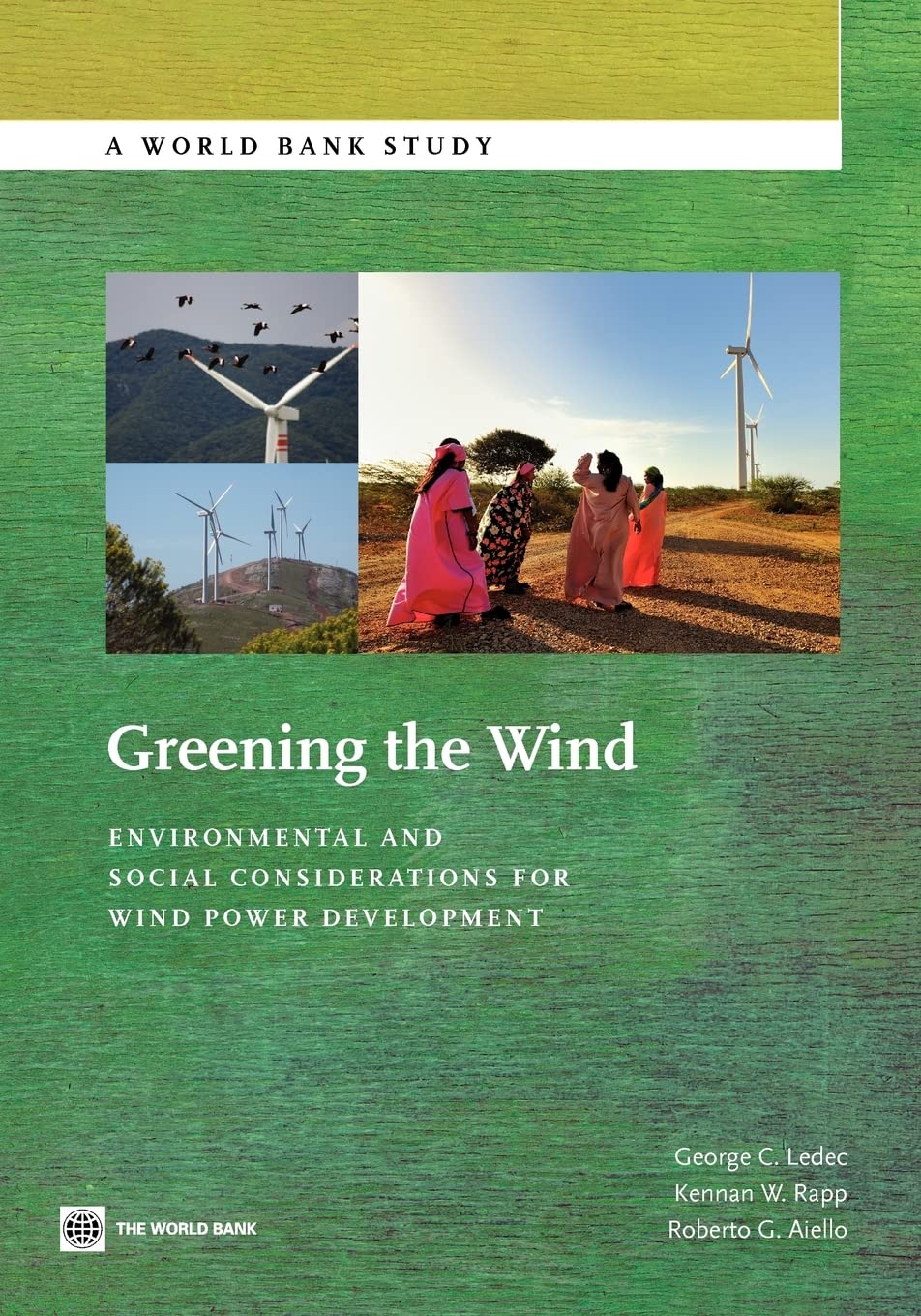
Wind power is widely regarded as a key component of an environmentally sustainable, lowcarbon energy future because it is renewable, requires almost no water, and generates nearzero emissions of greenhouse gases and other pollutants. Nonetheless, wind power development can involve significant environmental and social impacts that need to be fully recognized and appropriately managed. Of particular concern are (i) biodiversityrelated impacts upon birds, bats, and natural habitats; (ii) visual impacts, noise, radar and telecommunications interference, and other local nuisance impacts; and (iii) land acquisition, benefitssharing, indigenous communities, and other socioeconomic and cultural issues. This book, Greening the Wind: Environmental and Social Considerations for Wind Power Development in Latin America and Beyond, describes the key environmental and social impacts that are associated with largescale, gridconnected wind power development. It builds upon recent World Bank experience with wind power development in Latin America and other regions where wind power is growing rapidly. The book describes good practices and provides advice for the planning, construction, and operation of landbased wind power projects in ways that can (i) avoid significant harm to birds, bats, and natural habitats; (ii) manage visual and other local impacts in ways acceptable to most stakeholders; and (iii) effectively address compensation, benefitssharing, and sociocultural concerns. It provides information to enable wind project investors and operators, governments, development organizations, researchers, NGOs, and others to support wind power with reduced adverse environmental and social impacts thereby enhancing the longterm sustainability of this renewable energy technology. Specific chapters cover (i) key characteristics and trends in wind power development; (ii) making wind power safer for biodiversity; and (iii) addressing the social impacts of wind power development.
⚠️ WARNING (California Proposition 65):
This product may contain chemicals known to the State of California to cause cancer, birth defects, or other reproductive harm.
For more information, please visit www.P65Warnings.ca.gov.