
Title
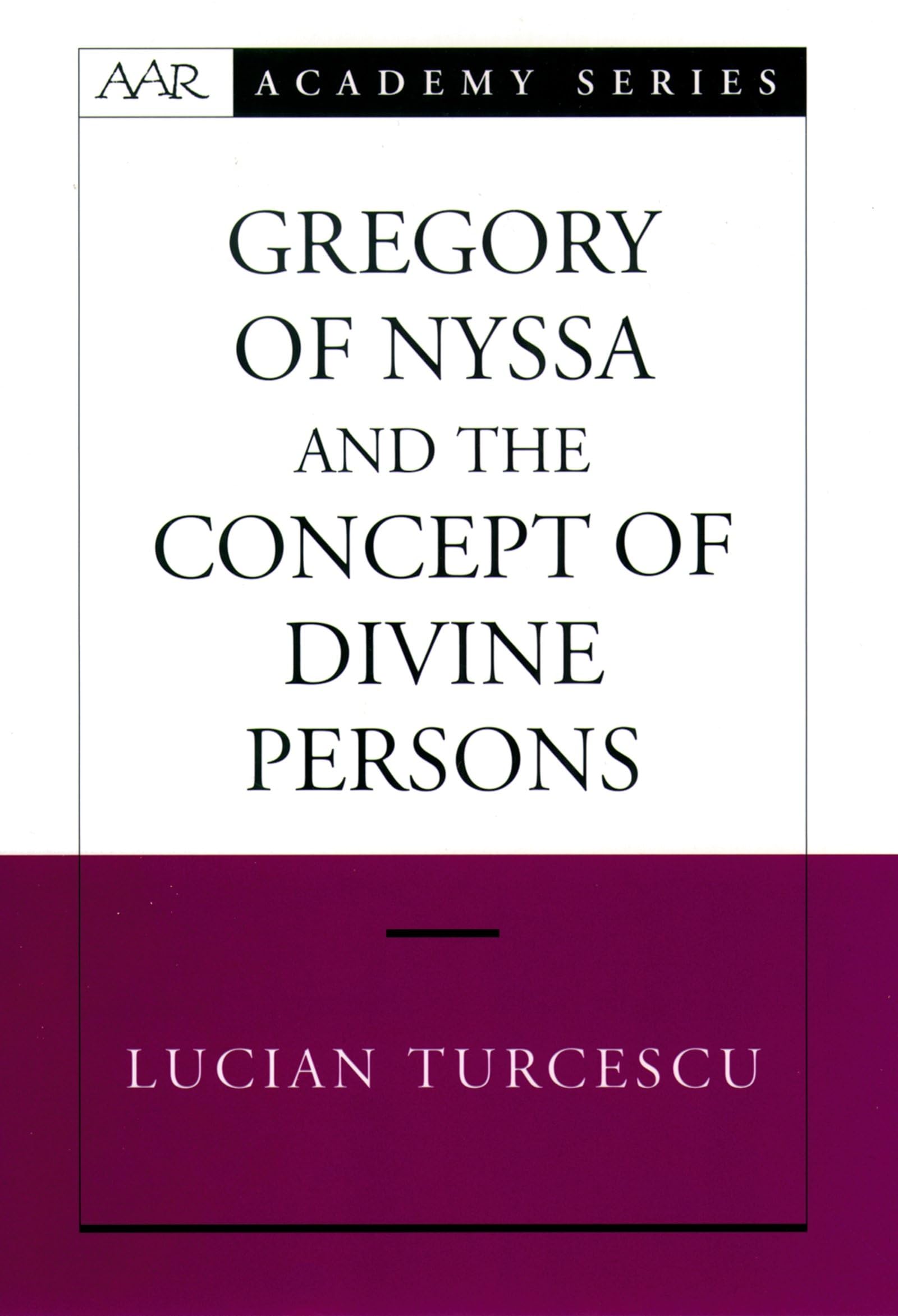
Gregory of Nyssa and the Concept of Divine Persons (AAR Academy Series),Used
Sold by Ergodebooks, an authorized reseller.
Returns accepted within 30 days | support@ergodebooks.com
Shipping Information
- Free Standard Shipping — United States only
- Processing Time: 3–5 business days
- Estimated Delivery: 6–10 business days after dispatch
- Double-boxed, fully insured & discreetly packaged
- Tracking number sent via email once dispatched
Returns & Refund
Returns accepted within 30 days of delivery.
Damaged or Defective Item
Free return shipping + replacement or full refund
Wrong Item Received
Free return shipping + replacement or full refund
Change of Mind
Return shipping at customer's expense · 25% restocking fee applies
Payment Option

The concept of personhood is central to a wide range of contemporary issues, ranging from reproductive rights to the death penalty and euthanasia. We may think that the concept of person is a modern development. In fact, however, this idea does not originate with our discovery of human rights, consciousness, and individuality.In this study Lucian Turcescu shows that the fourthcentury theologian Gregory of Nyssa developed a very sophisticated concept of the person in the context of his attempts to clarify the paradox of the Trinitya single God comprising three distinct persons. Turcescu offers the first indepth analysis of Gregory's writings about the divine persons. He shows that Gregory understood personhood as characterized by uniqueness, relationality, and freedom. He reasoned that the three persons of the Trinity have distinctive properties that make them individuals, that is, capable of being enumerated and circumscribed. But this idea of individuation, inherited from the neoPlatonists, falls short of expressing a clear notion of personal uniqueness. By itself it would suggest that a person is merely a collection of properties. Gregory's great contribution was to perceive the importance of relationality to personhood. The three divine persons know and love each other, are in communion with each other, and freely act together in their common will. This understanding, argues Turcescu, adds up to a concept of personal uniqueness much like our modern one.Turcescu's work not only contributes to our knowledge of the history of Trinitarian theology but can be helpful to theologians who are dealing with issues in contemporary ethics.
⚠️ WARNING (California Proposition 65):
This product may contain chemicals known to the State of California to cause cancer, birth defects, or other reproductive harm.
For more information, please visit www.P65Warnings.ca.gov.