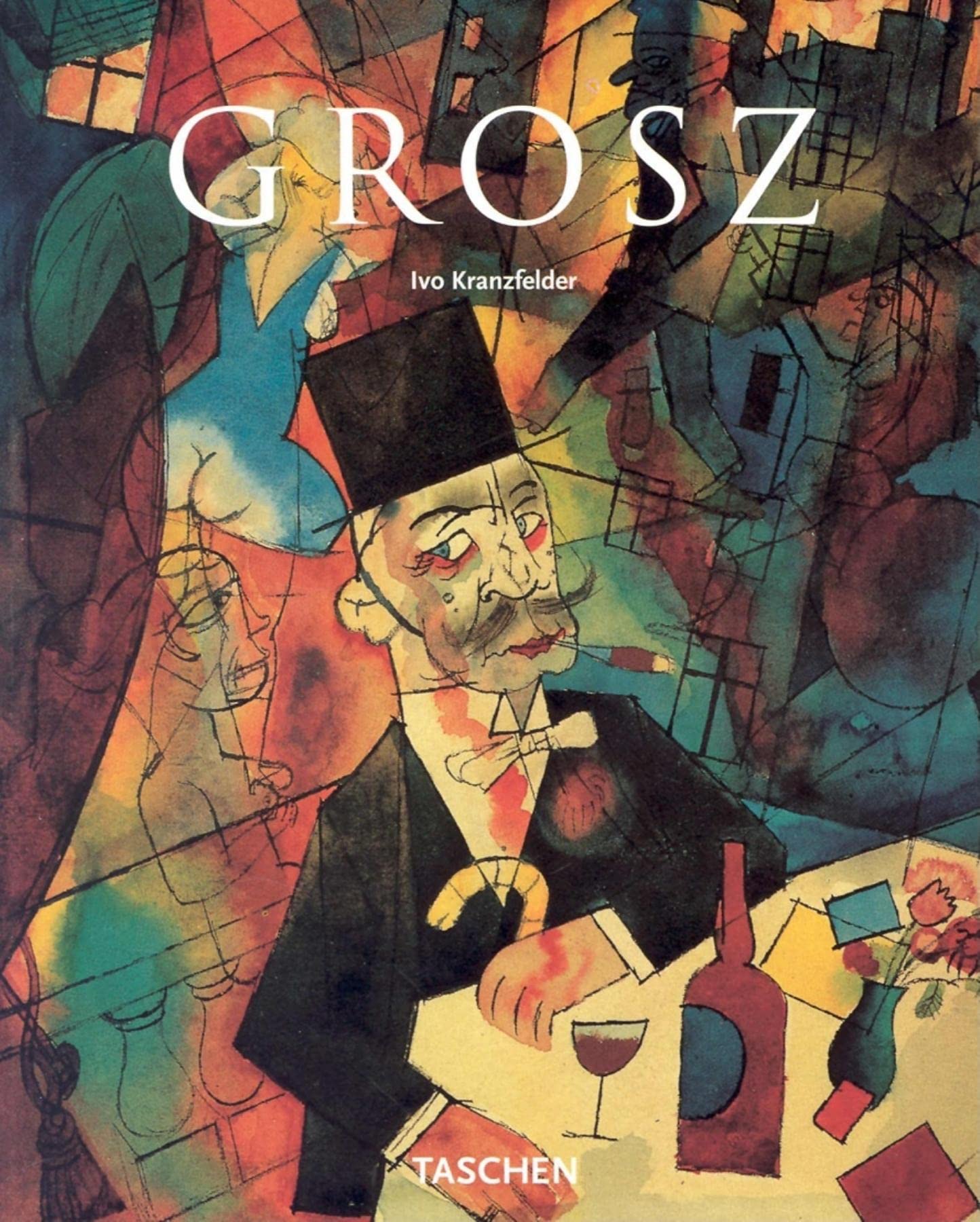
Savage caricatures: Acerbic painting as social commentary George Grosz (18931959) was one of the most important exponents of Dadaism, and therefore of political painting in general. He not only condemned both militarism and bourgeois culture, but also set himself in opposition to traditional forms of art. The decisive element in Groszs paintings is their content: in them he pointed out defects in the political and social conditions, literally arraigning them before the public. For Grosz, painting served as a political instrument: I drew and painted from a sense of contradiction and through my work tried to convince the world that it was ugly, sick, and phony. Fascinated by the metropolis, Grosz depicted the wild and dissolute life in the bars and nightclubs of the Weimar Republic in the 1920s. He directed his attention to the shady side of life and filled his canvas with caricatures of distorted figures. Grosz never permitted human beings to emerge as individuals, but instead always portrayed types, as representatives of a social level or class. After the publication of his candidly drawn pornographic illustrations, Grosz fell under strong criticism in the 1920s. The Nazis castigated his works as degenerate art. About the Series:Each book in TASCHENs Basic Art Series features: a detailed chronological summary of the life and oeuvre of the artist, covering his or her cultural and historical importance a concise biography approximately 100 colour illustrations with explanatory captions
⚠️ WARNING (California Proposition 65):
This product may contain chemicals known to the State of California to cause cancer,
birth defects, or other reproductive harm.
For more information, please visit
www.P65Warnings.ca.gov.
<div class="dynamic-checkout__content" id="dynamic-checkout-cart" data-shopify="dynamic-checkout-cart"> <shopify-accelerated-checkout-cart wallet-configs="[{"supports_subs":true,"supports_def_opts":false,"name":"shop_pay","wallet_params":{"shopId":73758048501,"merchantName":"Ergodebooks","personalized":true}},{"supports_subs":false,"supports_def_opts":false,"name":"amazon_pay","wallet_params":{"checkoutLanguage":"en_US","ledgerCurrency":"USD","placement":"Cart","sandbox":false,"merchantId":"A1G1ZY975O1T6J","productType":"PayAndShip","design":"C0002"}},{"supports_subs":true,"supports_def_opts":false,"name":"paypal","wallet_params":{"shopId":73758048501,"countryCode":"US","merchantName":"Ergodebooks","phoneRequired":true,"companyRequired":false,"shippingType":"shipping","shopifyPaymentsEnabled":true,"hasManagedSellingPlanState":false,"requiresBillingAgreement":false,"gatewayType":"MANAGED","merchantId":"L873BZSC9NMQS","sdkUrl":"https://www.paypal.com/sdk/js?components=buttons\u0026commit=false\u0026currency=USD\u0026locale=en_US\u0026client-id=AbasDhzlU0HbpiStJiN1KRJ_cNJJ7xYBip7JJoMO0GQpLi8ePNgdbLXkC7_KMeyTg8tnAKW4WKrh9qmf\u0026merchant-id=L873BZSC9NMQS\u0026intent=authorize","serviceableCountryCodes":["AE","AR","AT","AU","BE","BG","CA","CH","CO","CZ","DE","DK","EE","ES","FI","FR","GB","HR","HU","IE","IL","IN","IT","JP","LT","LU","LV","MX","NL","PL","PT","SA","SE","SG","SI","SK","TR","US"]}}]" access-token="c0f52a66b386e9fa5c0ab4c2febc737c" buyer-country="US" buyer-locale="en" buyer-currency="USD" shop-id="73758048501" cart-id="62b81eab58b4afdbc01a8517af6b5cef" enabled-flags="["a1d1f9a1"]" > <div class="wallet-button-wrapper"> <ul class='wallet-cart-grid wallet-cart-grid--skeleton' role="list" data-shopify-buttoncontainer="true"> <li data-testid='grid-cell' class='wallet-cart-button-container'><div class='wallet-cart-button wallet-cart-button__skeleton' role='button' disabled aria-hidden='true'> </div></li><li data-testid='grid-cell' class='wallet-cart-button-container'><div class='wallet-cart-button wallet-cart-button__skeleton' role='button' disabled aria-hidden='true'> </div></li><li data-testid='grid-cell' class='wallet-cart-button-container'><div class='wallet-cart-button wallet-cart-button__skeleton' role='button' disabled aria-hidden='true'> </div></li> </ul> </div> </shopify-accelerated-checkout-cart> </div>