If you have any questions, you are always welcome to contact us. We'll get back to you as soon as possible, withing 24 hours on weekdays.
Customer service
All questions about your order, return and delivery must be sent to our customer service team by e-mail at yourstore@yourdomain.com
Sale & Press
If you are interested in selling our products, need more information about our brand or wish to make a collaboration, please contact us at press@yourdomain.com
Help
If you have any questions, you are always welcome to contact us. We'll get back to you as soon as possible, withing 24 hours on weekdays.
Customer service
All questions about your order, return and delivery must be sent to our customer service team by e-mail at yourstore@yourdomain.com
Sale & Press
If you are interested in selling our products, need more information about our brand or wish to make a collaboration, please contact us at press@yourdomain.com
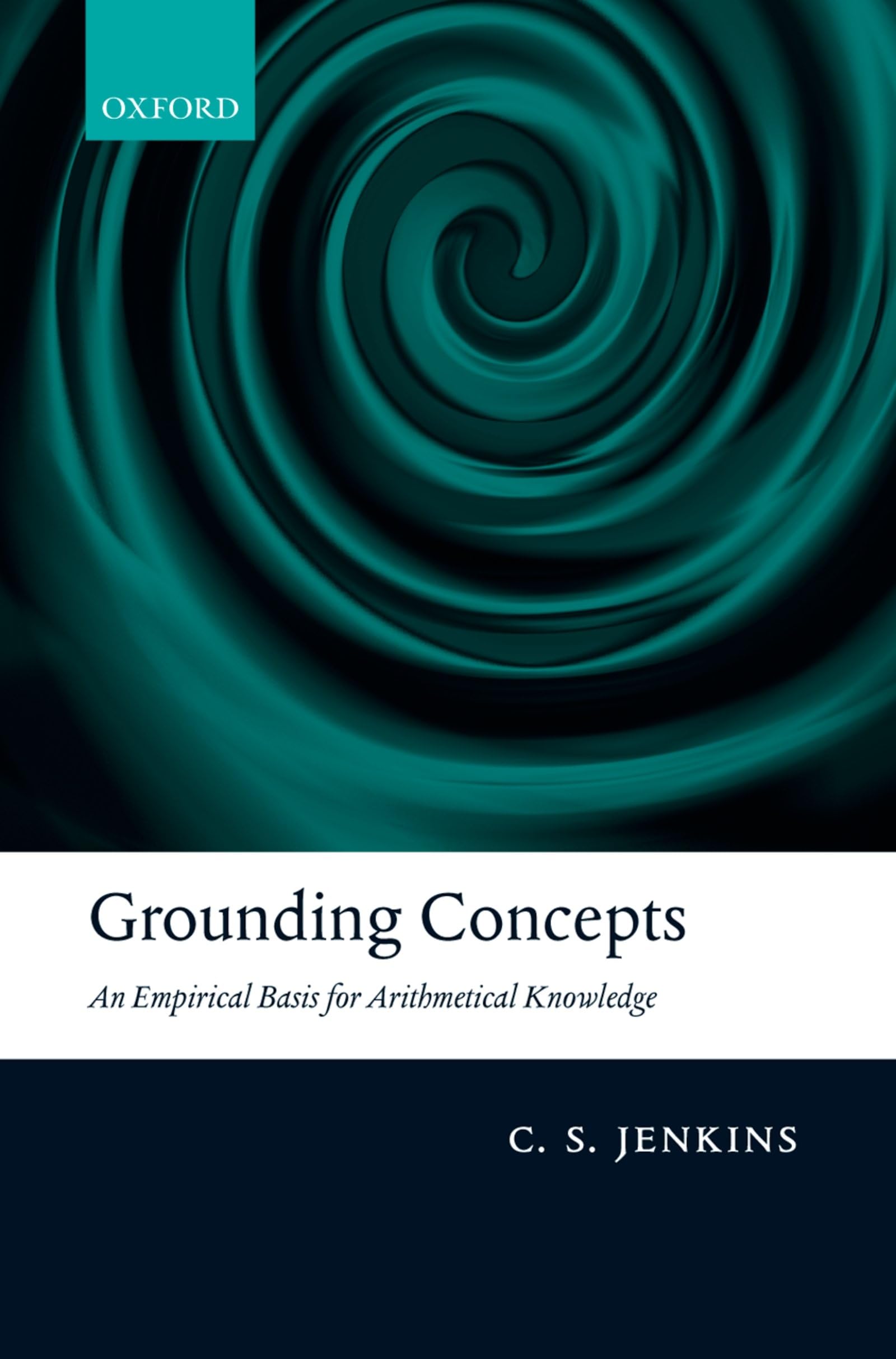
Grounding Concepts tackles the issue of arithmetical knowledge, developing a new position which respects three intuitions which have appeared impossible to satisfy simultaneously: a priorism, mindindependence realism, and empiricism.Drawing on a wide range of philosophical influences, but avoiding unnecessary technicality, a view is developed whereby arithmetic can be known through the examination of empirically grounded concepts. These are concepts which, owing to their relationship to sensory input, are nonaccidentally accurate representations of the mindindependent world. Examination of such concepts is an armchair activity, but enables us to recover information which has been encoded in the way our concepts represent. Emphasis on the key role of the senses in securing this coding relationship means that the view respects empiricism, but without undermining the mindindependence of arithmetic or the fact that it is knowable by means of a special armchair method called conceptual examination.A wealth of related issues are covered during the course of the book, including definitions of realism, conditions on knowledge, the problems with extant empiricist approaches to the a priori, mathematical explanation, mathematical indispensability, pragmatism, conventionalism, empiricist criteria for meaningfulness, epistemic externalism and foundationalism. The discussion encompasses themes from the work of Locke, Kant, Ayer, Wittgenstein, Quine, McDowell, Field, Peacocke, Boghossian, and many others.
⚠️ WARNING (California Proposition 65):
This product may contain chemicals known to the State of California to cause cancer,
birth defects, or other reproductive harm.
For MAP (Minimum Advertised Price) violations and Intellectual Property (IP) or Trademark concerns, please contact:
support@ergodebooks.com
⚠️ California Proposition 65 Warning: Some products sold on this website may expose you to chemicals known to the State of California to cause cancer, birth defects, or other reproductive harm. For more information, visit www.P65Warnings.ca.gov.