
Title
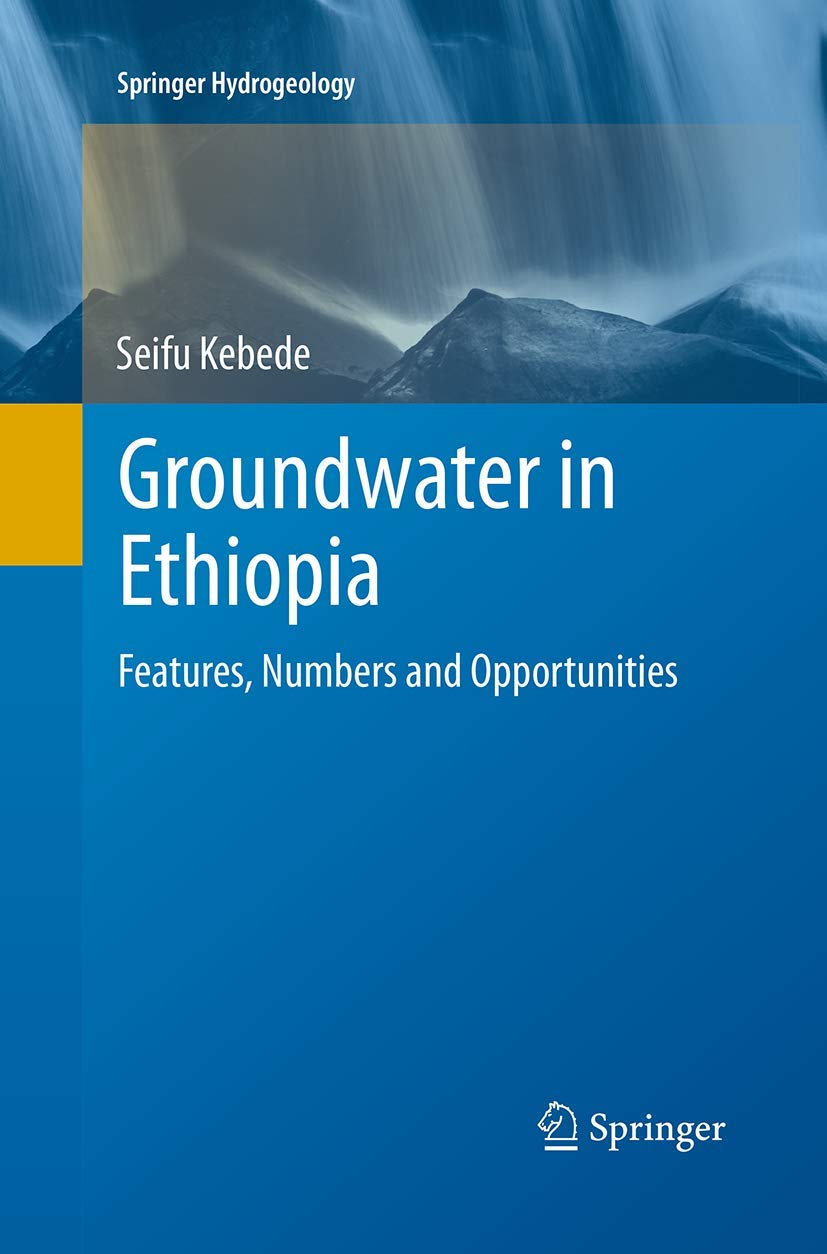
Groundwater in Ethiopia: Features, Numbers and Opportunities (Springer Hydrogeology),Used
Sold by Ergodebooks, an authorized reseller.
Returns accepted within 30 days | support@ergodebooks.com
Shipping Information
- Free Standard Shipping — United States only
- Processing Time: 3–5 business days
- Estimated Delivery: 6–10 business days after dispatch
- Double-boxed, fully insured & discreetly packaged
- Tracking number sent via email once dispatched
Returns & Refund
Returns accepted within 30 days of delivery.
Damaged or Defective Item
Free return shipping + replacement or full refund
Wrong Item Received
Free return shipping + replacement or full refund
Change of Mind
Return shipping at customer's expense · 25% restocking fee applies
Payment Option

This book provides a comprehensive description of groundwater resources in Ethiopia and its various dimensions (groundwater as resource, environmental functions, and socioeconomics). The prevailing knowledge of groundwater resources in Ethiopia (or elsewhere in Sub Saharan Africa) was based on geological and stratigraphic framework known nearly four decades ago (mainly 1960's and 70's). Thanks to the substantial geoscientific research since the 70's a new set of relevant geological/stratigrahpic data has been created that helps to redefine our understanding of groundwater resources in Africa as a whole and in Ethiopia in particular:a) For the first time the basement aquifer of Ethiopia has been described hydrogeologically based on genesis of regoliths (deep weathering and striping history); clear regional difference in groundwater potential is shown for the first time; comparative accounty has been given regarding groundwater occurrence in the generally low grade basement rocks of Ethiopia (Arabian Nubian shield) and high grade basement rocks of the rest of Africa.b) For the first time groundwater occurrence in multilayred sedimentary rocks account for spatial variation in degree of karstification; deformation history, and stratigraphy.c) The vast volcanic aquifers of Ethiopia which have previously classified based on their ages are now reclassified based on age, morphology (eg. groundwater in plateau volcanics, groundwater in shield volcanics) and aquifer structure.d) The loose alluvio lacustrine sediments which were known as least extensive in previous works based on areal cover are in fact shown to host the most voluminous groundwater resources in Ethiopia. These aquifers have now been described based on their geomorphology, extent, and genesis.The aim of this book is to use these newly created knowledge to redefine the understanding of groundwater resources in Ethiopia.
⚠️ WARNING (California Proposition 65):
This product may contain chemicals known to the State of California to cause cancer, birth defects, or other reproductive harm.
For more information, please visit www.P65Warnings.ca.gov.