
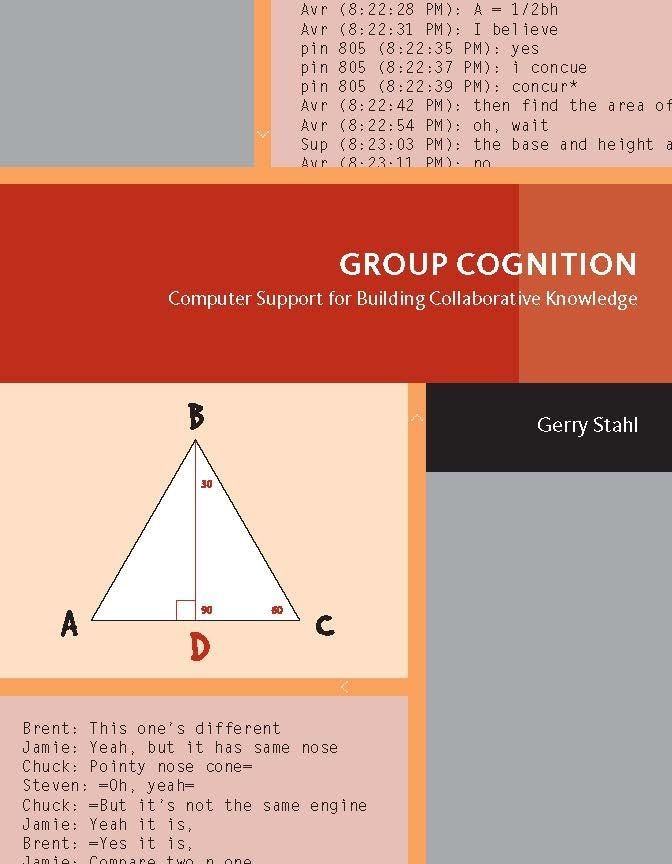
Title
Group Cognition: Computer Support for Building Collaborative Knowledge (Acting with Technology),Used
Sold by Ergodebooks, an authorized reseller.
Returns accepted within 30 days | support@ergodebooks.com
Shipping Information
- Free Standard Shipping — United States only
- Processing Time: 3–5 business days
- Estimated Delivery: 6–10 business days after dispatch
- Double-boxed, fully insured & discreetly packaged
- Tracking number sent via email once dispatched
Returns & Refund
Returns accepted within 30 days of delivery.
Damaged or Defective Item
Free return shipping + replacement or full refund
Wrong Item Received
Free return shipping + replacement or full refund
Change of Mind
Return shipping at customer's expense · 25% restocking fee applies
Payment Option

Exploring the software design, social practices, and collaboration theory that would be needed to support group cognition; collective knowledge that is constructed by small groups online.Innovative uses of global and local networks of linked computers make new ways of collaborative working, learning, and acting possible. In Group Cognition Gerry Stahl explores the technological and social reconfigurations that are needed to achieve computersupported collaborative knowledge buildinggroup cognition that transcends the limits of individual cognition. Computers can provide active media for social group cognition where ideas grow through the interactions within groups of people; software functionality can manage group discourse that results in shared understandings, new meanings, and collaborative learning. Stahl offers software design prototypes, analyzes empirical instances of collaboration, and elaborates a theory of collaboration that takes the group, rather than the individual, as the unit of analysis.Stahl's design studies concentrate on mechanisms to support group formation, multiple interpretive perspectives, and the negotiation of group knowledge in applications as varied as collaborative curriculum development by teachers, writing summaries by students, and designing space voyages by NASA engineers. His empirical analysis shows how, in smallgroup collaborations, the group constructs intersubjective knowledge that emerges from and appears in the discourse itself. This discovery of group meaning becomes the springboard for Stahl's outline of a social theory of collaborative knowing. Stahl also discusses such related issues as the distinction between meaning making at the group level and interpretation at the individual level, appropriate research methodology, philosophical directions for group cognition theory, and suggestions for further empirical work.
⚠️ WARNING (California Proposition 65):
This product may contain chemicals known to the State of California to cause cancer, birth defects, or other reproductive harm.
For more information, please visit www.P65Warnings.ca.gov.