
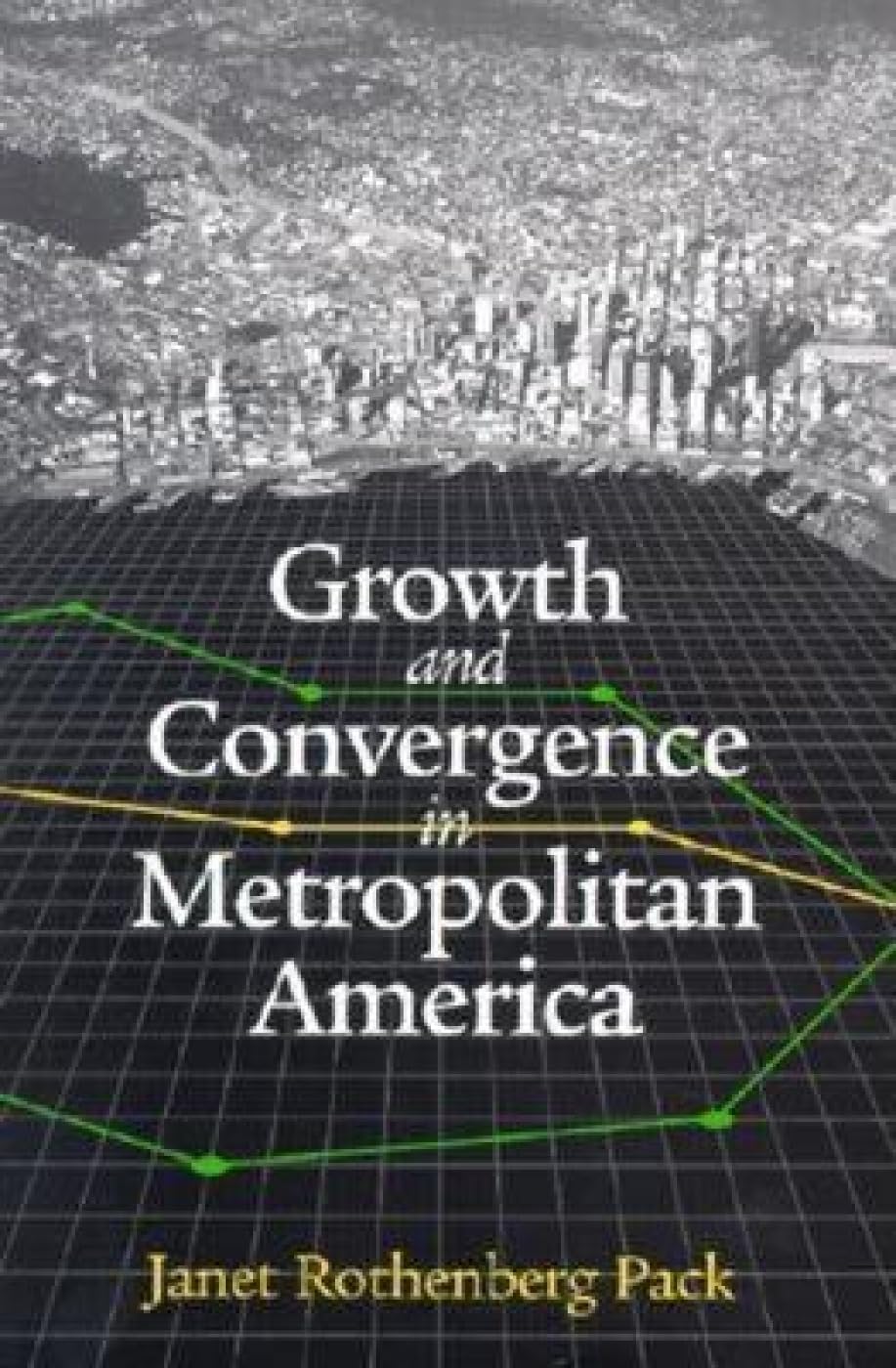
Title
Growth And Convergence In Metropolitan America (James A. Johnson Metro Series),Used
Sold by Ergodebooks, an authorized reseller.
Returns accepted within 30 days | support@ergodebooks.com
Shipping Information
- Free Standard Shipping — United States only
- Processing Time: 3–5 business days
- Estimated Delivery: 6–10 business days after dispatch
- Double-boxed, fully insured & discreetly packaged
- Tracking number sent via email once dispatched
Returns & Refund
Returns accepted within 30 days of delivery.
Damaged or Defective Item
Free return shipping + replacement or full refund
Wrong Item Received
Free return shipping + replacement or full refund
Change of Mind
Return shipping at customer's expense · 25% restocking fee applies
Payment Option

While the suburbs of most metropolitan areas are wealthier than their urban counterparts, rapid regional growth can improve the welfare of both city and suburb, according to a new book from Janet Rothenberg Pack. In Growth and Convergence in Metropolitan America, Pack identifies growth trends that have contributed to the convergence of welfare among regions. Pack analyzes demographic, social, and economic data from 277 metropolitan areas in the northeastern, midwestern, southern, and western United States between 1960 and 1990. Her analysis reveals a strong connection between regional growth and improved socioeconomic vitality. She finds little connection between population growththe focus of many previous studiesand wellbeing, but a strong connection between per capita income growth and wellbeing. Moreover, there has been a major change in the factors associated with economic growth between the 1970s and 1980s. In the latter decade, the importance of an educated labor force and major universities have assumed major importance. This appears likely to have continued to be true in the 1990s. While current urban policy has focused on intrametropolitan cooperation as the key to improving conditions in declining or slowgrowing urban areas, Pack's analysis emphasizes the major differences among the larger regions of the countryboth their cities and suburbs. From this perspective, national policies, both macroeconomic policy and the progressive income tax, appear to be the most effective influences promoting regional convergence and improving the socioeconomic wellbeing of both city and suburban residents.'
⚠️ WARNING (California Proposition 65):
This product may contain chemicals known to the State of California to cause cancer, birth defects, or other reproductive harm.
For more information, please visit www.P65Warnings.ca.gov.