
Title
Growth Theory: An Exposition,Used
Sold by Ergodebooks, an authorized reseller.
Returns accepted within 30 days | support@ergodebooks.com
Shipping Information
- Free Standard Shipping — United States only
- Processing Time: 3–5 business days
- Estimated Delivery: 6–10 business days after dispatch
- Double-boxed, fully insured & discreetly packaged
- Tracking number sent via email once dispatched
Returns & Refund
Returns accepted within 30 days of delivery.
Damaged or Defective Item
Free return shipping + replacement or full refund
Wrong Item Received
Free return shipping + replacement or full refund
Change of Mind
Return shipping at customer's expense · 25% restocking fee applies
Payment Option

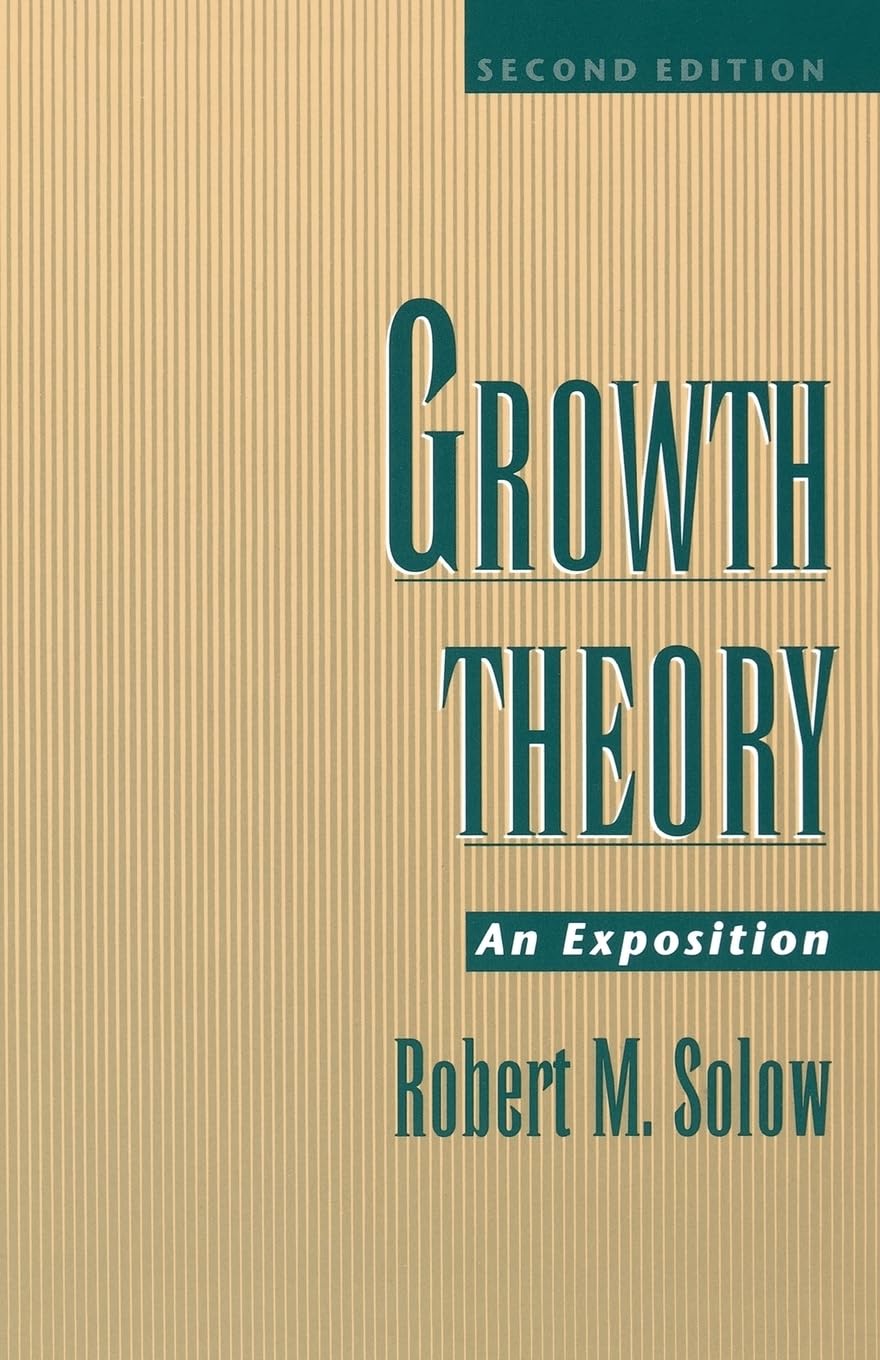
From Nobel Laureate Robert M. Solow comes this second edition of his classic text, Growth Theory, to which he has added six new chapters. The book begins with the author's Nobel Prize Lecture 'Growth Theory and After' (1987), followed by the six original chapters of the first edition. The author maintains that basic growth theory is still best summarized in these chapters.The publication of the first edition in 1970 coincided with a worldwide productivity slowdown; during that time very little work occurred on growth theory. It wasn't until the 1980s that a surge of new research appeared, including the work of Roemer, Lucas, Grossman/Helpman, Aghion, and Howitt. The second half of the book deals with this relatively recent surge, often referred to as 'the new endogenous growth theory.' As a bridge to the six new chapters, Solow includes an essay entitled 'Intermezzo' in which he discusses this transition. The author recasts his model to help the reader compare the relationships among all models; he deals rather tersely, for reasons explained in the book, with 'AK' theory, convergence, and international crosssection studies rather tersely. The author concludes by drawing some lessons from the new growth theory and suggests where gaps may be filled in future research. Although Solow disagrees strongly with much of the recent research, he is quick to acknowledge some of its outstanding contributions.This second edition is essential reading for graduate courses in macroeconomics as well as courses on growth theory at both undergraduate and graduate levels. No other book provides this broad overview of the whole field and its evolution.
⚠️ WARNING (California Proposition 65):
This product may contain chemicals known to the State of California to cause cancer, birth defects, or other reproductive harm.
For more information, please visit www.P65Warnings.ca.gov.