
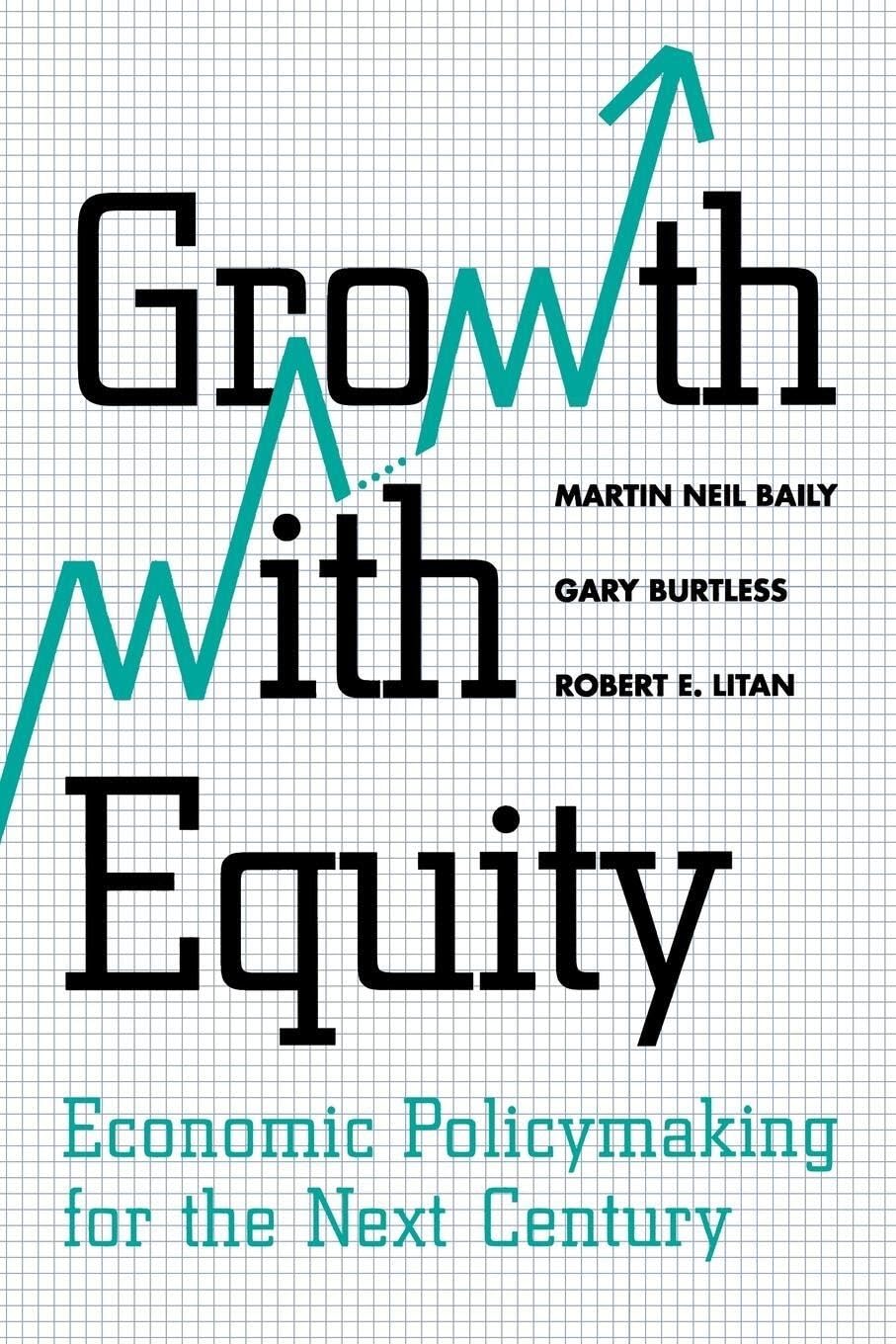
Title
Growth With Equity: Economic Policymaking For The Next Century,New
Sold by Ergodebooks, an authorized reseller.
Returns accepted within 30 days | support@ergodebooks.com
Shipping Information
- Free Standard Shipping — United States only
- Processing Time: 3–5 business days
- Estimated Delivery: 6–10 business days after dispatch
- Double-boxed, fully insured & discreetly packaged
- Tracking number sent via email once dispatched
Returns & Refund
Returns accepted within 30 days of delivery.
Damaged or Defective Item
Free return shipping + replacement or full refund
Wrong Item Received
Free return shipping + replacement or full refund
Change of Mind
Return shipping at customer's expense · 25% restocking fee applies
Payment Option

For nearly two decades the U.S. economy has been plagued by two disturbing economic trends: the slowdown in the growth rates of productivity and average real wages and the increase in wage and income inequality. The federal budget is in chronic deficit. Imports have far exceeded exports for more than a decade. American competitiveness has been a source of concern for even longer. Many Americans worry that foreigners are buying up U.S. companies, that the economy is losing its manufacturing base, and that the gap between rich and poor is widening. In this book three of the nation's most noted economists look at the primary reasons for these trends and assess which of the many suggestions for change in policywhether for increased tax incentives for investment, education reform, or accelerated research and developmentare likely to work and which may not work and could even hinder economic development. The author's discuss a variety of issues connected with deindustrialization and diminished competitiveness, distinguishing between problems that would be of real concern and those that should not. They evaluate explanations for slow growth in aggregate productivity in the United States and its relation to slower growth in other industrialized countries. They discuss the performance of the various sectors of the U.S. economy and systematically examine the evidence for and against the major proposals for correcting the adverse trends in productivity and inequity. Growth With Equity clearly explains how the country can accomplish the challenge of accelerating growth and narrowing the gap that separates the rich from the poor. While recognizing that some of their recommendations may be politically painful, the authors stress the importance of adopting a purposeful, longrange policy to encourage growth, ensure equity, and reduce the government's equity.
⚠️ WARNING (California Proposition 65):
This product may contain chemicals known to the State of California to cause cancer, birth defects, or other reproductive harm.
For more information, please visit www.P65Warnings.ca.gov.