
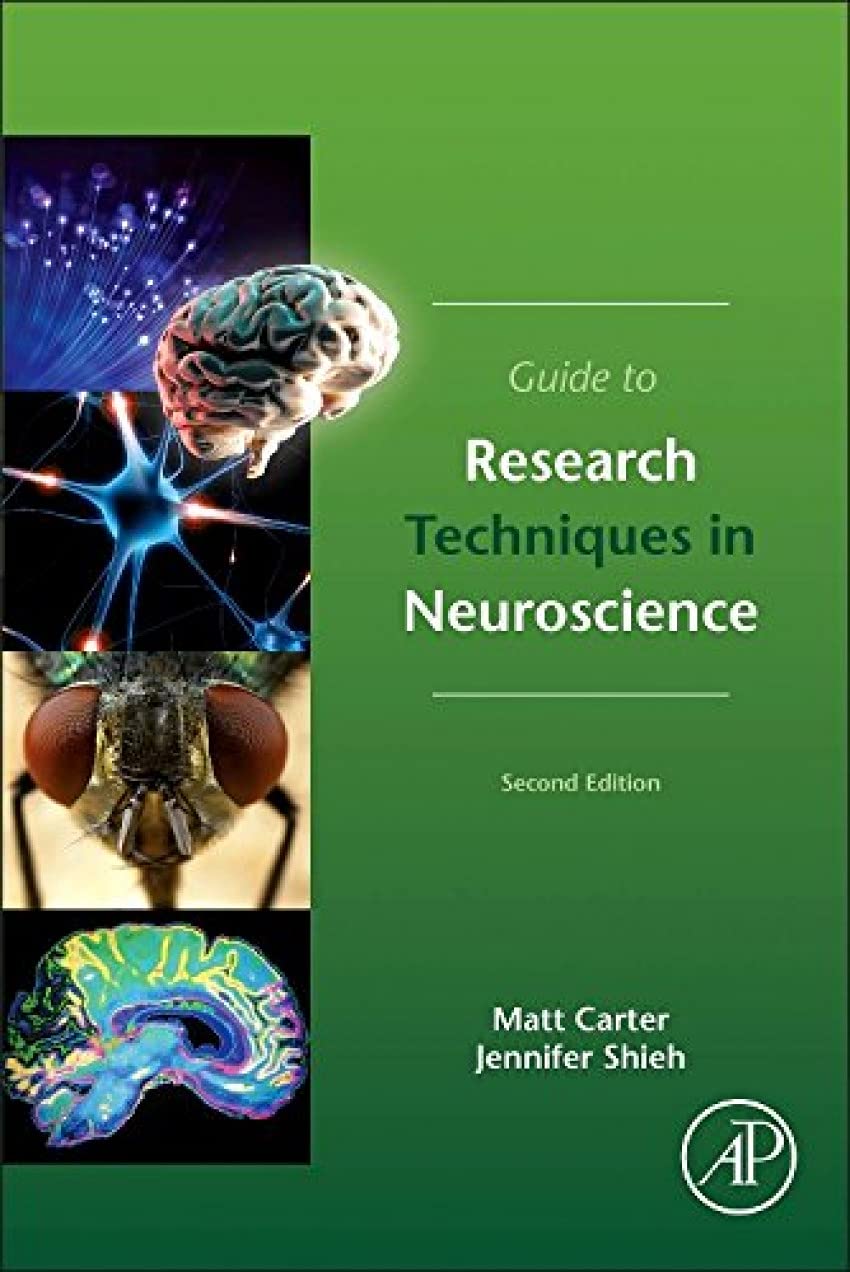
Title
Guide To Research Techniques In Neuroscience
Sold by Ergodebooks, an authorized reseller.
Returns accepted within 30 days | support@ergodebooks.com
Shipping Information
- Free Standard Shipping — United States only
- Processing Time: 3–5 business days
- Estimated Delivery: 6–10 business days after dispatch
- Double-boxed, fully insured & discreetly packaged
- Tracking number sent via email once dispatched
Returns & Refund
Returns accepted within 30 days of delivery.
Damaged or Defective Item
Free return shipping + replacement or full refund
Wrong Item Received
Free return shipping + replacement or full refund
Change of Mind
Return shipping at customer's expense · 25% restocking fee applies
Payment Option

Neuroscience Is, By Definition, A Multidisciplinary Field: Some Scientists Study Genes And Proteins At The Molecular Level While Others Study Neural Circuitry Using Electrophysiology And Highresolution Optics. A Single Topic Can Be Studied Using Techniques From Genetics, Imaging, Biochemistry, Or Electrophysiology. Therefore, It Can Be Daunting For Young Scientists Or Anyone New To Neuroscience To Learn How To Read The Primary Literature And Develop Their Own Experiments.This Volume Addresses That Gap, Gathering Multidisciplinary Knowledge And Providing Tools For Understanding The Neuroscience Techniques That Are Essential To The Field, And Allowing The Reader To Design Experiments In A Variety Of Neuroscience Disciplines. Written To Provide A Handson Approach For Graduate Students, Postdocs, Or Anyone New To The Neurosciences Techniques Within One Field Are Compared, Allowing Readers To Select The Best Techniques For Their Own Work Includes Key Articles, Books, And Protocols For Additional Detailed Study Data Analysis Boxes In Each Chapter Help With Data Interpretation And Offer Guidelines On How Best To Represent Results Walkthrough Boxes Guide Readers Stepbystep Through Experiments
⚠️ WARNING (California Proposition 65):
This product may contain chemicals known to the State of California to cause cancer, birth defects, or other reproductive harm.
For more information, please visit www.P65Warnings.ca.gov.
- Q: How many pages does this book have? A: This book has four hundred eighteen pages. It provides a comprehensive overview of research techniques in neuroscience.
- Q: What is the binding type of this book? A: The binding type is paperback. This makes it lightweight and easy to handle for students and professionals alike.
- Q: What are the dimensions of this book? A: The dimensions are five point ninety-eight inches by zero point seventy-five inches by eight point seventy-four inches. These measurements make it convenient for reading and transport.
- Q: Who is the author of this book? A: The author is Matt Carter. He brings expertise in neuroscience to guide readers through complex research techniques.
- Q: What field does this book cover? A: This book covers the field of neuroscience. It emphasizes multidisciplinary approaches to understanding and conducting research.
- Q: Is this book suitable for beginners? A: Yes, this book is suitable for beginners. It is designed to help new scientists learn how to read literature and design experiments.
- Q: Can I use this book for advanced neuroscience studies? A: Yes, advanced students can benefit from this book. It provides tools and comparisons of techniques suitable for various levels of expertise.
- Q: Does this book include step-by-step guides? A: Yes, it includes step-by-step guides through experiments. These walk-through boxes are designed to aid understanding and application.
- Q: Will this book help with data interpretation? A: Yes, it includes data analysis boxes in each chapter. These boxes provide guidelines on interpreting results effectively.
- Q: Is there additional resource material in this book? A: Yes, it includes key articles, books, and protocols for further study. This enhances the learning experience for readers.
- Q: How should I store this book? A: Store this book in a cool, dry place. Keeping it away from direct sunlight will help preserve the quality of the pages.
- Q: Can I lend this book to someone? A: Yes, you can lend this book to others. Its accessible content makes it a great resource for anyone interested in neuroscience.
- Q: What if the book arrives damaged? A: If the book arrives damaged, contact customer support. They typically provide return instructions or replacements.
- Q: Is there a warranty for this book? A: No, there is usually no warranty for books. However, check the return policy for any specific conditions.
- Q: What is the main audience for this book? A: The main audience includes graduate students and postdocs. It is also useful for anyone new to the neuroscience field.