
Title


Guide to the Stars,New
Sold by Ergodebooks, an authorized reseller.
Returns accepted within 30 days | support@ergodebooks.com
Shipping Information
- Free Standard Shipping — United States only
- Processing Time: 3–5 business days
- Estimated Delivery: 6–10 business days after dispatch
- Double-boxed, fully insured & discreetly packaged
- Tracking number sent via email once dispatched
Returns & Refund
Returns accepted within 30 days of delivery.
Damaged or Defective Item
Free return shipping + replacement or full refund
Wrong Item Received
Free return shipping + replacement or full refund
Change of Mind
Return shipping at customer's expense · 25% restocking fee applies
Payment Option

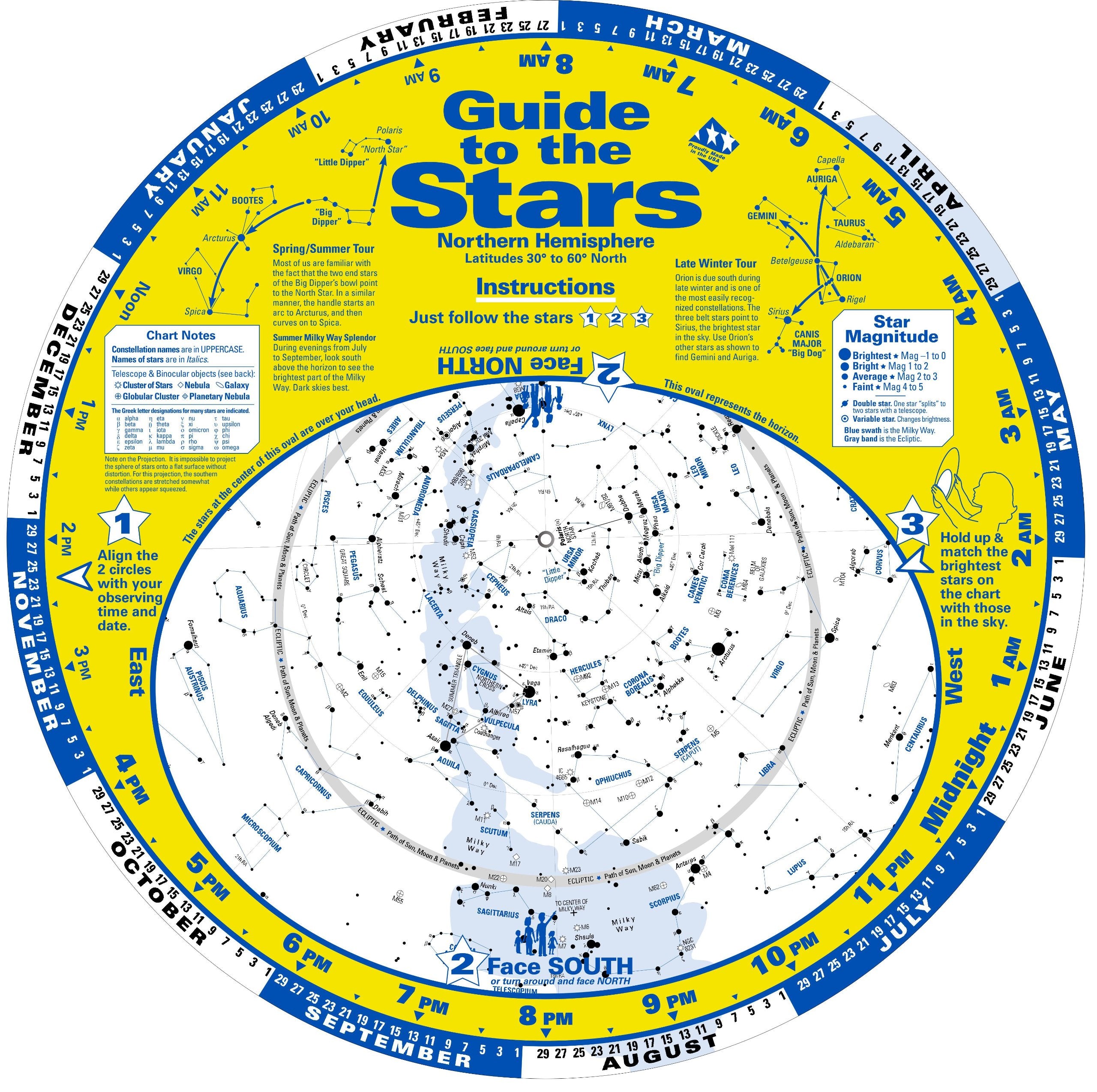
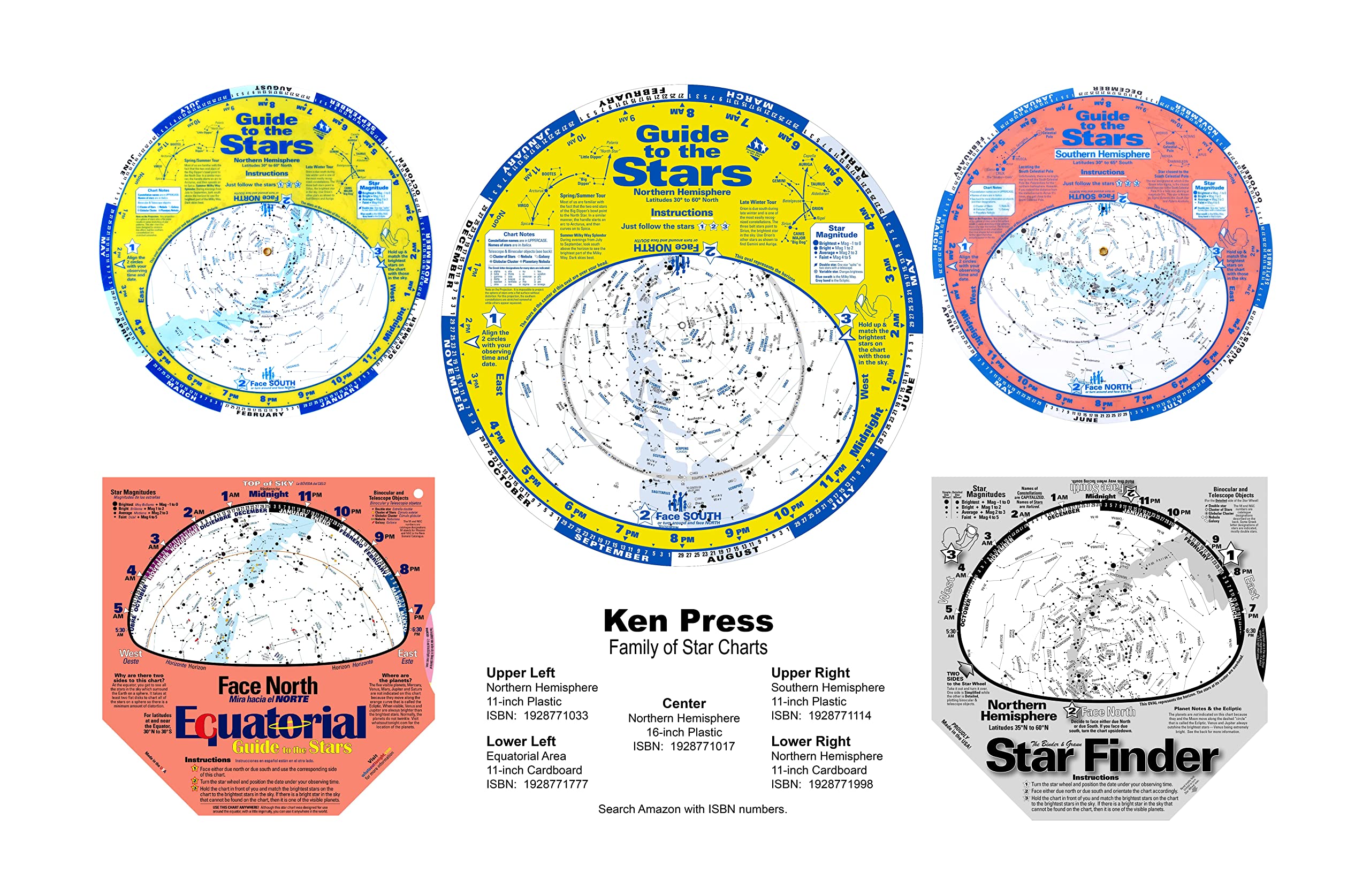
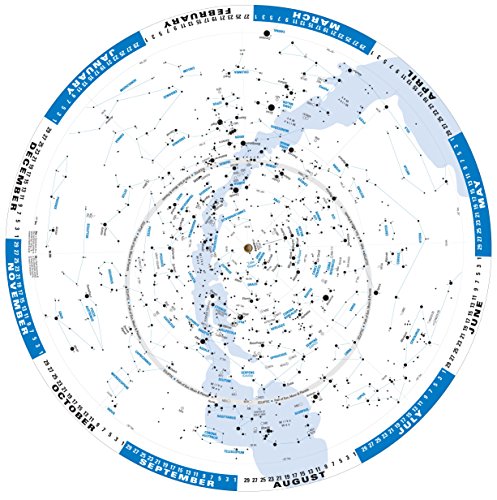
The 5th edition (published 2013) of the 16inch diameter plastic Guide to the Stars chart is an instrument to help you identify the constellations. You simply dialin your observing time and date to find the set of constellations visible in your sky (this is accomplished by turning the clear top piece). Although this chart is designed for beginners, seasoned amateur astronomers will find it useful, too.This chart can be used anywhere in the world between latitudes 30 and 60 degrees North, which includes the US and Canada, England, Europe, Northern China and Japan.The 16inch diameter is large and easy to read, ideal for families, teachers and seniors! The 5th edition has been improved by indicating more binocular objects and providing more pertinent information on the back, all without increasing clutter or decreasing the text size.The front chart indicates 70 Constellations, the Names of 55 Stars, the Milky Way Band, the Ecliptic (which is the path of the Sun, Moon and Planets), 54 favorite Double Stars, the Summer Triangle, Winter/Summer Tours and 56 Galaxies, Star Clusters and Nebulae that can be observed with binoculars or a small telescope. Additionally, favorite star patterns are noted, like the Great Square of Pegasus, the Circlet of Pisces, the Northern Cross of Cygnus and others.On the back side, there are useful tables and other astronomical information, including: Mythology, Yearly Meteor Showers, Moon map, Phases of the Moon, Facts about the Planets, A Short history of Astronomy, the 10 Brightest Stars, Information about the Binocular & Telescope Objects (those on the chart), Why Stars Twinkle, additional instructions for using the chart and more.PLANET NOTE. Most star charts, like this one, do not indicate, on the chart, the position of the Planets or Moon because these objects move through the constellations of the zodiac, along a path in the sky called the Ecliptic (indicated on the chart). Website support is provided to help identify the planets that are visible in the sky.This chart is also available in a smaller 11inch diameter (ISBN 1928771033). And, there is a lowcost kid's version printed in color on sturdy cardlike paper (ISBN 192877122X), as well as the Equatorial Guide to the Stars for use in and around the equator (ISBN 1928771777). Finally, there is the Celestial Atlas Menor, 128 pages chockfull of star charts and tables (ISBN 9781928771883).
⚠️ WARNING (California Proposition 65):
This product may contain chemicals known to the State of California to cause cancer, birth defects, or other reproductive harm.
For more information, please visit www.P65Warnings.ca.gov.
- Q: What are the dimensions of the Guide to the Stars chart? A: The Guide to the Stars chart has a diameter of sixteen inches. It is designed to be large and easy to read, making it suitable for families and educators.
- Q: What is the binding type of the Guide to the Stars? A: The Guide to the Stars is bound as a map. This binding type allows for easy handling and usability when outdoors.
- Q: How many pages does the Guide to the Stars have? A: The Guide to the Stars includes three pages. These pages contain valuable information and instructions for using the chart effectively.
- Q: Who is the author of the Guide to the Stars? A: The author of the Guide to the Stars is Ken Graun. He has designed this chart to assist both beginners and experienced astronomers.
- Q: What constellations are included in the Guide to the Stars? A: The chart indicates seventy constellations. It also highlights the names of fifty-five stars and various celestial objects like galaxies and star clusters.
- Q: How do I use the Guide to the Stars chart? A: To use the Guide to the Stars, simply dial in your observing time and date. This will allow you to see which constellations are visible in your sky.
- Q: Is the Guide to the Stars suitable for beginners? A: Yes, the Guide to the Stars is designed for beginners. However, experienced amateur astronomers will also find it useful.
- Q: Can I use the Guide to the Stars chart anywhere in the world? A: Yes, the chart can be used anywhere between latitudes thirty and sixty degrees North. This includes the US, Canada, and parts of Europe and Asia.
- Q: How do I keep the Guide to the Stars chart in good condition? A: To maintain the chart, store it flat and away from direct sunlight. Avoid bending or folding to prevent damage.
- Q: Is the Guide to the Stars waterproof? A: No, the Guide to the Stars is made of plastic but is not specifically waterproof. It’s best to keep it dry and protected from moisture.
- Q: What additional information does the Guide to the Stars provide? A: The chart includes tables and information on topics like mythology, meteor showers, and phases of the moon. This enhances the educational value of the chart.
- Q: Can children use the Guide to the Stars chart? A: Yes, children can use the Guide to the Stars. The design is user-friendly, making it accessible for young learners.
- Q: What is the primary purpose of the Guide to the Stars? A: The primary purpose of the Guide to the Stars is to help users identify constellations in the night sky. It serves as an educational tool for astronomy.
- Q: Is there a smaller version of the Guide to the Stars? A: Yes, there is a smaller eleven-inch diameter version available. This option may be more convenient for travel or younger users.
- Q: What are some features of the Guide to the Stars chart? A: The chart features the Milky Way band, the ecliptic, and various star patterns. It also points out double stars and notable celestial objects.