If you have any questions, you are always welcome to contact us. We'll get back to you as soon as possible, withing 24 hours on weekdays.
Customer service
All questions about your order, return and delivery must be sent to our customer service team by e-mail at yourstore@yourdomain.com
Sale & Press
If you are interested in selling our products, need more information about our brand or wish to make a collaboration, please contact us at press@yourdomain.com
Help
If you have any questions, you are always welcome to contact us. We'll get back to you as soon as possible, withing 24 hours on weekdays.
Customer service
All questions about your order, return and delivery must be sent to our customer service team by e-mail at yourstore@yourdomain.com
Sale & Press
If you are interested in selling our products, need more information about our brand or wish to make a collaboration, please contact us at press@yourdomain.com
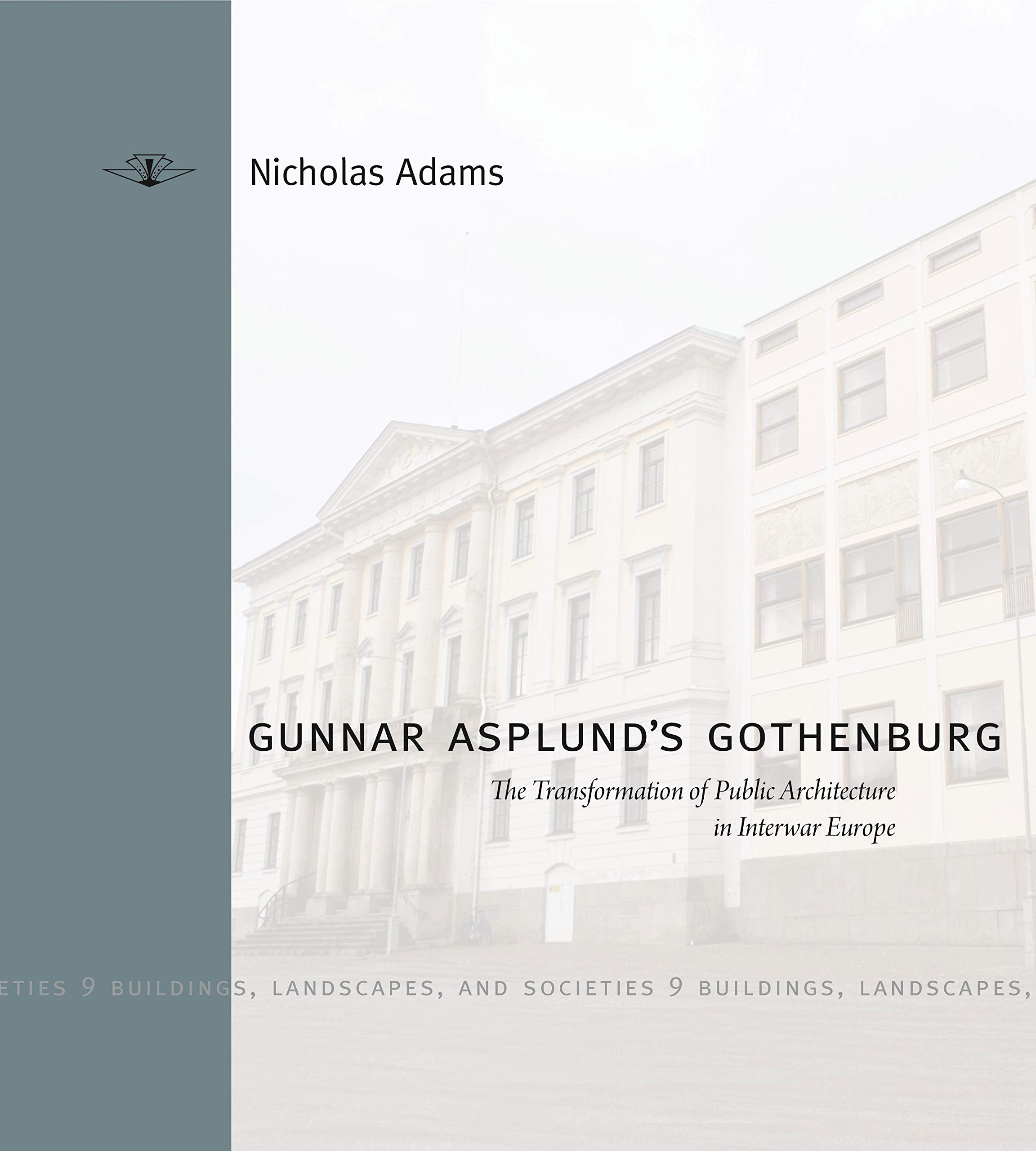
In the west coast port city of Gothenburg, Sweden, the architect Gunnar Asplund built a modest extension to an old courthouse on the main square (193436). Judged today to be one of the finest works of modern architecture, the courthouse extension was immediately the object of a negative newspaper campaign led by one of the most noted editors of the day, Torgny Segerstedt. Famous for his determined opposition to National Socialism, he also took a principled stand against the undermining of urban tradition in Gothenburg. Gothenburgs problems with modern public architecture, though clamorous and publicized throughout Sweden, were by no means unique. In Gunnar Asplunds Gothenburg, Nicholas Adams places Asplunds building in the wider context of public architecture between the wars, setting the originality and sensitivity of Asplunds conception against the political and architectural struggles of the 1930s. Today, looking at the building in the broadest of contexts, we can appreciate the richness of this exquisite work of architecture. This book recaptures the complex magic of its creation and the fascinating controversy of its completed form.
⚠️ WARNING (California Proposition 65):
This product may contain chemicals known to the State of California to cause cancer,
birth defects, or other reproductive harm.
For MAP (Minimum Advertised Price) violations and Intellectual Property (IP) or Trademark concerns, please contact:
support@ergodebooks.com
⚠️ California Proposition 65 Warning: Some products sold on this website may expose you to chemicals known to the State of California to cause cancer, birth defects, or other reproductive harm. For more information, visit www.P65Warnings.ca.gov.